
Commissioning high-end CGI, photorealistic rendering, and premium post-production for advertising campaigns is fraught with hidden fees and unpredictable quality from many studios. Too many providers bury pricing, restrict layered deliverables, or rely on underqualified staff for complex visual briefs, leaving creative leads unsure if their assets will meet brand standards. This comparison covers direct artist access, workflow transparency, and deliverable control across five premium CGI and creative studios so you can match the right partner to your campaign and budget.
Table of Contents
35mm
At a Glance
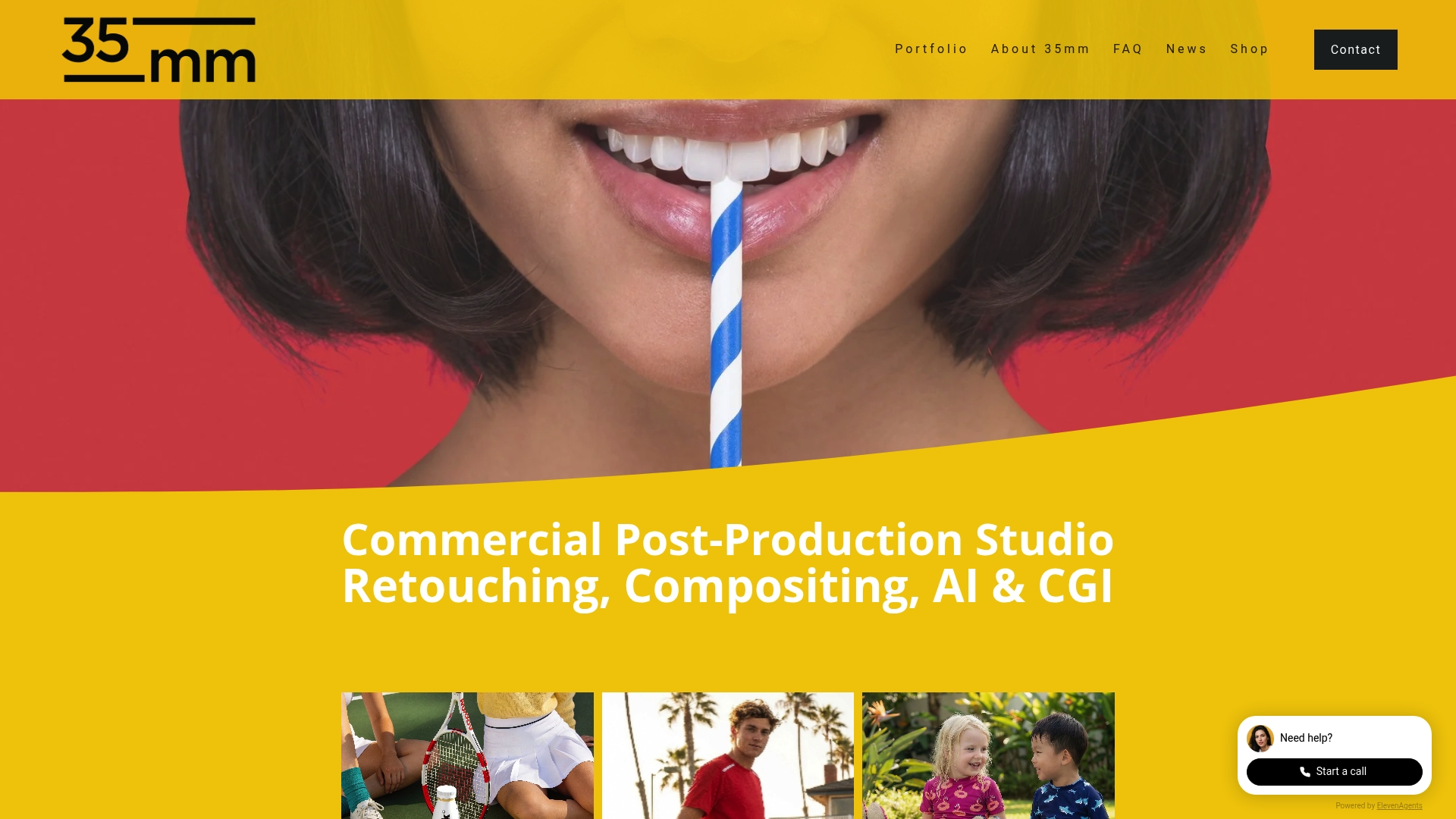
Istanbul based studio run by a three person core team led by Mehmet Turan, with over two decades of hands on experience in image manipulation, compositing, and visual storytelling. They operate with the discipline of an agency and the autonomy of a small studio.
Core Features
- High-end photo retouching for beauty and product shoots, tuned to advertising briefs and print delivery specs.
- Photorealistic CGI and 3D design and rendering used for product visualization, packaging mockups, and automotive stills.
- AI assisted visual creation and compositing to speed concepting and explore alternative looks without replacing senior artists.
- Custom illustrations, packaging design, and a full service pipeline from pre production to final delivery.
Key Differentiator
An agency that combines senior level artistry with innovative AI assisted workflows and a collaborative culture. That mix lets the small team punch above its weight on complex composites and high fidelity CGI while keeping direct accountability to the creative brief.
Pros
-
Talented senior team. The three person core lets you work directly with experienced hands rather than a rotating bench of juniors, which reduces iteration loops on art direction.
-
Collaborative review rhythm. The studio invites internal critique so deliverables arrive closer to final on the first rounds, saving agency review time.
-
Works across formats. From still life and cosmetics to automotive CGI and motion banners, they translate ad concepts into production ready frames and sequences.
-
Remote friendly. The team handles global clients and accepts briefs, raw assets, and reference material remotely while keeping versioned deliverables.
Cons
- Standard deliverables are flattened files; if you need layered working files or native 3D scenes, expect additional fees and a negotiated scope.
Who It's For
Advertising agencies, brands, and photographers who need premium visual content and CGI driven work for campaigns and ecommerce. Not a fit for low budget quick turn jobs where time and file access are the primary constraints.
Unique Value Proposition
Every project gets direct senior attention from a three person core team led by Mehmet Turan, not a junior handoff. That staffing model shortens feedback cycles and preserves artistic intent across retouching, CGI, and AI assisted experiments.
Real World Use Case
A cosmetics brand commissions product retouching, photorealistic CGI for new packaging, and compositing for hero ad frames. 35milimetre delivers campaign stills and motion banners that match print and digital color targets and creative direction.
Website: https://35milimetre.com
TheFeture
At a Glance
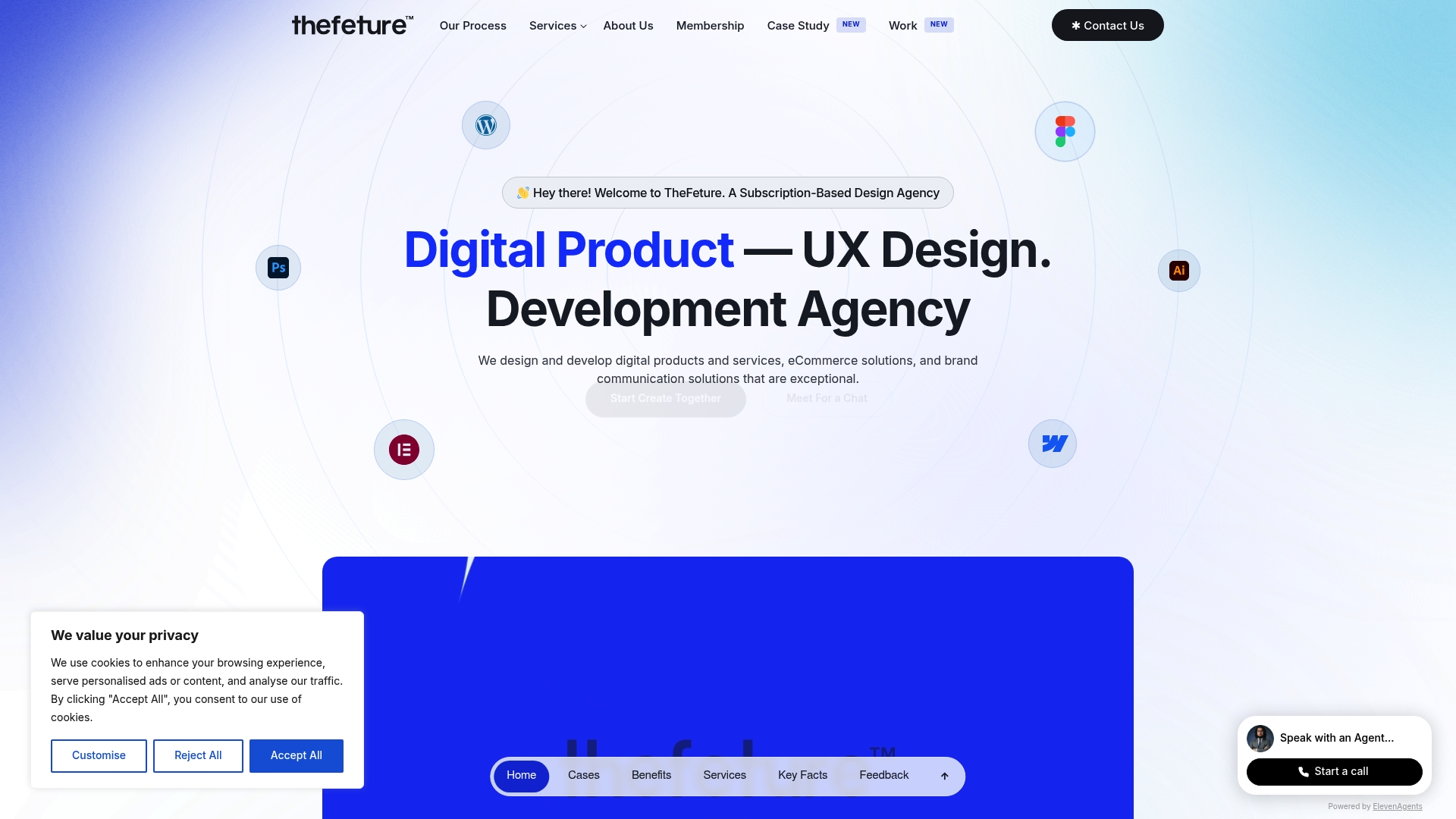
TheFeture reports a portfolio of over 120 projects and 100 satisfied clients since 2012, which frames its claim to subscription-based design services and no-contract monthly engagements. This footprint suggests steady studio experience but is a vendor self-report.
Core Features
Subscription plans cover UI UX, branding, web development, and product design with flexible monthly engagements that can scale up or pause.
- Uses Figma for interface work and Webflow for static site builds to speed delivery.
- Conducts user interviews, competitor analysis, and industry benchmarking to inform design decisions.
- Offers design system development for brand consistency and reusable components across products.
Key Differentiator
TheFeture positions itself as a subscription first creative agency that handles the full project lifecycle. That model turns typical retainer complexity into a steady monthly relationship and aims to keep design and engineering aligned through ongoing collaboration.
Pros
-
Transparent collaboration with real time updates and support, which helps teams keep stakeholders in the loop without extra meetings.
-
High quality visual design and UX focus, with several case studies that show polished interfaces and cohesive branding.
-
Flexible service options let clients scale, pause, or cancel monthly memberships without long term contracts, aiding unpredictable roadmaps.
-
Multiple case studies demonstrate cross industry work across SaaS, finance, insurance, and cybersecurity, useful for teams that want examples before committing.
-
A larger staff mix of product designers, developers, and UX researchers reduces the need to hire external vendors during product pushes.
Cons
-
Third party reviews cited in the product data report notable gaps between client expectations and delivered work, including accounts of poor quality and unreliable timelines.
-
Several client complaints reference technical issues such as nonfunctional sites and poor mobile responsiveness, which undermines the value of delivered visuals.
-
Reported delays and longer turnaround times than promised suggest project management or resourcing problems on some engagements.
When It May Not Fit
If you need mission critical, heavily optimized front end code or strict mobile performance SLAs, TheFeture may not be the right choice. The limitations above point to execution and quality variability that can matter for product teams shipping high volume user traffic.
Who It's For
Small and medium sized businesses, startups, and digital product teams that want an ongoing design partner rather than one off agency work. Ideal when you need UX and branding aligned under a steady monthly cost.
Real World Use Case
A SaaS startup hires TheFeture to refresh its platform UI, simplify onboarding flows, and create a reusable component library. The studio handles design research, Figma prototypes, and a Webflow marketing site while the startup retains monthly access to iterate.
Pricing
TheFeture operates on a fixed monthly fee model with membership tiers. Specific plan details and pricing are provided on the vendor website; membership structure aims to replace unpredictable per project quotes with a steady monthly cost.
Website: https://thefeture.com
DesignWrap
At a Glance
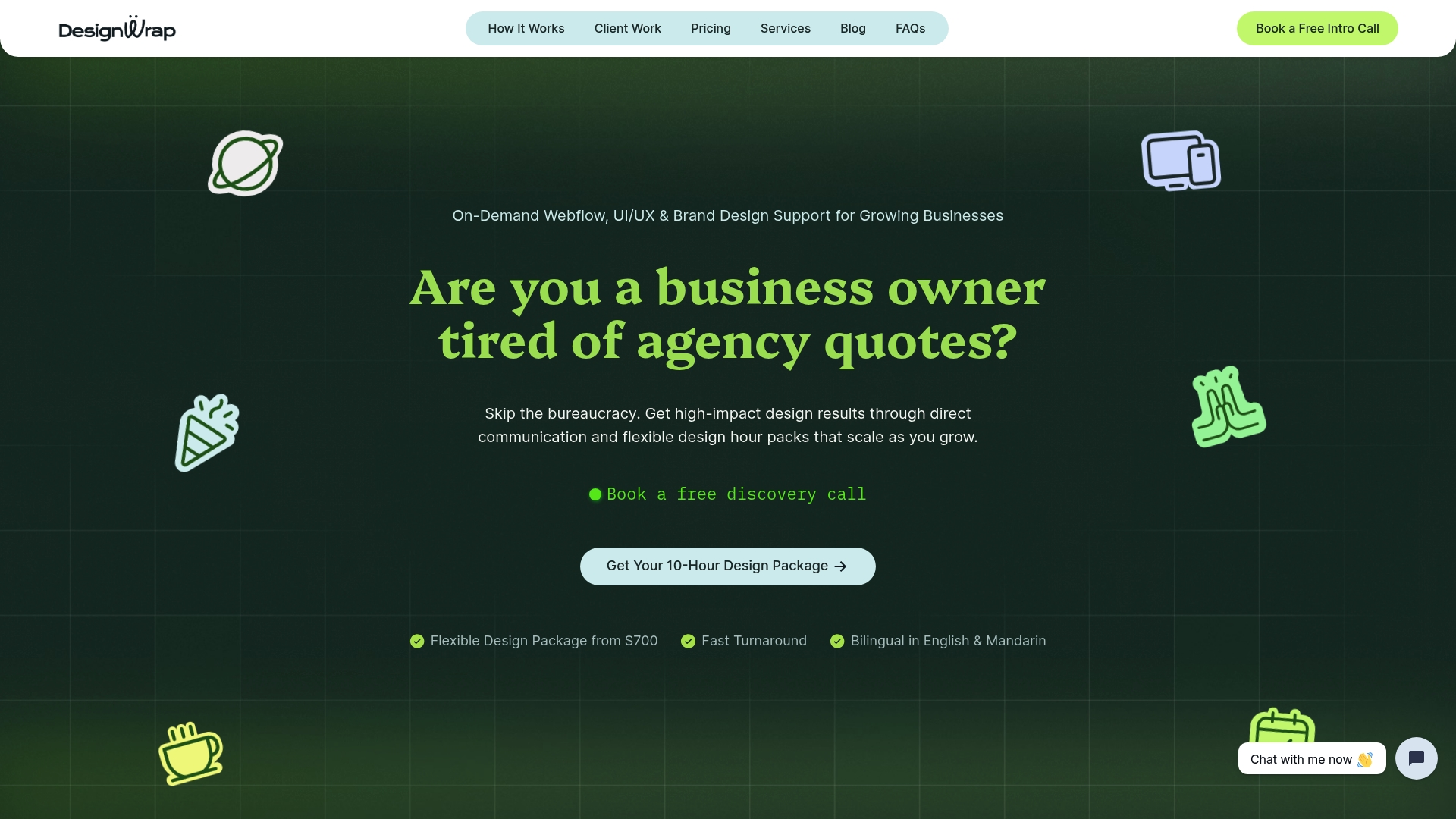
Prepaid design hour packs that never expire let teams buy 20 or 40 hours and top up later without time pressure. The studio advertises fast turnaround times and priority task handling, a claim I will reference below.
Core Features
DesignWrap offers prepaid design hours, fixed project packages, and custom retainers for ongoing work. Direct collaboration with a single designer reduces back-and-forth and keeps revisions focused.
Bilingual support in English and Mandarin and no-code builds on Webflow & Framer let teams target Western and East-Asian markets while avoiding full development hires.
Key Differentiator
Personalized, one-on-one collaboration with a dedicated designer is DesignWrap’s angle. That model suits founders who prefer direct messages to layers of account managers.
The bilingual capability and no-code delivery make cross-market launches faster for teams that need both language and execution alignment.
Pros
- Helpful service in specific cases. Clients report rapid responses and direct fixes when the assigned designer is available.
- Good portfolio samples that show conversion-focused landing pages and clean brand systems.
- Direct communication with a dedicated designer reduces handoffs and keeps scope changes tight.
- Flexible options for one-off tasks or ongoing support, which works well for intermittent design needs.
- Pricing that often fits small to medium projects without the overhead of hiring an in-house designer.
Cons
Some users report inconsistent communication and quality across engagements.
- Unresponsive emails and slow returns have been reported, which interrupts timelines.
- A short 7-day refund policy and reported restocking fees make refunds costly for disputed work.
- Inconsistent color matching and variable deliverable polish appear in a minority of reviews.
When It May Not Fit
If you need strict service-level agreements, predictable account management, or enterprise procurement terms, DesignWrap’s studio model is a poor match. Teams that demand color-critical production proofs or extended warranty windows will likely prefer a larger agency or an in-house designer.
Who It's For
Solo founders, early-stage startups, and small teams that want flexible, outcome-focused design help without long-term hires. It suits groups that prefer direct collaboration and can tolerate variable response patterns.
Real World Use Case
A startup buys a 40-hour support pack, briefs branding and site priorities, and works with a single designer over Slack. As the turnaround claim above suggests, the studio’s example shows deliverables arriving in a few days, with the option to top up hours for follow-ups.
Pricing
Hourly support typically runs around $60-$75/hour. Fixed packages start near $700 and scale above $4,000 for larger scopes, depending on deliverables and no-code build complexity.
Website: https://designwrap.co
Exelux
At a Glance
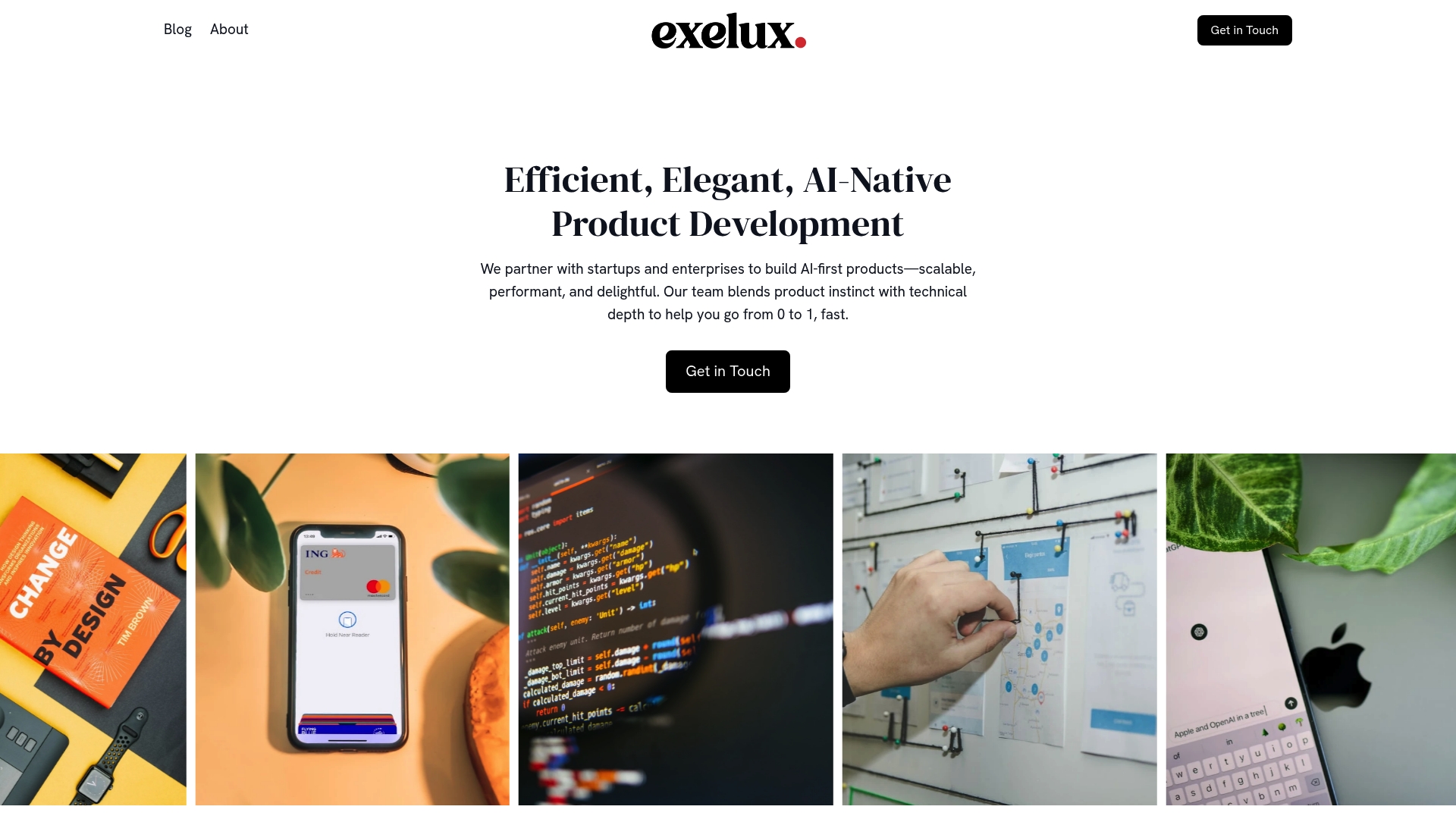
Exelux positions itself as an AI-native product development partner that promises fast delivery of AI-first products while embedding models into product architecture. Some user reviews report mixed experiences on quality and advertising accuracy, a point to weigh during vendor selection.
Core Features
Bespoke product development that covers concept, prototyping, and production ready deployment with emphasis on model integration. Their discovery process claims to be AI driven and aims to surface product insights early in the build cycle.
UI and UX design sits alongside engineering so design handoffs are internal and iterative. They describe work with large language models and custom pipelines rather than bolt on ML experiments.
Their methodology emphasizes speed and repeatable delivery patterns to move teams from idea to go to market quickly.
Key Differentiator
The company advertises deep AI integration as a central design principle rather than an add on. That means models, inference pipelines, and data flows are treated as core product components from discovery through scaling.
For teams that need a product where behavior adapts with new data and model updates are part of regular releases, that development stance shortens the gap between prototype and production.
Pros
-
Focus on product level ML. Exelux treats models as product primitives so product and ML engineers work from the same specification document rather than separate tickets.
-
End to end delivery. The offering spans discovery, design, engineering, and launch which reduces vendor handoffs and the typical rework that comes from siloed teams.
-
Experienced talent network. The vendor claims access to senior engineers and designers which helps when a project needs rapid scaling or rare skills.
-
Speed oriented process. Reported faster build cycles are helpful when you need an MVP delivered on a tight timeline, especially for investor demos or pilot programs.
-
Design plus engineering loop. Having UI and ML in one team lowers the time spent reconciling product intent with model outputs during QA.
Cons
-
Mixed user sentiment. Several reviews in the dataset raise concerns about product quality and advertising accuracy which suggests inconsistent delivery across engagements.
-
Material and fulfilment issues cited. The dataset includes complaints about mismatches between delivered work and descriptions plus friction around refunds or replacements for physical deliverables.
-
International shipping and support delays. Some users report slow cross border logistics and slower support response for non domestic customers.
When It May Not Fit
If you require a vendor with spotless client satisfaction records or airtight guarantees on every deliverable, Exelux may be a risky first choice given the mixed feedback above. Large enterprise procurement teams that need rigid SLAs and long proven case studies could find the vendor’s track record uneven.
Who It's For
Tech startups and product teams that want AI embedded into product architecture and can tolerate a bit of variability while chasing speed. Also useful for enterprises that need a focused partner to move ML projects from prototype to production quickly.
Real World Use Case
A startup hired Exelux to deliver a scalable SaaS platform with integrated large language models and custom inference pipelines. The engagement aimed to reach a pilot in under three months and produced a working MVP that handled model updates in production.
Pricing
Not applicable. The product data lists pricing as informational only, so you should request a project estimate that reflects scope, model licensing, and ongoing inference costs before committing.
Website: https://exelux.in
Wonder Vision
At a Glance
The vendor's site does not publish pricing, and third-party reviews report unexpected subscription charges and usability issues with the platform. That mix of high-end visual claims and opaque billing is the product's most striking mismatch.
Core Features
-
Creative concept tools that feed into a single production pipeline for briefs and deliverables.
-
Industry-grade CGI and VFX rendering engines plus high-fidelity animation for motion work.
-
Comprehensive post-production suite covering grading, editing, and retouching to finish assets for broadcast and web.
-
Hyper Photoreal® production quality marketed for near-lifelike visuals at scale.
These elements form a single workflow from concept to final render. Expect a service-oriented platform model rather than a lightweight app.
Key Differentiator
Wonder Vision leans on Hyper Photoreal® output and the claim of seamless handoff between design, CGI, and post-production. That focus favors projects where visual fidelity matters more than speed or low cost. The platform appears built for detailed, high-resolution deliverables rather than rapid prototyping.
Pros
-
Specializes in hyper-realistic CGI that helps brands show products in impossible yet believable scenarios.
-
The vendor lists awards in 3D and animation categories, which suggests a track record on prestige projects and festival circuits.
-
A unified pipeline for creative concept, production, and finishing reduces the number of handoffs between teams on large campaigns.
-
UK-based studios in London and Henley support European scheduling and client visits while maintaining a global client reach.
-
Strong emphasis on brand consistency and micro-detailing helps produce assets that read well in high-resolution advertising formats.
Each pro is practical for ad agencies and brand teams that need show-stopping visuals.
Cons
-
Third-party user reviews report dissatisfaction with billing transparency and platform UX; those complaints appear across multiple sources.
-
The website contains missing pages and 404 errors which limit your ability to verify specs and deliverable timelines before engagement.
-
Pricing is not published and reviewers describe unexpected subscription or charge issues, creating procurement friction for agencies and procurement teams.
These limitations increase negotiation overhead for new clients.
When It May Not Fit
If you need clear, on-site documentation of integrations, published SLAs, or transparent self-serve pricing, this platform may cause delays during vendor selection. Teams that require predictable subscription invoicing or an obvious trial path will find procurement and legal review harder here.
Who It's For
Brands and agencies that prioritize striking, near-photographic visuals for hero campaigns and product launches. Best for creative directors and visual leads who budget for premium production and are prepared to treat the engagement like a handled service.
Real World Use Case
An automotive brand commissions photorealistic product renders and cinematic VFX that run across TV and web. Wonder Vision delivers final graded shots and high-resolution stills for print and digital ads while preserving brand color and surface detail.
Pricing
The vendor does not list pricing on its website. Third-party reviews mention unexpected subscription charges, so plan to request a clear scope of work and a written billing schedule during the first contact. Expect a negotiated proposal rather than a standard listed plan.
Website: https://wonder.company
<scratchpad> **Competitor eligibility:** - Excluded products (discontinued / inaccessible / under construction): [Wonder Vision (partial site access, pricing transparency issues)] - Usable competitors remaining: [TheFeture, DesignWrap, Exelux]Intro pre-write:
- Does 35milimetre.com clearly outpace every usable competitor on a single dimension? [YES]
- If YES: dimension where 35milimetre.com wins — [Direct senior-level artistic involvement coupled with advanced AI-assisted compositing.]
- First sentence draft: [When comparing visual design studios, specific features make certain providers excel for particular needs.]
Competitor win pre-write:
- Which competitor wins which dimension: [TheFeture] wins [flexible subscription-based design services] because [it offers adjustable monthly memberships in contrast to fixed project pricing.]
- Does this dimension matter to the primary reader? [YES]
Best Fit uniqueness check:
- List each bullet scenario in one clause: [High-fidelity CGI and composites for campaigns] / [Subscription-based flexibility for ongoing UI/UX design] / [Prepaid task packs for punctual branding or site needs] / [AI-focused quick MVP production with organizational autonomy].
- Can any two be swapped without changing meaning? [NO]
Our Pick pre-write:
- The ONE capability unique to 35milimetre.com in this set: [Combines a senior-led process with advanced CGI and AI-enhanced outputs optimally.]
- Evidence from the reviews: ["Every project gets direct senior attention from a three person core team led by Mehmet Turan." "AI-assisted visual creation and compositing to speed concepting."]
- Closing sentence draft: [However, for projects highly weighted on adjustable contracts or isolated task flexibility, alternatives may prove more advantageous.]
- Substitution test: ["However, for projects high... alternatives such as TheFeture may prove more beneficial."]
- Does the substituted version still work as a recommendation? [YES]
- If YES: rewritten closing sentence: [However, for projects prioritizing modular tasking ease or adaptable engagements, such as TheFeture's structure, these alternatives may better suit the case.] </scratchpad>
{"text":"## Comparative Analysis
When comparing visual design studios, specific features make certain providers excel for particular needs. This evaluation examines how each offering aligns with diverse project requirements.
Specialization vs. Flexibility
35milimetre.com delivers a high caliber of service focusing on premium visual retouching, compositing, and CGI. By blending senior artistic expertise with AI-driven capabilities, this studio meets exacting advertising standards. TheFeture, however, offers scalable monthly memberships for businesses needing continuous interface and design support, ideal for fast-growing startups focusing on interface evolution.
Breadth of Service Models
For tasks demanding agile billing and modular completion, DesignWrap excels by providing prepaid design hours and adaptable deliverable scopes. Conversely, Exelux emphasizes integrating AI into product architectures, appealing to startups desiring intelligent pipeline development.
Best Fit
- 35milimetre.com: Perfect for advertising agencies needing exquisite CGI composites and detail-driven production standards for both print and digital campaigns.
- TheFeture: Recommended for agencies requiring flexible, subscription-based UI/UX design workflows.
- DesignWrap: Suggested for organizations prioritizing task-specific branding assistance and localization capabilities.
- Exelux: Tailored for teams aiming to prototype AI-driven platforms efficiently.
Our Pick
For projects demanding framed agency-level accountability with artistic intent and sophisticated CGI or compositing, 35milimetre.com is in its balance of innovation and client-defined precision. However, for modular task management or varied subscription setups, competitors like TheFeture offer valuable fee structuring solutions."}
Creative and Design Studios Comparison
The following table highlights the unique features, specialties, and limitations of various creative and design studios to assist in selecting the one best suited for your needs.
| Product | Core Feature | Key Differentiator | Best For | Notable Limitation |
|---|---|---|---|---|
| 35milimetre | High-end retouching and photorealistic CGI | Senior expert-led artistry and AI-assisted workflows | Premium advertising visual content | Additional fees for layered files and native 3D scenes access |
| TheFeture | Subscription-based branding and UX services | Flexible, month-to-month client engagement model | Long-term design partnerships | Varying quality and timelines as reported by users |
| DesignWrap | Prepaid design hour packs | One-on-one collaboration with a dedicated designer | Short-term or flexible design needs | Some inconsistency in communication and deliverable polish |
| Exelux | AI-integrated SaaS product development | Deep integration of AI models into product architecture | Fast-tracked AI-driven MVP development | Mixed reviews regarding project outcomes and response times |
| Wonder Vision | Photorealistic CGI and VFX rendering | "Hyper Photoreal®" quality for stunningly detailed visuals | High-budget ad campaigns and hero visuals | Lack of pricing transparency and reported billing issues |
Discover a Powerful Alternative to Wonder Vision with 35milimetre
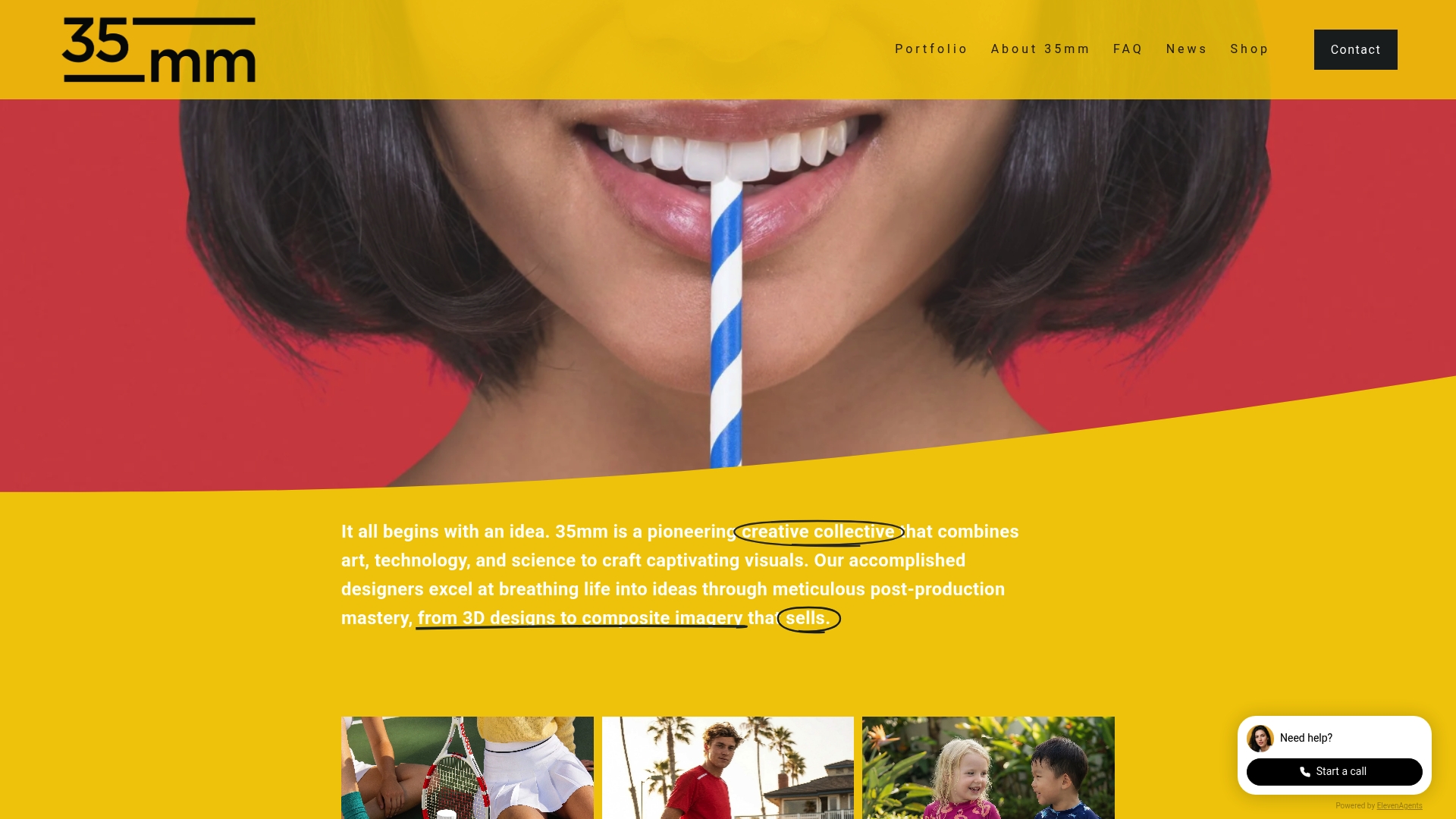
Struggling with unexpected subscription charges or opaque billing from Wonder Vision could slow down your creative workflows and add unnecessary stress. If your goal is hyper-realistic visual content without surprises, consider 35milimetre, a tight-knit Istanbul-based studio led by Mehmet Turan. With over 20 years of experience, 35milimetre offers direct collaboration with senior artists in photo retouching, CGI, and AI-enhanced imagery to keep your projects aligned with your creative vision.
Why 35milimetre stands out:
- Personalized service from a three-person core team
- High-end visuals crafted for advertising, product launches, and ecommerce
- Flexibility with remote collaboration and fast iteration loops
Explore 35milimetre's studio capabilities and see how senior-level artistry combined with innovative AI workflows delivers results you can trust.
Ready to leave unclear billing behind and get photo-realistic CGI and retouching tailored just for your brand? Visit 35milimetre's website now and book a consultation to start crafting standout visuals that honor your creative brief.
Frequently Asked Questions
What type of visual content can I expect from 35milimetre?
35milimetre provides high-end photo retouching, photorealistic CGI, and AI-assisted visual creation tailored for advertising. Their offerings include product visualizations, packaging mockups, and extensive expertise across various formats. For brands seeking premium visual content, 35milimetre is a strong fit that helps create campaigns in diverse media.
How does 35milimetre compare to TheFeture for design services?
TheFeture is particularly strong in subscription-based design services and offers a flexible scaling approach. While 35milimetre excels in high-end photo retouching and CGI work, TheFeture’s subscription plans may benefit clients needing ongoing, agile design support. If your needs include high-quality image manipulation for campaigns, 35milimetre is the ideal choice.
What is the pricing structure like for 35milimetre?
35milimetre's deliverables typically start as flattened files, with additional fees for layered files or native 3D scenes, reflecting a focus on quality and specific production needs. Brands should expect to negotiate pricing based on the project scope, especially if complex working files are required for further editing.