
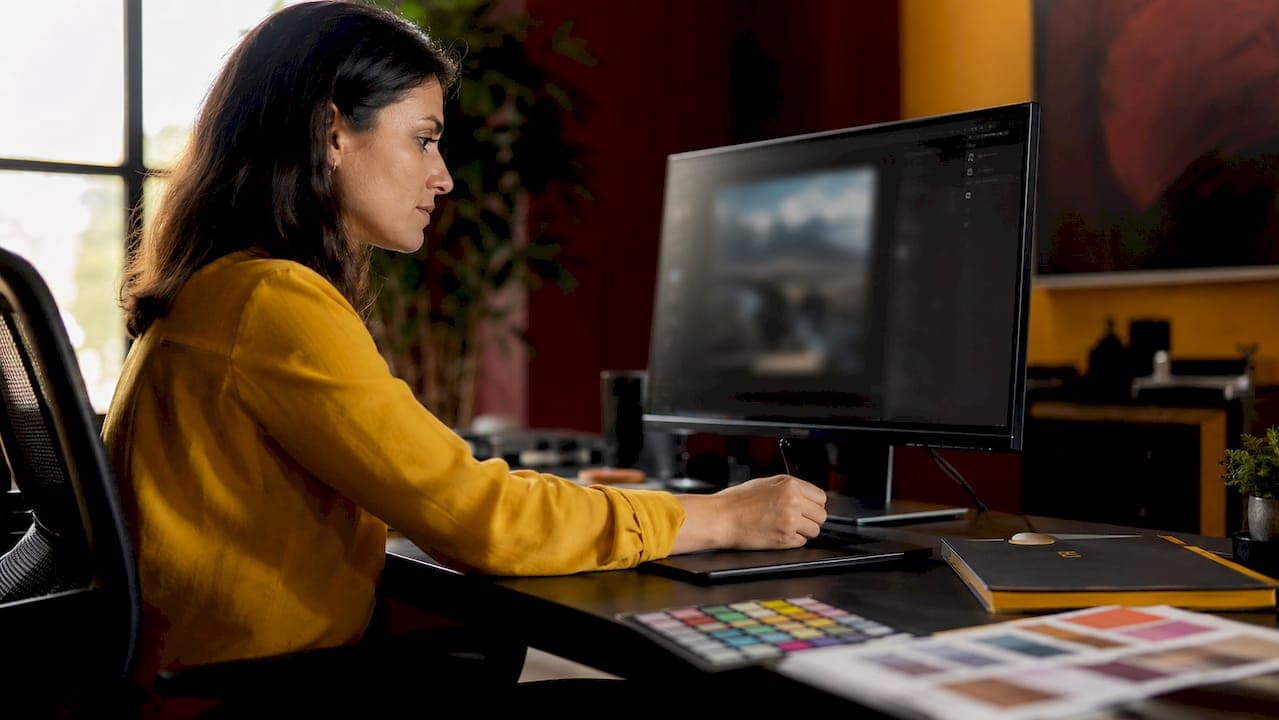
Professional image editing is the process of refining raw visuals to align precisely with brand identity, customer expectations, and conversion goals. For marketers and business owners, the stakes are high. A single product photo is often the only thing standing between a browser and a buyer. Understanding why professional image editing drives results, rather than treating it as an optional polish step, separates brands that build trust quickly from those that quietly lose it.
Why professional image editing shapes brand perception
Professional image editing is more about perception management and risk control than beautifying images. It protects revenue by creating visual clarity that customers register before they read a single word of copy. The industry term for this discipline is photo retouching, which covers everything from color grading and background removal to compositing and skin correction in Adobe Photoshop or Lightroom.
Audiences judge brand credibility subconsciously through image quality, and that judgment influences purchasing decisions regardless of actual product quality. A poorly lit, inconsistently colored product shot signals sloppiness. It tells the viewer that the brand does not pay attention to detail, and that doubt transfers directly to the product itself.
Professional retouching eliminates what specialists call "tone drift," the subtle shift in color temperature, contrast, or mood that creeps in when images are shot across different days, locations, or lighting setups. Tone drift and ambiguity make a brand feel scattered rather than intentional. Correcting it creates a shared visual language that builds trust even when viewers cannot articulate why they feel confident.
Pro Tip: Build a brand editing reference sheet that documents your approved color temperature, contrast range, and shadow style. Share it with every photographer and retoucher you work with, just as you would share a typography or color palette guide.
Professional vs. amateur editing: what is the real difference?
The gap between professional retouching and DIY or automated editing is not always visible at first glance. It shows up over time, across campaigns, and at the moment a customer decides whether to buy.
Automated tools and AI-based editors have improved significantly, but AI editing misses subtle issues like jagged masking edges, unnatural skin tones, and tone drift that erode brand trust gradually. These tools optimize for speed, not for the nuanced judgment that a trained post-production artist applies when reading a brand's visual identity. The result is images that look processed rather than polished.

The table below compares the two approaches across the factors that matter most to marketers and business owners.
| Factor | Professional editing | Amateur or automated editing |
|---|---|---|
| Color consistency | Calibrated across entire campaign | Variable; dependent on source file quality |
| Edge quality | Clean, natural masking with no artifacts | Frequent jagged or halo artifacts |
| Brand alignment | Guided by brand identity standards | Generic presets with no brand context |
| Tone drift correction | Caught and corrected systematically | Often missed or overcorrected |
| Over-editing risk | Low; edits are subtle and strategic | High; filters and sliders invite excess |
| Turnaround reliability | Predictable with professional workflows | Inconsistent without structured process |
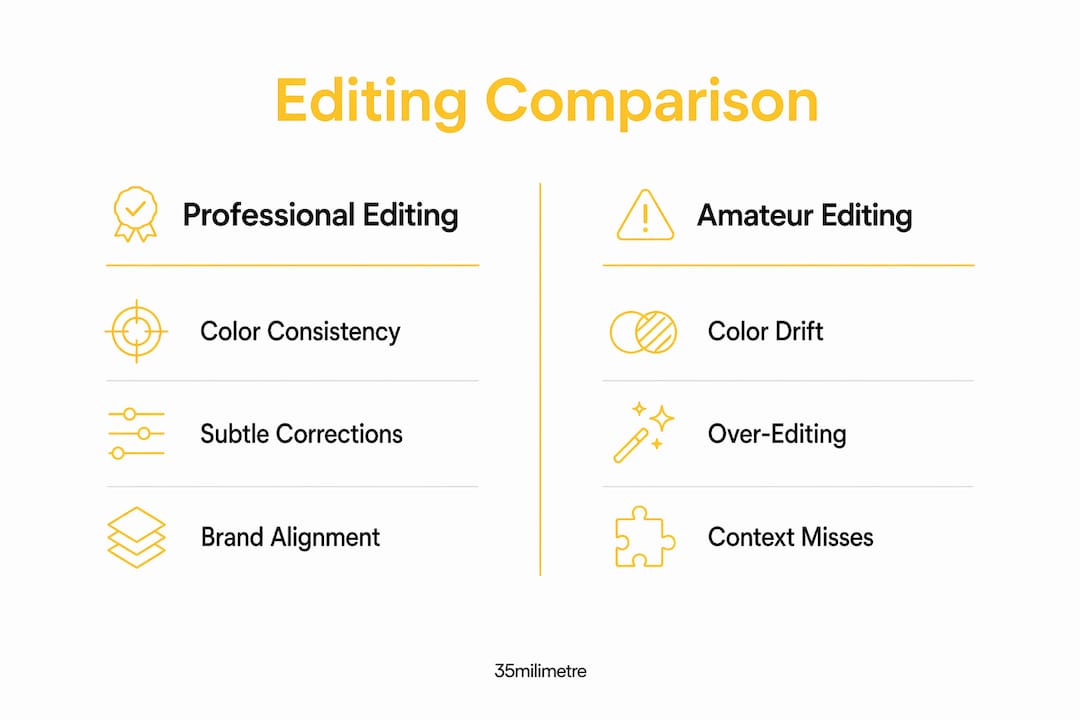
Over-editing creates artificial visuals that feel untrustworthy. Professional editors prioritize invisible corrections that enhance natural qualities rather than replace them. That restraint is a skill, and it is one that automated tools cannot replicate because they lack the contextual judgment to know when to stop.
The advantages of professional editing extend beyond individual images. Skilled retouching sharpens structure, catches logical inconsistencies in visual storytelling, and maintains coherence across an entire campaign. That coherence is what turns a collection of photos into a brand.
How image editing enhances photos to multiply marketing ROI
Professional retouching is a strategic performance multiplier that increases the return on your entire photography and visual marketing budget. A photoshoot investment can be wasted entirely without post-production that aligns the output with customer psychology and brand standards.
The brain processes images faster than text, so product photos function as silent sales representatives. Poor editing creates doubt at the exact moment a customer is deciding whether to trust you. Clean backgrounds, sharp edges, and natural shadows reduce friction in the buying process by removing visual distractions that cause hesitation.
The benefits of image editing extend directly to return rates. Accurate retouching in fashion and cosmetics reduces product returns by ensuring that color and texture in the image match what the customer receives. Return costs in e-commerce routinely exceed the cost of professional post-production, which means retouching pays for itself before a single additional sale is counted.
Consistency across campaigns strengthens brand recognition over time. When every image shares the same color temperature, contrast level, and compositional style, customers begin to recognize your brand before they see your logo. That recognition accelerates purchase decisions because familiarity reduces perceived risk.
Pro Tip: Integrate your editing guidelines directly into your brand identity document alongside your fonts and color palette. Treat retouching standards as a core brand asset, not a production afterthought. This single step prevents tone drift from accumulating across campaigns.
The importance of professional edits is clearest when you measure what poor editing costs. Revisions, reshoots, and customer doubt are all avoidable expenses. Professional retouching eliminates clarity gaps before they reach the customer, protecting credibility and accelerating the path to purchase.
What steps can marketers take to integrate professional editing?
Incorporating professional image editing into your brand strategy requires more than hiring a retoucher. It requires building a system that produces consistent results across every campaign and every deliverable.
Start by developing a visual editing brief that documents your brand's approved look. This brief should specify color temperature ranges, acceptable shadow styles, background treatments, and any compositing or color grading standards specific to your product category. Think of it as the post-production equivalent of a brand style guide. Without it, even skilled retouchers will interpret your brand differently each time.
Second, choose a professional editing service that has direct experience in your product category. A studio that retouches automotive imagery for major manufacturers approaches color accuracy and surface rendering very differently from one that handles lifestyle photography. Ask to see category-specific work, not just a general portfolio. The strategic role of visuals in marketing is too significant to assign to a generalist without relevant experience.
Third, build a structured feedback loop into your workflow. The first round of edits should be treated as a calibration exercise, not a finished product. Provide written feedback that references your editing brief, and document approved outputs as reference files for future rounds. This process shortens revision cycles dramatically over time.
Fourth, align your post-production timeline with your campaign calendar. Retouching takes time when done properly, and rushing it produces exactly the kind of inconsistencies that erode brand trust. Build editing time into your production schedule the same way you build in photography days.
Finally, consider tools like Adobe Bridge or Capture One for managing and reviewing edited assets at scale. These platforms allow you to compare color consistency across large image sets before approving files for publication, catching tone drift before it reaches your audience. For deeper guidance on building this kind of visual system, the creative image editing guide from 35milimetre covers the strategic foundations in detail.
Key takeaways
Professional image editing is a revenue-protecting business function, not a cosmetic step, and brands that treat it as a core part of their visual identity consistently outperform those that do not.
| Point | Details |
|---|---|
| Editing builds brand trust | Consistent, calibrated images signal professionalism and reduce buyer hesitation before a word is read. |
| AI tools have real limits | Automated editing misses tone drift, jagged edges, and brand context that trained retouchers catch systematically. |
| Editing reduces return rates | Accurate color and texture representation in retouched images lowers costly product returns in fashion and e-commerce. |
| Guidelines prevent tone drift | Documenting editing standards alongside fonts and colors keeps visuals coherent across campaigns and time. |
| Post-production multiplies ROI | Strategic retouching increases the return on every photography investment by aligning visuals with customer psychology. |
The part most brands get wrong about retouching
After more than two decades working in post-production at 35milimetre, the most consistent mistake we see is treating retouching as the last step rather than a strategic one. Brands invest heavily in photography, then hand off the files with vague instructions and a tight deadline. The result is technically competent editing that has no relationship to the brand's visual identity.
The brands that get the most out of professional retouching treat it as a conversation, not a transaction. They come with reference files, written briefs, and a clear sense of what emotion they want the image to produce in the viewer. That clarity makes the retoucher's job faster and the output more consistent. We have seen campaigns where a single well-briefed editing round produced files that needed no revisions at all.
The other thing worth saying directly: the goal of good retouching is to make the edit invisible. When a customer looks at a product image and simply feels confident, that is the edit working. The moment they notice the retouching, something has gone wrong. That discipline, knowing when to stop, is what separates professional post-production from everything else. It is why brand imagery built on strong retouching standards outlasts trends and continues to convert long after the campaign launches.
— 35milimetre
How 35milimetre helps brands build visual authority
35milimetre's commercial retouching services are built for brands that need more than technically clean images. Led by Mehmet Turan and a specialized team covering post-production, graphic design, and 3D artistry, the Istanbul-based studio has spent over two decades delivering high-end visuals for technology and automotive clients. Every project begins with a briefing process designed to align retouching decisions with your brand identity, not just your shot list. Whether you need product retouching for an e-commerce catalog, compositing for a campaign launch, or AI-enhanced imagery for a new product line, 35milimetre brings the same strategic discipline to every deliverable. If you want visuals that support campaign success and hold up across every channel, this is where to start.
FAQ
What is professional image editing, exactly?
Professional image editing, also called photo retouching, is the process of correcting and refining images using tools like Adobe Photoshop or Lightroom to align visuals with brand standards and customer expectations. It covers color grading, background removal, compositing, and tone correction.
Why hire an image editor instead of using automated tools?
Automated tools miss subtle issues like tone drift, jagged masking edges, and brand context that trained retouchers catch systematically. Professional editors apply judgment that no preset or AI filter can replicate.
How does professional editing reduce product return rates?
Accurate retouching ensures that color and texture in product images match what the customer actually receives, which is especially critical in fashion and cosmetics. Lower visual discrepancy between image and product directly reduces return rates.
How often should brands update their editing guidelines?
Editing guidelines should be reviewed whenever a brand refreshes its visual identity, launches a new product category, or notices inconsistency across recent campaigns. Treating them as living documents prevents tone drift from accumulating over time.
What is the biggest risk of skipping professional retouching?
Skipping professional retouching risks inconsistent visuals that signal sloppiness, reduce buyer confidence, and increase return rates. The cost of poor editing, measured in lost conversions and returns, routinely exceeds the cost of professional post-production.