
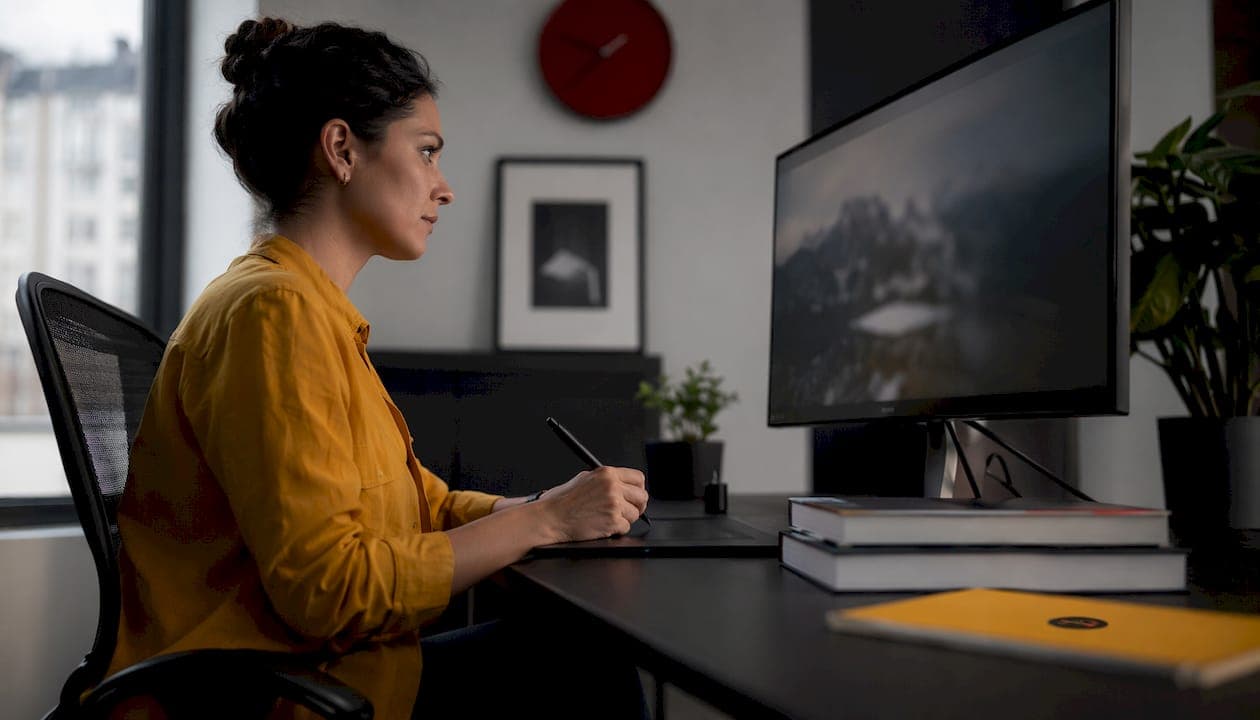
Professional retouching is defined as the expert process of refining images to align with a brand's identity and marketing goals through targeted enhancement that preserves natural aesthetics. For marketing professionals and brand managers, this distinction matters enormously. A product photo is often one still frame standing in for a physical experience, and that single image carries the full weight of your brand's credibility. Understanding why choose professional retouching is the first step toward producing visuals that actually convert.
Why professional retouching builds brand credibility
Brand trust lives in the details your audience processes without realizing it. A product photo with distracting reflections or poor lighting signals a lack of attention to detail, and consumers register that signal subconsciously before they read a single word of copy. The result is a subtle but real erosion of confidence in your brand.
Professional retouching addresses these subconscious cues directly. Common credibility killers include:
- Sensor dust spots that appear as dark specks on clean backgrounds
- Uneven skin tones caused by mixed lighting on shoot day
- Inconsistent color temperature across a product catalog
- Harsh shadows that obscure product shape or texture
- Blown highlights that erase surface detail on packaging
Each of these issues is fixable, and fixing them is exactly what a skilled retoucher does. Consistent color grading across photos taken at different times or under different lighting conditions creates a unified visual identity that reinforces consumer trust across every platform where your brand appears.
Pro Tip: Before briefing a retoucher, audit your existing image library for color temperature inconsistencies. Identifying the problem upfront saves revision rounds and keeps your brand's visual language coherent from the first deliverable.

Cross-platform consistency is a concrete business advantage, not a cosmetic preference. When your Instagram grid, your e-commerce product pages, and your print catalog all share the same color palette and tonal range, your brand reads as organized and reliable. That perception directly influences purchase decisions.
What are the key technical processes in professional retouching?
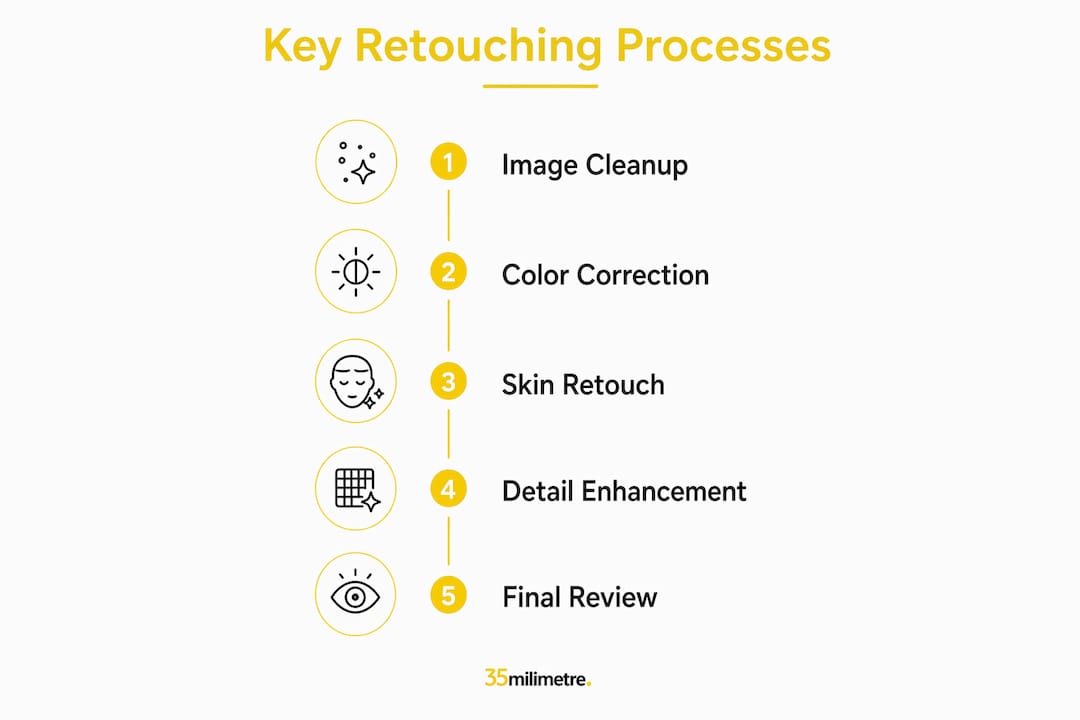
Professional retouching operates across three levels of complexity, and knowing which level your project requires is the first decision a brand manager should make.
- Basic retouching covers color correction, exposure adjustment, cropping, and straightening. This level suits catalog images where speed and volume matter more than artistic nuance.
- Intermediate retouching adds object removal, background cleanup, and targeted skin retouching. This is the standard for most commercial product and lifestyle photography.
- High-end retouching involves complex artistic techniques including frequency separation, dodge and burn, and compositing. This level is appropriate for hero campaign images, luxury product launches, and editorial spreads.
The gap between basic and high-end is not just a matter of time spent. It reflects fundamentally different skill sets. High-end techniques like frequency separation allow a retoucher to work on skin texture and tone independently, preserving the natural grain of a surface while correcting color. Dodge and burn sculpts light and shadow to give a product three-dimensional presence on a flat screen. Compositing assembles multiple exposures or elements into a single image that no single camera frame could capture.
A common misconception is that professional retouching produces the "plastic" look associated with over-processed images. That outcome is a symptom of poor technique, not professional retouching itself. Expert retouchers balance color, texture, and lighting according to physical laws, so the result feels natural and intentional. The goal is invisible work: the viewer sees the product or the person, not the edit.
Pro Tip: When reviewing retouched images, zoom out to 50% view before approving. Retouching artifacts are often invisible at 100% zoom but become obvious at the scale a consumer actually sees the image on a screen.
Human skill remains the differentiator at the high-end level. Automated tools can apply filters and batch-correct exposure, but they cannot make the judgment calls that define a brand's visual identity.
Why choose professional retouching over DIY or automated solutions?
The case for professional retouching over automated alternatives comes down to precision and brand alignment. Automated AI tools often miss nuanced brand-specific aesthetics and can introduce artifacts or blur important product details. That matters because a blurred logo edge or a color shift on a hero product can undermine months of brand-building work.
The specific limitations of automated and DIY approaches include:
- AI filters apply global adjustments that ignore the specific areas needing correction
- Batch processing flattens the visual variation that gives a brand its character
- Consumer-grade editing apps lack the layer control needed for non-destructive workflows
- Automated skin retouching removes texture along with blemishes, producing the plastic look that damages authenticity
- DIY edits rarely account for how an image will render across different output formats, from OLED screens to offset print
Brand-specific aesthetic adherence is the clearest advantage a professional retoucher brings. Your brand has a defined color palette, a tonal mood, and a level of contrast that distinguishes it from competitors. A skilled retoucher learns that language and applies it consistently, whether working on a single hero image or a 200-piece catalog. An AI filter does not know the difference between your brand's signature warm tones and a color cast that needs correcting.
The marketing outcomes are concrete. High-quality retouched images reduce customer uncertainty and lower product return rates in e-commerce. When a customer can clearly see the texture, color, and shape of a product, they make better-informed purchase decisions. Fewer surprises at delivery means fewer returns, and fewer returns directly improve margin.
How professional retouching enhances visual storytelling and marketing outcomes
Visual storytelling depends on images that direct attention without distraction. Professional retouching is the tool that makes that direction possible. When a background is clean, lighting is sculpted, and color is consistent, the viewer's eye goes exactly where the brand intends. That control is what separates a campaign image from a snapshot.
| Marketing Context | Retouching Impact |
|---|---|
| E-commerce product pages | Cleaner images reduce uncertainty and support purchase decisions |
| Social media campaigns | Consistent color grading creates a recognizable grid aesthetic |
| Print and OOH advertising | High-resolution retouching holds detail at large format sizes |
| Packaging and catalog | Accurate color reproduction aligns physical product with digital image |
| Brand editorial content | Compositing and color grading create mood that supports brand narrative |
For e-commerce brands specifically, the stakes are high. Visuals are the strongest driver of online sales, and retouching enhances product representations for clear, appealing imagery that reduces the gap between expectation and reality. That gap is the primary cause of returns, and closing it has a direct effect on profitability.
Consistency across channels is equally important. A brand that looks polished on its website but inconsistent on social media sends a mixed signal about its reliability. Professional retouching, applied with a defined style guide, keeps every touchpoint aligned. You can read more about visual storytelling for brands to understand how image consistency compounds over time into a recognizable brand presence.
Pro Tip: Create a retouching style guide before your first project brief. Define your preferred skin tone range, background brightness, shadow depth, and color temperature. Sharing this document with your retoucher cuts revision cycles significantly and produces consistent results from the first round.
The best brand campaigns use retouching not to deceive but to clarify. A luxury automotive brand removes road grime and corrects reflections so the car's design reads cleanly. A skincare brand smooths uneven lighting so the product's packaging color matches the actual product on shelf. These are not distortions. They are the difference between a photograph and a brand asset.
Key Takeaways
Professional retouching is the most direct investment a brand can make in the quality and consistency of its visual communication, with measurable effects on consumer trust, conversion, and return rates.
| Point | Details |
|---|---|
| Brand credibility starts with image quality | Sensor dust, poor lighting, and color inconsistency erode consumer trust before a word is read. |
| Three retouching levels serve different needs | Basic, intermediate, and high-end retouching each match specific commercial and campaign contexts. |
| Human skill outperforms automation at the high end | Techniques like frequency separation and dodge and burn require judgment that AI tools cannot replicate. |
| Consistency across channels is a business advantage | Unified color grading across platforms reinforces brand reliability and supports purchase decisions. |
| Retouching reduces e-commerce return rates | Clear, accurate product imagery closes the gap between customer expectation and delivered product. |
What two decades of retouching work taught us about brand imagery
The most common mistake we see from marketing teams is treating retouching as a finishing step rather than a production discipline. They shoot, they approve, and then they ask for "a quick retouch" as if it were a spell-check. That approach produces mediocre results and wastes budget on revision rounds that a proper brief would have prevented.
The brands that get the most value from professional retouching treat it as a creative partnership. They share their brand guidelines before the first image is delivered. They define what "natural" means for their specific product category, because natural for a luxury watch is different from natural for a skincare serum. They give feedback that references visual references, not just adjectives.
We have also watched the AI retouching conversation evolve rapidly over the past two years. Our honest assessment is that AI tools are genuinely useful for high-volume, low-complexity tasks. They are not a replacement for the judgment required on a hero campaign image. The importance of professional editing becomes clearest precisely when the stakes are highest, and that is when automated shortcuts cost more than they save.
The brands that invest in quality imagery consistently outperform those that treat visuals as a commodity. That is not a philosophical position. It shows up in engagement rates, in conversion data, and in the longevity of campaign assets that do not need to be reshot six months later.
— 35mm
How 35milimetre approaches professional retouching for commercial brands
35milimetre has spent over two decades refining the craft of commercial post-production for brands in technology, automotive, and consumer goods. The studio's work covers the full range from basic color correction to high-end compositing and CGI integration, with a team that includes a post-production artist, a graphic designer, and a 3D artist working in close coordination.
For marketing professionals who need imagery that holds up across every channel, from e-commerce product pages to large-format print, 35milimetre builds a retouching workflow around your brand's specific visual language. The studio also works directly with ad agencies and photographers who need a reliable post-production partner for campaign-level work. You can learn more about enhancing product images for e-commerce or reach out to discuss your next project directly.
FAQ
What is professional retouching?
Professional retouching is the expert process of enhancing images to meet brand standards through techniques like color grading, frequency separation, and compositing. It focuses on natural enhancement rather than heavy manipulation.
How does retouching differ from basic photo editing?
Basic editing covers exposure and cropping, while professional retouching addresses brand-specific color consistency, complex object removal, and high-end techniques like dodge and burn that automated tools cannot replicate.
Does professional retouching make images look fake?
The "plastic" look is a symptom of poor technique, not professional retouching. Skilled retouchers preserve natural texture and follow physical lighting laws so the result feels authentic and intentional.
Why hire a retoucher instead of using AI tools?
Automated AI tools miss brand-specific aesthetics and can blur critical product details. A professional retoucher applies your brand's visual language with precision that batch processing cannot match.
How does retouching affect e-commerce sales?
High-quality retouched product images reduce customer uncertainty and lower return rates by accurately representing the product's color, texture, and shape before purchase.