
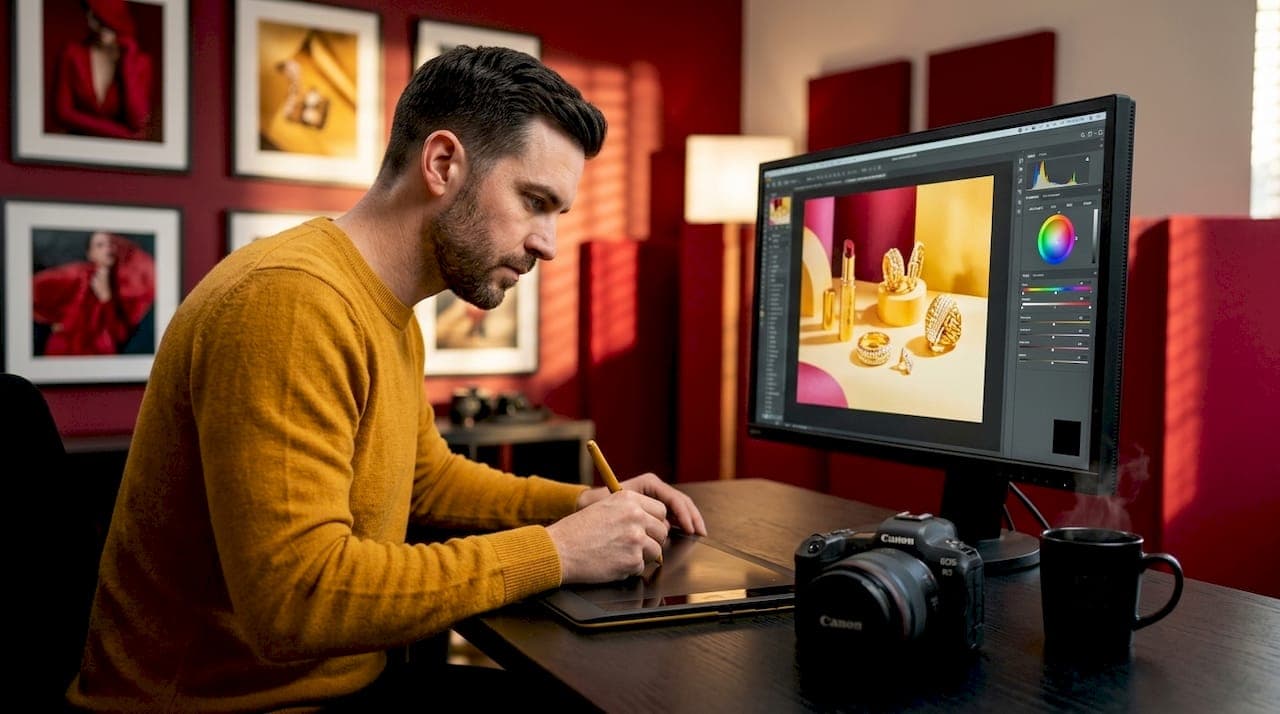
Commercial photography is defined as the practice of producing images created specifically to promote, advertise, or sell a product, service, or brand. Unlike personal or fine art photography, every frame in a commercial shoot has a business objective behind it. Whether you are a startup building your first product catalog or a marketing director commissioning a national ad campaign, understanding how commercial and advertising photography works will directly shape the quality and effectiveness of your visual assets.
What is commercial photography and how is it defined?
The commercial photography definition, at its core, is straightforward: images made for commercial use. That means the photograph exists to generate revenue, drive awareness, or support a transaction. Adobe Photoshop, professional lighting rigs, and post-production workflows are all standard tools in this field, but the defining factor is always intent and usage, not equipment. A technically stunning portrait shot for a magazine editorial is not commercial photography. That same portrait shot for a skincare brand's paid ad campaign is.
The commercial photography definition also carries legal weight. Commercial images used in ads require broader licensing than editorial images, and the rights granted to the client determine where, how long, and in what context the image can appear. This distinction matters enormously when you are budgeting a campaign or negotiating with a commercial and advertising photographer. Getting the licensing wrong is not a technicality. It is a legal and financial exposure.
How does commercial photography differ from editorial photography?
The most practical way to understand commercial photography is to compare it directly with editorial photography, since the two are frequently confused. Both involve professional photographers, professional lighting, and high-quality output. The difference lies in purpose, licensing, and legal requirements.
Commercial photography supports marketing and sales, while editorial photography is produced for informational or storytelling purposes, such as news articles, documentary features, or educational content. A photo of a chef plating a dish for a restaurant's website is commercial. The same photo published in a food magazine profile of that chef is editorial. The visual result may look identical. The rights, costs, and legal obligations are entirely different.
One of the most misunderstood areas is model and property releases. Identifiable people in commercial photography require signed model releases before their image can be used in advertising or product promotion. Editorial photography, by contrast, operates under broader fair use protections and often does not require a release. The same applies to private property. Shoot a building for a real estate ad and you likely need a property release. Shoot it for a news story and you generally do not.
Pro Tip: Before signing any photography contract, confirm whether the license covers the specific channels you plan to use, including paid social, print, out-of-home advertising, and packaging. Each channel may require separate rights, and licensing mistakes in commercial work can result in costly legal disputes.
| Aspect | Commercial photography | Editorial photography |
|---|---|---|
| Primary purpose | Advertising, marketing, and sales | News, storytelling, and education |
| Licensing scope | Broad, channel-specific, often exclusive | Restricted, non-commercial use only |
| Model releases required | Yes, for identifiable individuals | Generally not required |
| Property releases required | Yes, for private locations | Usually not required |
| Typical cost | Higher due to usage rights | Lower, rights are more limited |
What are the primary types of commercial photography?
Commercial photography includes many sub-types, each defined by the business context it serves rather than by a particular visual style. Understanding these categories helps you identify which type of commercial and advertising photography your project actually requires.
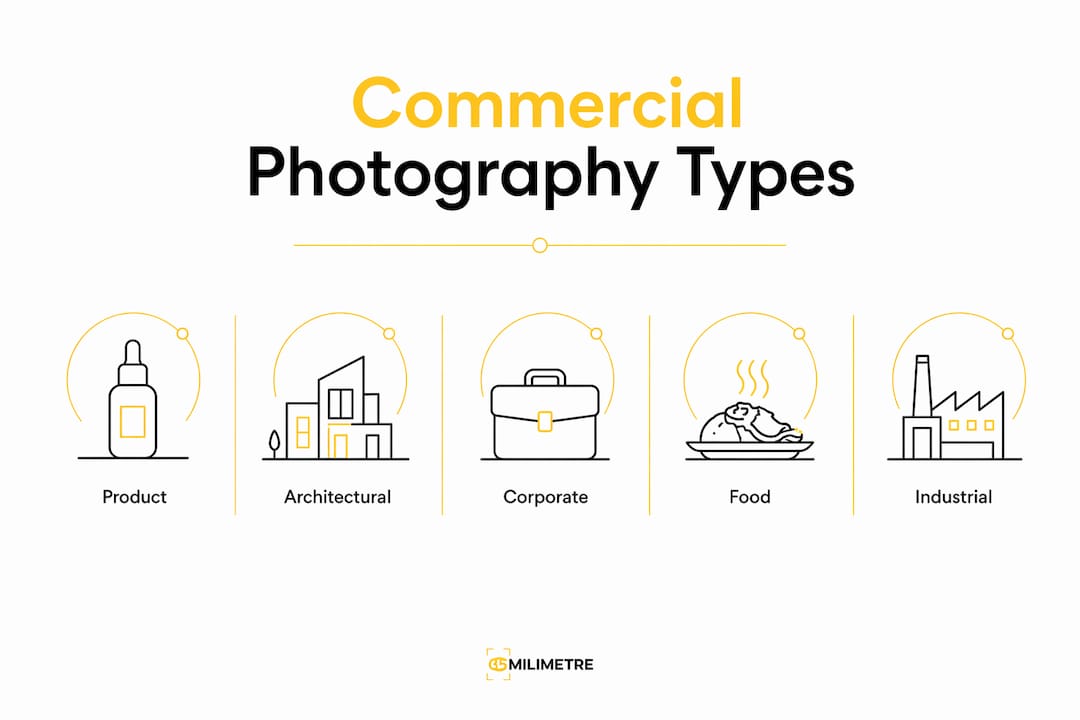
Product photography is the most widely recognized sub-type. It covers everything from simple white-background e-commerce shots to complex lifestyle compositions where the product is shown in use. Brands like Apple and Nike invest heavily in product photography because one still frame stands in for the entire physical experience a customer cannot yet have.
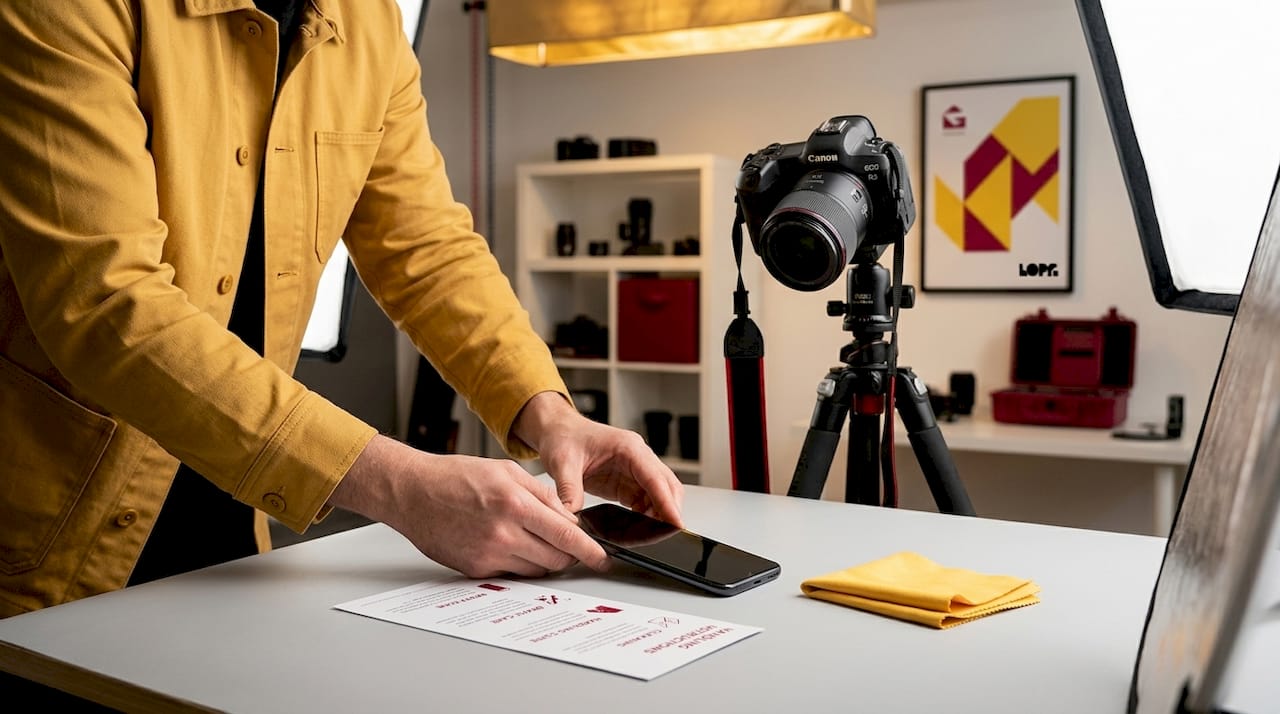
Commercial architectural photography documents buildings, interiors, and spaces for commercial purposes. Real estate developers use it to market properties. Hotels use it for booking platforms. Architects use it for portfolio and press materials. Commercial architectural photography requires specialized wide-angle lenses, controlled lighting, and precise vertical correction in post-production to present spaces accurately and attractively.
Corporate and headshot photography covers executive portraits, team photos, and event documentation used in annual reports, LinkedIn profiles, press releases, and company websites. These images communicate professionalism and build trust with clients, investors, and recruits.
Food photography serves restaurants, packaged goods brands, and delivery platforms. A well-executed food image on a menu or app listing directly influences purchase decisions. The gap between a phone snapshot and a professionally lit food photograph is measurable in conversion rates.
Industrial and construction photography documents manufacturing facilities, construction progress, and heavy equipment for investor relations, safety documentation, and B2B marketing materials.
Real estate marketing photography is a distinct commercial sub-genre focused on residential and commercial property listings. These images are delivered as high-resolution digital files optimized for multi-channel use across listing platforms, print brochures, and social media.
How does a commercial photography project typically work?
A professional commercial photography project follows a structured workflow, and understanding each stage helps you collaborate more effectively with your photographer or post-production partner.
-
Client consultation and brief. The project begins with a detailed conversation about goals, brand guidelines, target audience, and deliverables. A clear brief prevents costly reshoots and misaligned expectations.
-
Pre-production planning. This stage covers location scouting, prop sourcing, model casting, and the creation of a detailed shot list. Shot lists and standardized art direction including lighting setups and color references are critical for brand consistency, especially across multi-day shoots or recurring campaigns.
-
On-set production. The shoot itself involves controlled lighting, professional styling, and careful composition. A commercial and advertising photographer directs talent, manages the set, and captures the approved shots from the brief.
-
Post-production. This is where raw images become polished marketing assets. Post-production in commercial photography often requires more time than the shoot itself. Retouching, color grading, compositing, background replacement, and image enhancement all happen at this stage. For a product campaign, this might mean removing surface imperfections, perfecting reflections, or compositing the product into a lifestyle scene.
-
Review and approval. The client reviews selects, requests revisions, and approves final images. A well-run ad agency visual workflow builds structured feedback rounds into the timeline to avoid scope creep.
-
Final delivery. Finished files are exported in the formats and resolutions required for each channel, whether that is a 300 DPI print file, a compressed web JPEG, or a layered PSD for future adaptation.
Pro Tip: Request a shot list sign-off from all stakeholders before the shoot date. Decisions made on set under time pressure are almost always more expensive than decisions made in pre-production.
Why does commercial photography matter for marketing and branding?
Professional commercial imagery does more than make a brand look polished. It directly influences consumer behavior and brand perception at every touchpoint. Images must be delivered as high-resolution digital files suited for multi-channel campaigns, because the same asset will appear on a website, a paid social ad, a printed brochure, and potentially out-of-home advertising. Consistency across those channels is what builds brand recognition over time.
The misconception many businesses hold is that technically good photography is sufficient. It is not. A photograph can be sharp, well-lit, and beautifully composed and still fail commercially if it does not communicate the right message to the right audience. Commercial photography succeeds when creative skill meets commercial discipline, meaning the image is not just attractive but strategically aligned with the brand's positioning and the campaign's conversion goals.
Post-production is as critical as the shoot itself in creating images that perform across channels. Color grading ensures visual consistency. Retouching removes distractions. Compositing allows creative executions that would be impossible or prohibitively expensive to achieve purely on set. For brands operating across digital and print simultaneously, the post-production stage is where the visual strategy is actually realized.
| Marketing channel | Role of commercial photography |
|---|---|
| E-commerce product pages | Drives purchase decisions through clear, trust-building imagery |
| Paid social advertising | Stops the scroll and communicates brand value in under two seconds |
| Print and out-of-home | Requires high-resolution files with precise color accuracy |
| Corporate websites | Establishes credibility and brand identity for new visitors |
Key takeaways
Commercial photography is the production of images built around a specific business objective, and its value to a brand depends equally on creative execution, legal compliance, and post-production quality.
| Point | Details |
|---|---|
| Definition of commercial photography | Images created specifically to promote, advertise, or sell a product, service, or brand. |
| Legal requirements matter | Model and property releases are required for commercial use; licensing scope determines where images can appear. |
| Multiple sub-types exist | Product, architectural, corporate, food, industrial, and real estate photography all fall under the commercial umbrella. |
| Post-production is not optional | Retouching, color grading, and compositing transform raw shots into polished, channel-ready marketing assets. |
| Strategy drives results | Technically strong images fail commercially without alignment to brand positioning and campaign goals. |
What we have learned from two decades of commercial post-production
The most common mistake we see from businesses investing in commercial photography for the first time is treating the shoot as the finish line. They budget for the photographer, the location, and the talent, and then they are surprised when the raw files do not look like the reference images they approved in the brief. The gap between a raw commercial photograph and a finished marketing asset is almost always closed in post-production, and that work takes real time and real skill.
We have worked on campaigns where the photography itself was executed flawlessly, but the images sat unusable for weeks because no one had planned the retouching and color grading pipeline. On the other side, we have seen modest shoots produce exceptional campaign assets because the post-production was treated as a core part of the creative process from day one. The brands that get the most from their commercial photography investment are the ones that plan the full pipeline, not just the shoot day.
The other thing worth saying directly: understanding image usage rights before you commission work is not a legal formality. It determines your actual budget. A photograph licensed for a single regional print run costs far less than one licensed for global digital and print use. If you do not clarify this upfront, you will either overpay or find yourself renegotiating rights after the fact, which is always more expensive. Plan the licensing the same way you plan the shot list.
— 35mm
Take your commercial visuals further with 35milimetre
At 35milimetre, we work directly with brands, ad agencies, and photographers to handle the post-production side of commercial photography at a professional level. From retouching and color grading to compositing and CGI integration, our team in Istanbul has spent over two decades turning raw commercial shoots into finished assets that perform across every channel. If your brand is investing in commercial and advertising photography and you want the post-production to match the quality of the shoot, explore our retouching and post-production services and see what a difference the right finishing work makes. You can also learn more about how post-production supports campaigns at the agency level.
FAQ
What is the commercial photography definition in simple terms?
Commercial photography is any photography produced with the intent to promote, advertise, or sell a product, service, or brand. The defining factor is the business purpose behind the image, not the subject matter or visual style.
What does a commercial and advertising photographer do?
A commercial and advertising photographer plans, shoots, and delivers images aligned with a client's marketing objectives. Their work spans pre-production planning, on-set direction, and coordination with post-production teams to produce campaign-ready assets.
What types of commercial photography exist?
Commercial photography sub-types include product photography, commercial architectural photography, corporate headshots, food photography, industrial photography, and real estate marketing photography. Each serves a distinct business use case.
Do commercial photos require model releases?
Yes. Identifiable individuals in commercial photography require signed model releases before their likeness can be used in advertising or promotional materials. This is a legal requirement, not a best practice.
How long does a commercial photography project take?
Timeline varies by project scope, but most commercial shoots involve pre-production planning of several days to weeks, a shoot day or multiple days, and a post-production phase that can equal or exceed the shoot time in hours. Post-production alone is often the longest stage for complex campaigns.