
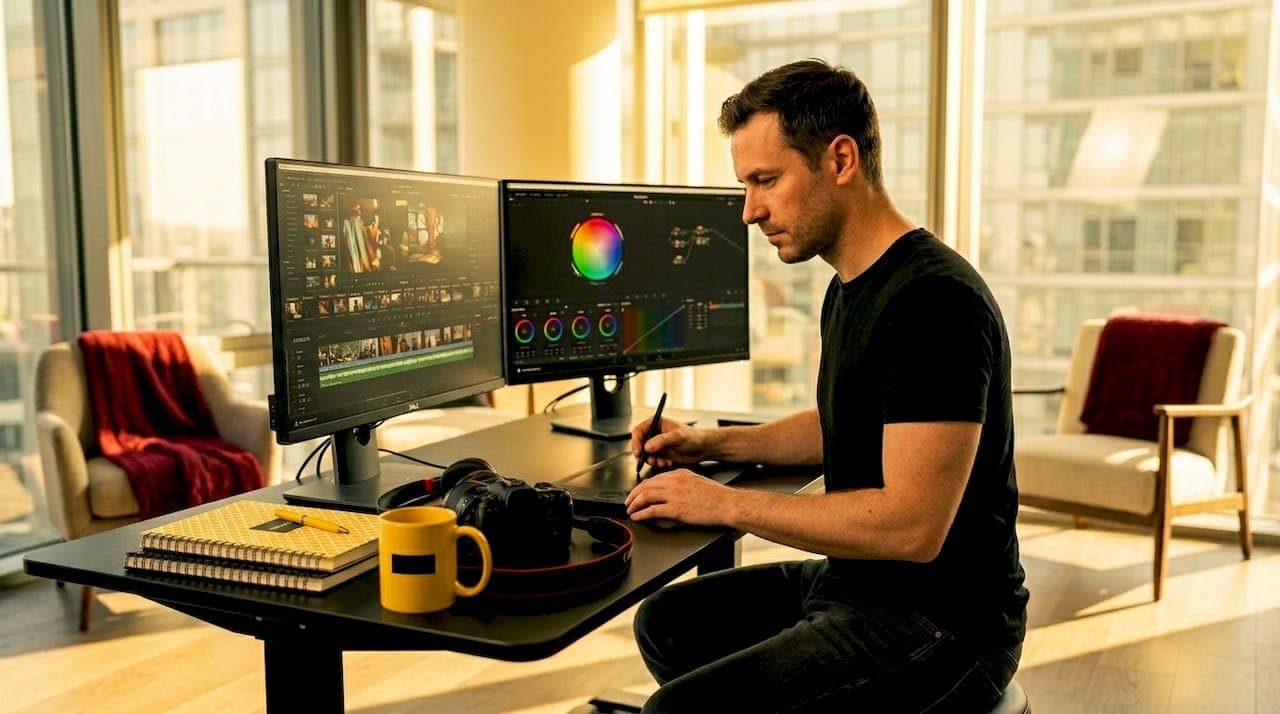
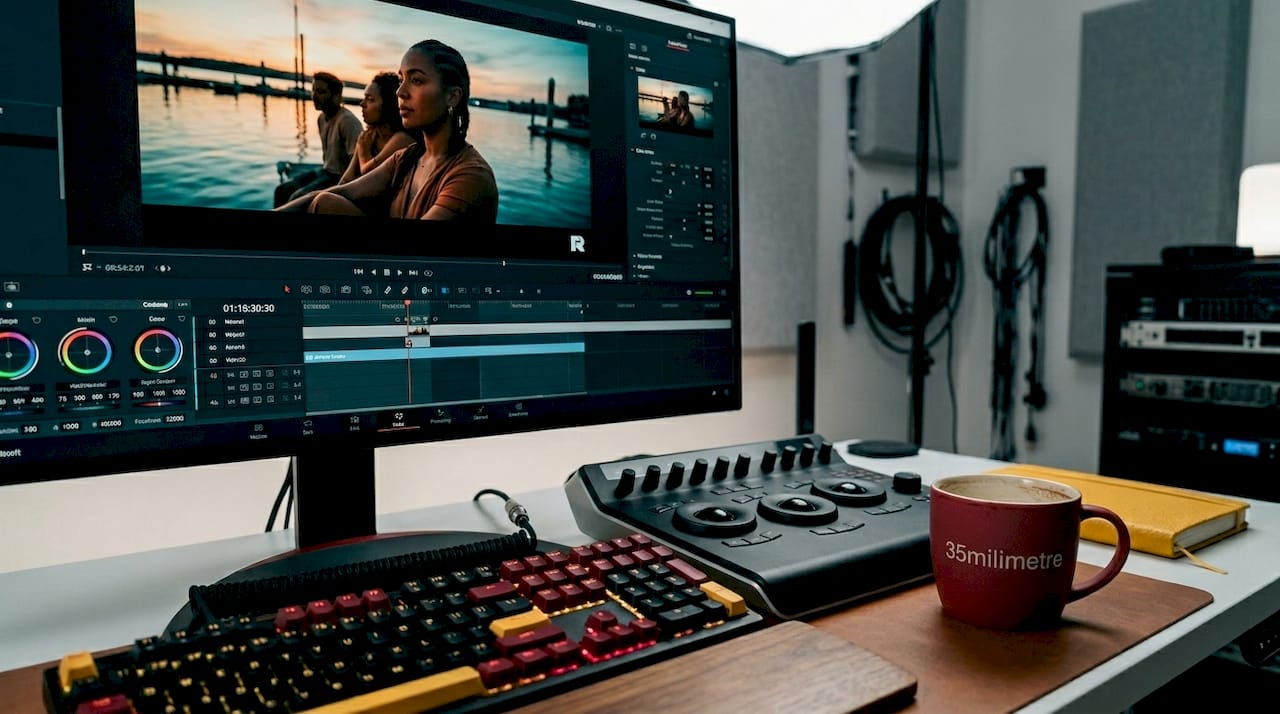
Post-production style is the purposeful combination of color grading, audio design, motion graphics, and visual effects that defines the final look and feel of any visual project. The best examples of post-production styles go far beyond a single filter or preset. They represent a repeatable creative system, one where multiple decisions compound across tone, color, sound, and motion to produce a distinctive result. Tools like DaVinci Resolve, After Effects, Cinema 4D, and Nuke each play a specific role in that system. Understanding these styles gives you the vocabulary and the framework to make deliberate choices rather than reactive ones.
1. What are the most popular color grading styles in post-production?
Color grading is the creative layer applied after color correction, which is the technical process of fixing exposure, white balance, and noise. Color correction fixes technical issues while color grading creates deliberate aesthetics such as warm, cool, or gritty moods. Skipping that distinction is one of the most common mistakes in post-production. You cannot grade your way out of a technically broken image.
The six most recognized grading looks in contemporary production are cinematic teal-and-orange, moody matte, bright and airy, dark and moody, minimalist clean, and cross-processed creative. Each one targets a specific emotional register. Teal-and-orange works by separating skin tones (orange) from environmental tones (teal), creating natural contrast without heavy saturation. It dominates commercial automotive and technology campaigns precisely because it reads as premium without feeling cold.
| Style | Visual character | Common use case |
|---|---|---|
| Teal-and-orange | Warm skin, cool environment, high contrast | Automotive, action, commercial |
| Moody matte | Lifted blacks, desaturated midtones, film-like | Drama, editorial, fashion |
| Bright and airy | High exposure, pastel tones, soft shadows | Lifestyle, beauty, e-commerce |
| Dark and moody | Crushed blacks, low saturation, heavy shadows | Thriller, noir, luxury brand |
| Minimalist clean | Neutral tones, accurate color, subtle contrast | Corporate, documentary, tech |
| Cross-processed | Shifted hue curves, unexpected color splits | Music video, art, experimental |
Photography-inspired looks like vintage film grain, high-key white, low-key black, and HDR all translate directly into video grading. Vintage film emulation, for example, adds grain structure and halation to digital footage, giving it the optical character of 35mm stock. This is not nostalgia for its own sake. It adds texture that makes compressed digital footage feel more tactile and less clinical.
Pro Tip: Always apply a primary color correction node before any creative grade in DaVinci Resolve. Grading on top of a corrected, normalized image produces far more consistent results across a scene than grading raw, unbalanced footage.
2. How audio post-production styles shape narrative and emotion
Audio post-production is the discipline that shapes how a project sounds after picture lock, and it covers dialogue editing, Foley, ADR, sound design, and final mixing. Audio post-production style is shaped by each of these elements working in sequence, not in isolation. A project with immaculate visuals but poorly edited dialogue will always feel unfinished. The ear is less forgiving than the eye.
Dialogue editing is the foundation. It removes unwanted noise, smooths room tone inconsistencies between cuts, and ensures every line reads clearly in the mix. Dialogue clarity is the foundation for all mixing decisions, a principle Skywalker Sound applies consistently across feature productions. Music and effects are balanced around it, not the other way around.
Foley is the most labor-intensive audio post technique. It involves live synchronized recording of footsteps, clothing rustle, and prop sounds performed in real time to picture. The distinction between Foley and a generic sound effects library is significant. Foley is custom, matched to the specific actor, surface, and movement on screen. That specificity is what creates genuine immersion rather than a generic approximation of reality.
Sound design extends beyond Foley into the construction of entirely new sonic environments. A sci-fi project might require designed sounds that have no real-world reference. A documentary might use natural ambience layered with subtle tonal beds to create unease or warmth. The final mix and mastering stage then balances all these elements, setting loudness standards for broadcast, streaming, or cinema delivery.
Pro Tip: Record 30 to 60 seconds of room tone at each location during production. This gives your dialogue editor the raw material to fill gaps between cuts and maintain acoustic continuity across the entire scene.
3. What role do motion graphics and VFX styles play in modern post-production?
Motion graphics and visual effects define post-production identity in ways that color grading alone cannot. They establish a design language, a visual grammar that tells the audience what kind of world they are watching. The animated holographic UI in Dimension on Mercy is a precise example. That project used Cinema 4D and Nuke to build a layered holographic interface that functioned as both a narrative device and a stylistic signature.
The pipeline behind that work illustrates how motion graphics production actually operates at a professional level:
- Editorial locks the cut scene by scene, using placeholder cards where VFX shots will eventually sit.
- The motion graphics team builds assets in Cinema 4D, iterating on design language and animation style.
- Compositing in Nuke integrates the CG elements with live footage, matching light, grain, and color.
- A final grade in DaVinci Resolve unifies the composited shots with the rest of the edit.
This coordinated pipeline approach reduces latency between departments and allows creative decisions to be tested and refined without restarting the entire sequence. After Effects handles the lighter motion graphics work, including title sequences, lower thirds, and kinetic typography, while Nuke handles the heavier compositing tasks that require precise node-based control.
The style created through motion graphics is not just aesthetic. It communicates genre, tone, and production value in the first few seconds of a project. A flat, minimalist title card reads differently from a particle-driven, three-dimensional sequence. Both are valid choices. The question is whether the choice is intentional and consistent with the rest of the post-production treatment.
4. Iconic film post-production styles and how they are achieved
Film noir is one of the most technically specific grading styles in cinema, and its modern interpretation requires precision rather than heavy-handed contrast. Modern film noir grading uses a split palette of cool shadows and warm practical lights, muted saturation in the midtones, and textured grain to evoke the genre's signature mood. The goal is controlled separation, not simply dark footage.
Several technical principles define this look:
- Shadow control: Lift the blacks slightly rather than crushing them completely. True noir has detail in the shadows, not a void.
- Color separation: Cool blues and teals in shadow areas contrast with amber and tungsten warmth in highlights, creating depth without saturation.
- Grain structure: Add film grain that matches the shadow density, heavier in dark areas and lighter in highlights, mimicking the behavior of actual film stock.
- Skin tone protection: Use a qualifier or mask to protect skin tones from the desaturation applied to the rest of the frame.
"The grade should feel like the story is being told through the light, not just the image." This principle applies equally to noir, to naturalistic drama, and to high-contrast commercial work. The grade is not decoration. It is a narrative instrument.
Contemporary grading across all genres faces the same core challenge: maintaining consistency across shots filmed at different times, in different locations, and under different lighting conditions. Shot matching in DaVinci Resolve, using scopes and reference stills rather than relying on memory, is the technical discipline that keeps a style coherent from the first cut to the last. For visual storytelling through post-production, consistency is not a constraint. It is the foundation that makes bold creative choices land correctly.
5. How to choose the right post-production style for your project
Choosing a post-production style is not a purely aesthetic decision. It is a strategic one that should be made before the edit begins, not after. The style needs to serve the narrative, the brand identity, the intended platform, and the emotional response you want to produce in the viewer.
Start with color correction before any creative grading. Achieving consistent visual style requires technical correction first, then creative grading tailored to the specific project. This sequence is non-negotiable. A grade applied to uncorrected footage will shift unpredictably across shots and undermine the consistency you are trying to build.
Match the style to the medium. A bright-and-airy pastel grade that works beautifully for a lifestyle brand on Instagram will feel tonally wrong for a corporate documentary intended for conference presentation. A dark-and-moody look that suits a luxury automotive film may read as oppressive on a product e-commerce page. Platform context shapes style choice as much as creative preference does.
Integrate audio, motion graphics, and color decisions as a unified system rather than treating them as separate departments. The brand video post-production tips principle applies here: every element of the post-production treatment should reinforce the same emotional register. A warm, analog-feeling grade paired with a clean, digital sound design creates a disconnect that audiences feel even if they cannot name it.
Pro Tip: Build a one-page style reference before post-production begins. Include three to five reference images for color, two to three audio references for tone and mix style, and one motion graphics reference for type and animation language. Share it with every department working on the project.
Key takeaways
Post-production style is a system of compounding decisions across color, audio, motion graphics, and VFX. No single element defines the style. All of them together do.
| Point | Details |
|---|---|
| Correction before grading | Always fix technical issues before applying any creative color treatment. |
| Style as a system | Post-production style is a repeatable recipe across multiple disciplines, not a single effect. |
| Audio clarity first | Dialogue editing is the foundation of every audio mix; music and effects are built around it. |
| Pipeline coordination | Separating editorial, VFX, and motion graphics stages reduces errors and speeds up iteration. |
| Match style to platform | The right grade for a cinema release will not automatically work for social media or e-commerce. |
What we have learned from two decades of post-production work
The conversation about post-production styles often focuses on tools and presets, and that focus misses the point. After more than twenty years working across commercial, automotive, and technology projects at 35milimetre, the clearest lesson we have learned is this: the style that works is the one that disappears. When color grading, sound design, and motion graphics are doing their job correctly, the viewer does not notice them. They simply feel the intended emotion and trust the world they are watching.
The trend we are watching most closely in 2026 is AI-assisted grading, specifically the use of tools that can match shots automatically and suggest grade starting points based on reference images. These tools are genuinely useful for reducing technical labor. They are not useful for making creative decisions. The judgment about which emotional register a scene should occupy still requires a human with context, taste, and an understanding of the full project arc.
The other shift worth noting is the collapse of the boundary between still image post-production and video post-production. At 35milimetre, we increasingly apply grading logic developed for motion work to product photography and commercial retouching, and vice versa. The disciplines are converging, and the professionals who understand both will have a significant advantage in the years ahead.
— 35mm
Take your post-production further with 35milimetre

At 35milimetre, we work across the full spectrum of post-production, from color grading and compositing to motion graphics and AI-enhanced imagery. Our Istanbul-based team has spent over two decades delivering high-end visuals for technology and automotive brands, working directly with ad agencies, photographers, and production companies who need results that hold up at the highest level. If you are building a project that requires a specific visual style and the technical discipline to execute it consistently, our professional post-production services are built for exactly that kind of work. Reach out to discuss your project and we will show you what a well-defined post-production style can do for your creative output.
FAQ
What is the difference between color correction and color grading?
Color correction is the technical process of fixing exposure, white balance, and noise to create a neutral, consistent baseline. Color grading is the creative layer applied afterward to establish mood, tone, and visual style.
What are the most common examples of post-production styles?
The most recognized styles include cinematic teal-and-orange, moody matte, bright and airy, dark and moody, minimalist clean, and cross-processed looks, each suited to different genres and platforms.
How does Foley differ from standard sound effects?
Foley is performed live, synchronized to picture, and recorded specifically for the footage being edited. Standard sound effects libraries provide generic recordings that are not matched to the specific actions, surfaces, or actors on screen.
How do motion graphics establish post-production style?
Motion graphics create a design language through typography, animation style, and visual hierarchy that signals genre, tone, and production value within the first seconds of a project. Tools like After Effects and Cinema 4D are the primary production environments for this work.
How do I choose the right post-production style for my project?
Start with color correction before any creative grading, then match your style choice to the narrative, the brand identity, and the delivery platform. Build a style reference document covering color, audio, and motion graphics before post-production begins.