
Outsourcing post-production makes sense for most agencies and brands once image volume or specialization outpaces internal capacity, and the smartest approach right now is a hybrid workflow: AI handles the repetitive baseline work, and human artists finish the frames that carry brand weight. A boutique studio like 35milimetre exists precisely for that second half of the equation, where campaign-grade retouching and compositing need a trained eye, not just software.
TL;DR:
- Outsourcing post-production is most cost-effective for teams processing over 50 images per month, especially when high-volume or complex tasks are involved.
- Specialized services like beauty retouching, complex compositing, CGI rendering, and hero asset production tend to be more expensive and require clear technical briefs.
- Effective budgeting depends on project complexity, with typical campaigns costing around 400 dollars for 100 images, including baseline corrections and hero work.
- A strong, detailed brief with usage, technical specs, and style references can significantly reduce revision cycles and control costs.
- Combining AI for bulk tasks with human finishing for hero shots offers the best efficiency, but brand-critical work benefits from boutique studios with dedicated senior artists.
Table of Contents
- When Does Outsourcing Post-Production Make Sense?
- What Services Do Agencies Typically Outsource?
- How Much Should You Budget for Outsourced Post-Production?
- Building a Brief That Actually Works the First Time
- Protecting Your IP and Quality When You Outsource
- Why Hybrid AI and Human Workflows Win on Commercial Work
- Why Boutique Studios Still Win the Brand-Critical Work
- Getting Started with 35milimetre
- Sources
When Does Outsourcing Post-Production Make Sense?
There's a rough tipping point where outsourcing post-production stops being optional and starts being obvious: somewhere around 50 to 100 images a month. Below that, an in-house designer with solid Photoshop skills can usually keep pace. Above it, the math shifts fast, because every hour your team spends on routine retouching is an hour they aren't spending on concepts, client strategy, or the campaign work that actually needs their judgment.
Volume isn't the only trigger. Certain types of work justify outsourcing even at low volume, because they demand specialist skill your team likely doesn't have on staff:
- Beauty and skin retouching for hero campaign images
- Complex compositing (multiple exposures, product plus environment, group shots)
- CGI rendering for products that don't exist yet or can't be photographed cheaply
- Packaging mockups and shelf-ready visuals
- Any image that will run as a hero asset across paid media
The vendor type should match the job. One-off tests suit freelance platforms; consistent monthly volume favors a specialized studio, and matching a distinct visual signature across a campaign works best with a dedicated team rather than a rotating pool of freelancers. Keep final creative sign-off in-house regardless of who does the pixel-level work. That approval layer is where brand consistency actually gets protected.
What Services Do Agencies Typically Outsource?
Post-production breaks down into service buckets, and each one carries a different price ceiling depending on how much judgment it requires. Color correction and baseline exposure fixes sit at the bottom. Beauty retouch, background compositing, and CGI rendering sit near the top.
- Color corrections and basic exposure fixes
- Skin and beauty retouching
- Background removal and replacement
- Compositing (combining multiple source images into one frame)
- CGI rendering and 3D product visualization
- Packaging mockups and hero polish for advertising
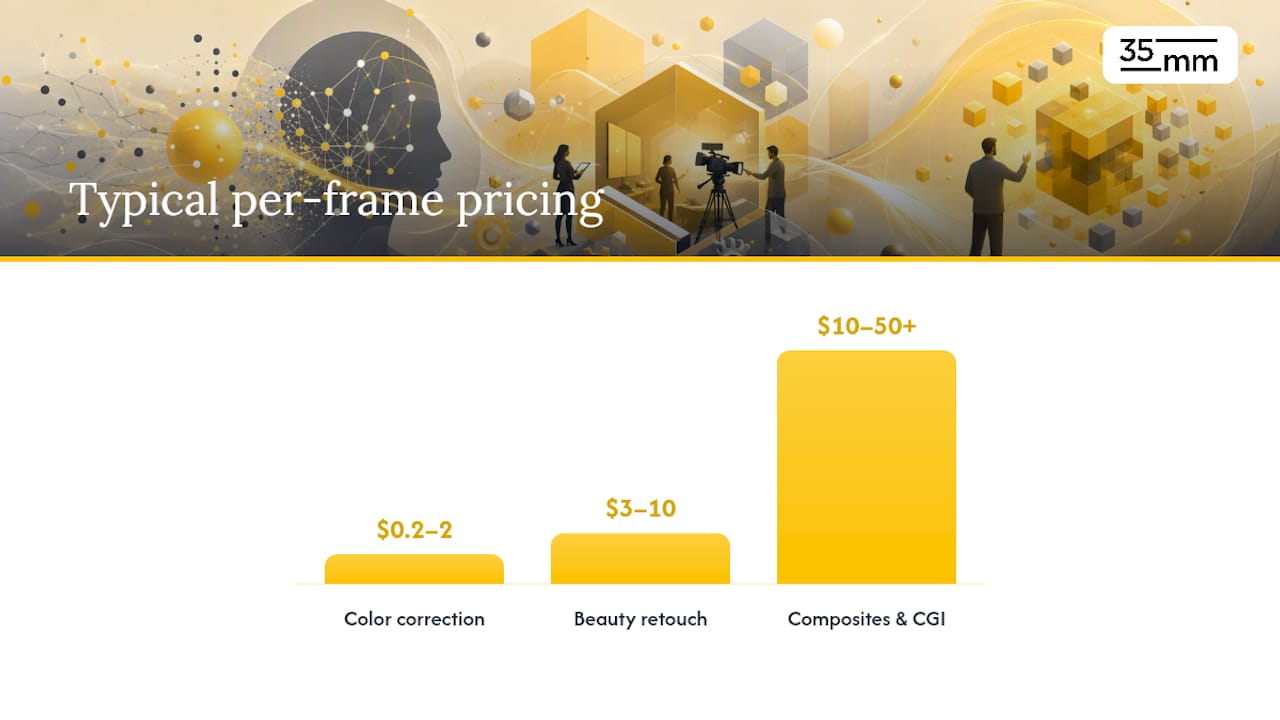
Pricing reality check: basic corrections typically run $0.20 to $2 per image, beauty retouch lands in the $3 to $10 range, and complex composites or CGI work can run $10 to $50 or more per frame depending on how much manual reconstruction is involved.
What pushes a job into a higher band isn't usually the subject matter. It's source-file condition (a poorly lit raw file needs more correction than a studio-controlled shot), whether the frame is a hero image destined for a billboard versus a bulk catalog shot, and how many revision rounds the brief anticipates. A single hero frame with three rounds of client feedback can cost more than fifty clean product shots combined.
How Much Should You Budget for Outsourced Post-Production?
Pricing models vary, and picking the wrong one for your project type is how budgets blow up mid-campaign. The four common structures are per-image, per-hour, monthly retainer, and flat project fee.
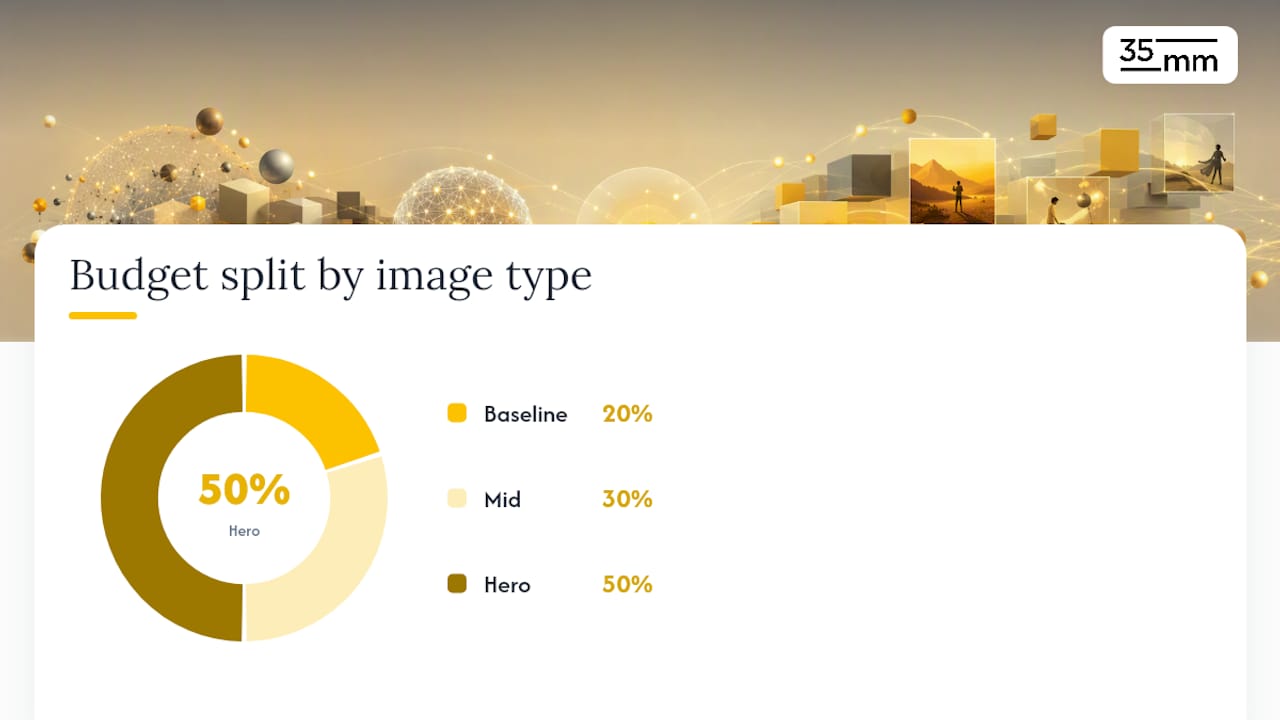
Here's how the math plays out on a mixed-complexity 100-image drop, a fairly typical campaign scope:
- 80 baseline images at roughly $1 each (color correction, minor cleanup) = $80
- 15 mid-complexity images at roughly $8 each (retouching, background work) = $120
- 5 hero frames at roughly $40 each (full compositing, skin work, brand color matching) = $200
- Total: around $400, before rush fees or extra revision rounds
Rush turnaround typically adds 20 to 50% to the base rate, since it forces a vendor to reprioritize other clients' queues. If your monthly volume regularly exceeds a few hundred images and you're paying rush fees more often than not, the headcount math starts favoring a full-time in-house hire over per-project outsourcing.
Building a Brief That Actually Works the First Time
The single biggest lever for controlling cost and quality is the brief itself. A strong brief with visual references, usage context, and explicit retouch limits eliminates most of the back-and-forth that inflates both timelines and invoices.
Include these elements every time:
- Final usage (paid social, print, packaging, web) since output specs differ
- Crop ratios and aspect requirements per platform
- Color reference swatches or Pantone values for brand accuracy
- Sample "before and after" outputs showing the target look
- Explicit limits on retouching (how much skin smoothing is too much)
On the technical side, specify color profile (sRGB for web, Adobe RGB or ProPhoto for print), resolution, file naming conventions, and whether you need layered masters alongside flattened exports. Documented technical specs prevent the single most common cause of rework: a vendor delivering the wrong color space or a resolution that falls apart at billboard size.
Lock the first batch, typically the first 10 to 20 hero frames, as a style baseline before bulk processing begins, and get sign-off in writing before the vendor touches the rest of the set. Briefs that show side-by-side "acceptable versus unacceptable" edit examples cut revision cycles dramatically, because the vendor sees your standard instead of guessing at it.
Pro Tip: Build a shared asset hub (Dropbox, Frame.io, or a client portal) with one folder structure and a running changelog. Scattered email threads with attachments are the fastest way to lose track of which version is final.
Protecting Your IP and Quality When You Outsource
Contracts matter more than most teams realize until something goes wrong. Specify work-for-hire terms explicitly rather than assuming a licensing agreement transfers full ownership. NDAs and secure file transfer (not consumer cloud links) protect unreleased product imagery and campaign concepts before launch.
- Confirm work-for-hire status in writing, not just "rights included"
- Require NDAs before sharing pre-launch product or campaign assets
- Set a revision policy with a defined number of included rounds
- Establish one clear acceptance criterion: does the delivered file match the locked style baseline?
Avoid single-vendor dependency for anything mission-critical. A basic contingency plan, a second qualified vendor on standby, or an in-house artist who can cover gaps protects your timeline if a primary partner has capacity issues during a launch window.
Why Hybrid AI and Human Workflows Win on Commercial Work
AI handles bulk baselining well: culling, exposure correction, and simple background removal on high volume. It fails at anything requiring judgment, brand color accuracy on skin tones, or complex composites where lighting has to match across layers.
The workflow that works: AI processes the bulk pass, a senior artist locks the first batch, then human finishing handles hero frames and anything touching brand identity. Testing on complex product shots showed roughly a 28% reduction in retouching time using this combination, without sacrificing the finish quality AI alone can't deliver. Contractors scale the volume peaks; the core team owns the craft.
Why Boutique Studios Still Win the Brand-Critical Work
Scale solves volume. It doesn't solve stewardship. When a hero image is going to carry a launch campaign, agencies consistently choose a boutique studio where senior artists touch the file directly, not a high-throughput pipeline where a junior editor works from a template.
That's the practical limit of scale: throughput and nuance trade off against each other. A studio built around three or four artists, rather than a rotating bench of hundreds, can hold a brand's visual signature across a full campaign cadence because the same eyes review every frame. Agencies increasingly split their work this way, routing bulk catalog images to faster, cheaper pipelines while reserving hero assets for a partner who treats each frame as its own creative decision. That split isn't a compromise. It's how creative ownership survives outsourcing at all.
— 35mm
Getting Started with 35milimetre
35milimetre is the alternative to a commodity editing pipeline for agencies who need hero images to actually look like hero images, not templated output run through a queue. Send raw sample frames, your intended usage, and a rough split between bulk and hero shots, and you'll get a scoped quote back rather than a generic per-image rate card.
The first 72 hours typically produce a sample batch against your brief plus a short style guide the whole team can reference, so everyone knows what "on brand" means before bulk processing starts. Scope changes and volume spikes get handled by pulling in additional artists from our network, without resetting the creative standard your first batch already locked in. If a campaign is coming up and the visuals need to carry real weight, start the conversation with 35milimetre and send over your first set of reference frames.