
The five dominant digital imagery trends shaping commercial visual content in 2026 are: imperfect/authentic aesthetics, literal situational storytelling, cinematic mood lighting, hybrid AI-human workflows, and process-first sequence storytelling. Your single most important action right now is to update your briefs and acceptance criteria to require human-authentic signals and sequence-based deliverables before any project goes into production.
Use this checklist as a starting point for any 2026 brief:
- Require at least one unedited RAW frame per deliverable set as a texture verification anchor
- Specify visible human-authentic markers: natural grain, candid framing, or tactile close-ups
- Request a minimum 3-image sequence (scene, action, detail) rather than a single hero shot
- Include cinematic lighting notes: RGB panel atmospherics, directional hard light, or projection textures
- Define permitted AI uses explicitly (culling, cleanup, background extension only; no generative substitution for hero subjects)
Table of Contents
- What are the top digital imagery trends for 2026?
- What should you actually commission for a 2026 campaign?
- Which production techniques should you ask for in your scope of work?
- What are the legal and brand-safety risks when commissioning imagery in 2026?
- How does 35milimetre apply these trends in commercial work?
- Key Takeaways
- The trend that actually matters most in 2026
- Work with 35milimetre on your next visual campaign
- Useful sources
What are the top digital imagery trends for 2026?
The visual content trends shaping commercial work this year share one underlying logic: audiences have grown fluent enough with AI-generated imagery to detect its absence of humanity, and they trust brands less for it.
Imperfect and authentic aesthetics
Visible imperfection is now a deliberate authenticity signal. Slight misfocus, visible pores, natural grain, and candid emotional moments are proof of human authorship precisely because AI saturation has made technical perfection indistinguishable from synthetic output. For brands, this means over-retouched, flawless imagery can actively erode trust rather than build it.
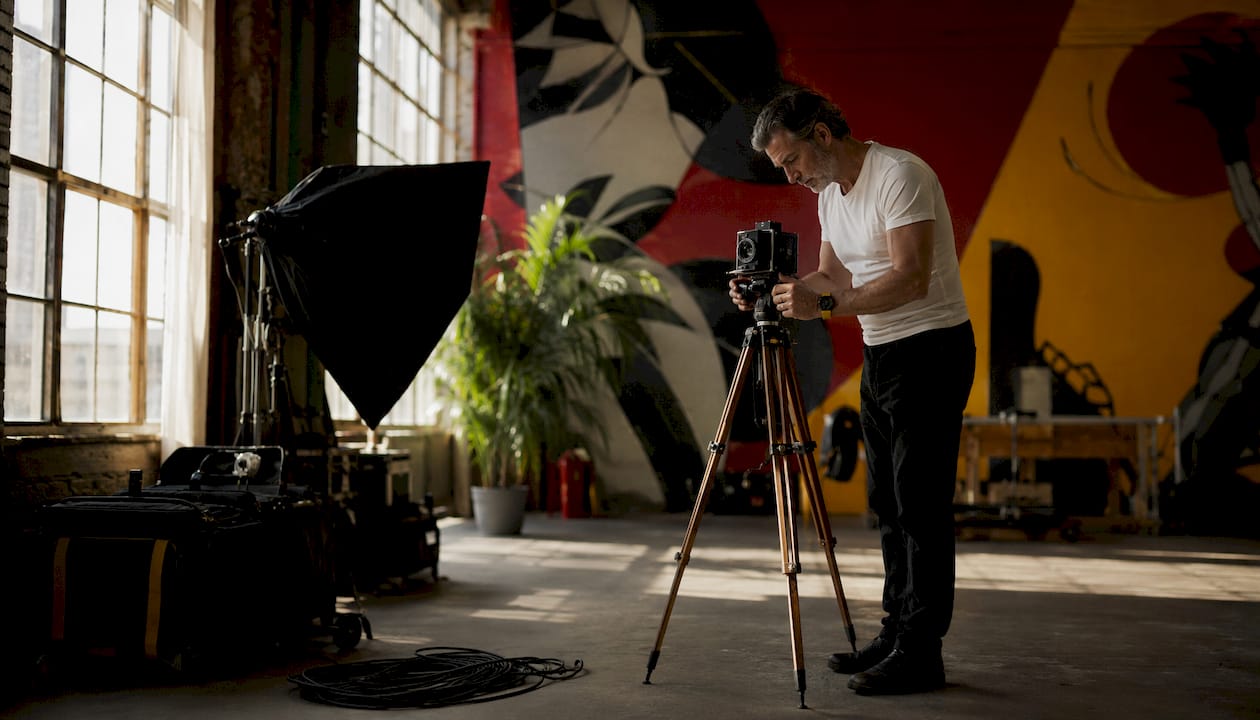
Brief example: "Preserve natural skin texture and film grain throughout; do not smooth to clinical perfection."
Literal situational storytelling
Abstract "corporate climber" stock aesthetics are declining. Search and download behavior shows that situational, process-driven images outperform metaphorical concepts for brand authority. Showing a product in actual use, in a real environment, with real context, communicates credibility faster than any conceptual metaphor.
Brief example: "Show the product mid-use in a working kitchen, not staged on a white surface."
Cinematic mood lighting
Traditional softbox setups are giving way to RGB panel atmospherics, hard directional beams, and projection-based textures. Cinematic lighting is now a functional brief requirement: atmosphere communicates brand position and emotional register more effectively than product perfection alone. This shift also means post-production grading plays a larger role in the final look.
Pro Tip: When briefing lighting, reference a specific film or still photographer whose palette matches your brand's emotional register. "Warm, low-key like early Fincher" is more actionable than "moody."
Hybrid AI-human workflows
AI is most valuable in 2026 as an assistive tool: rapid culling, cleanup, and background extension rather than creative authorship. Complex spatial reasoning, physical causality, and long-horizon consistency across a multi-image set still require human oversight. Brands that treat AI as a full creative replacement risk compositing errors and provenance gaps that damage credibility.
Process-first sequence storytelling
Single hero shots are losing ground to 3–5 image sets that walk viewers through a scene, an action, a detail, and a macro texture. Sequence storytelling drives higher engagement on social carousels and gives procurement teams more assets per shoot day. It also creates a natural home for macro texture close-ups, which are rising as tactile authenticity signals and SEO assets.
What should you actually commission for a 2026 campaign?
Knowing the trends is half the job. Translating them into a brief your studio can execute without excessive revision cycles is the other half. Here is what a 2026-ready commission looks like in practice.
Deliverables to specify:
- Full sequence sets: scene, action, detail, macro texture, and one behind-the-scenes frame per set
- Vertical-first crops (9:16) alongside standard horizontal masters
- High-resolution macro texture files (minimum 50MP equivalent)
- Short cinemagraph variants where motion adds platform value
- C2PA provenance metadata embedded in all final files
Technical specs to include in your SOW:
- Capture: RAW files retained and delivered alongside finals
- Stills: high-resolution TIFF masters, layered PSD for compositing
- Motion: ProRes 4444 for any cinemagraph or video derivative
- Color space: Adobe RGB or ProPhoto RGB for print; sRGB for digital
- LUTs: deliver the grading LUT alongside finals for brand consistency
Acceptance criteria before sign-off:
- Human-authentic markers present (grain, natural texture, candid framing)
- Permitted AI operations documented (culling, cleanup, background extension only)
- Physical-causality check passed: consistent shadows, accurate reflections, spatial continuity across all frames in a sequence
- Model and property releases on file for all identifiable subjects and locations
- Provenance metadata verified
Typical US commercial post-production timeline:
Pre-production (brief, scout, capture plan): 3–5 business days. Shoot day(s): 1–2 days. First edit pass and tethered selects: 2–3 days. Creative review and revision round: 3–5 days. Final delivery with provenance handoff: 1–2 days. Total: roughly 10–17 business days for a mid-market campaign.
| Budget band | Typical scope | What it usually includes |
|---|---|---|
| — | Single product or small set, 1 shoot day | Basic sequence set, standard retouching, TIFF/JPEG delivery |
| — | Multi-product or campaign, 1–3 shoot days | Full sequence sets, compositing, cinematic grade, LUT delivery, provenance metadata |
| — | Full campaign, CGI integration, multi-platform | CGI renders, AI-assisted workflow, cinemagraphs, C2PA embed, usage licensing |
Which production techniques should you ask for in your scope of work?
Specific technical language in your SOW prevents the most common revision-cycle problems. Here is a workflow that maps directly to the 2026 trends.
- Brief and capture plan — define sequence architecture, lighting references, and permitted AI uses before any gear is booked
- On-set capture — specify direct flash for texture pop, RGB panel atmospherics for mood, projection textures for depth, and vertical-first composition as a primary frame (not a crop)
- Tethered review — client selects sequences in real time, locking the set before the shoot wraps
- AI-assisted culling — AI handles rapid culling and maintenance edits; human retoucher reviews every selection
- Manual retouching — preserve grain and texture; no clinical smoothing unless the brief explicitly calls for it
- LUT-based cinematic grading — apply selective grain and color grade; deliver the LUT file alongside finals
- Compositing and physical-causality check — verify shadow consistency, reflection accuracy, and spatial continuity across all sequence frames
- Provenance embed and final delivery — C2PA metadata embedded; one unedited RAW frame per set retained as an authenticity anchor
Pro Tip: Require capture metadata (EXIF data intact) on all delivered RAW files. If a studio cannot provide it, that is a red flag for AI substitution in what was billed as a live shoot.
On the post-production side, AI-enhanced image techniques work best when the human retoucher defines the creative intent first and uses AI to accelerate execution, not replace judgment.
What are the legal and brand-safety risks when commissioning imagery in 2026?
The credibility gap around AI-generated imagery is widening. International standards bodies including EIC and ISO are developing authentication standards to help distinguish real images from synthetic ones, and brands that cannot demonstrate provenance face growing reputational exposure.
Red flags to check before publishing any commissioned asset:
- No provenance metadata or chain-of-custody documentation
- Compositing errors: inconsistent shadows, impossible reflections, or objects that defy physical logic
- Over-smooth, hyper-perfect outputs with no grain or texture variation
- Unclear licensing on any stock or generated element used in the composite
Practical mitigation steps:
- Require C2PA provenance metadata on all final deliverables as a contract clause
- Specify permitted AI uses in writing in the SOW (culling and cleanup only, or define broader permissions explicitly)
- Obtain signed model and property releases for all identifiable subjects and locations before shoot day
- Keep a chain-of-custody log: capture date, retoucher, AI tools used, and grading LUT applied
- For any AI-generated or AI-assisted element, include disclosure language in your usage policy consistent with current FTC guidance on digital authenticity
AI's limitations in structural reasoning and long-horizon consistency mean that human-directed compositing remains the standard for work where physical accuracy is non-negotiable.
How does 35milimetre apply these trends in commercial work?
35milimetre, led by Mehmet Turan, is a post-production and design studio with over 20 years of hands-on experience in compositing, retouching, CGI, and visual storytelling. The core team of three specialists covers post-production, graphic design, and 3D art, with the ability to scale for larger campaigns.
The studio's services map directly to the 2026 brief requirements above:
- Commercial photo retouching with texture-preserving workflows
- Compositing and CGI rendering with physical-causality verification
- AI-enhanced imagery with documented permitted-use workflows
- Cinematic color grading and LUT delivery
- Packaging design and custom illustration
- Provenance metadata embedding on request
A representative project at 35milimetre follows the workflow outlined earlier: brief and capture plan, tethered shoot, AI-assisted culling, manual retouch preserving grain, LUT grade, compositing check, and provenance handoff. That sequence minimizes revision cycles and protects the authenticity markers clients are increasingly asking for.
Key Takeaways
Updating your briefs to require sequence deliverables, texture files, cinematic lighting specs, and C2PA provenance metadata is the single most effective step you can take to align commercial imagery with 2026 standards.
| Point | Details |
|---|---|
| Sequence over single hero shots | Request 3–5 image sets (scene, action, detail, macro texture, BTS) per campaign deliverable. |
| Imperfection as a trust signal | Require human-authentic markers (grain, natural texture, candid framing) in acceptance criteria. |
| Define permitted AI uses | Specify in the SOW that AI is limited to culling and cleanup; require documentation of any broader use. |
| Provenance metadata is non-negotiable | Require C2PA metadata and one unedited RAW frame per set before final sign-off. |
| 35milimetre | Delivers texture-preserving retouching, compositing, CGI, and AI-enhanced imagery with provenance workflows built in. |
The trend that actually matters most in 2026
The conversation around the future of digital imagery tends to focus on what AI can do. We think the more useful question is what it cannot do yet, and what that gap means for brands that want to be trusted.
AI still cannot reliably maintain physical causality across a multi-image sequence. It cannot guarantee that the shadow in frame three matches the light source established in frame one. And it cannot produce the kind of grain, texture, and candid imperfection that audiences have learned to read as proof of a human behind the camera. Those limitations are not temporary inconveniences. They are the brief. The brands winning on trust in 2026 are the ones treating human-authentic signals as a design requirement, not an afterthought. That means briefing for texture, sequencing for storytelling, and verifying provenance before anything goes live.
Work with 35milimetre on your next visual campaign
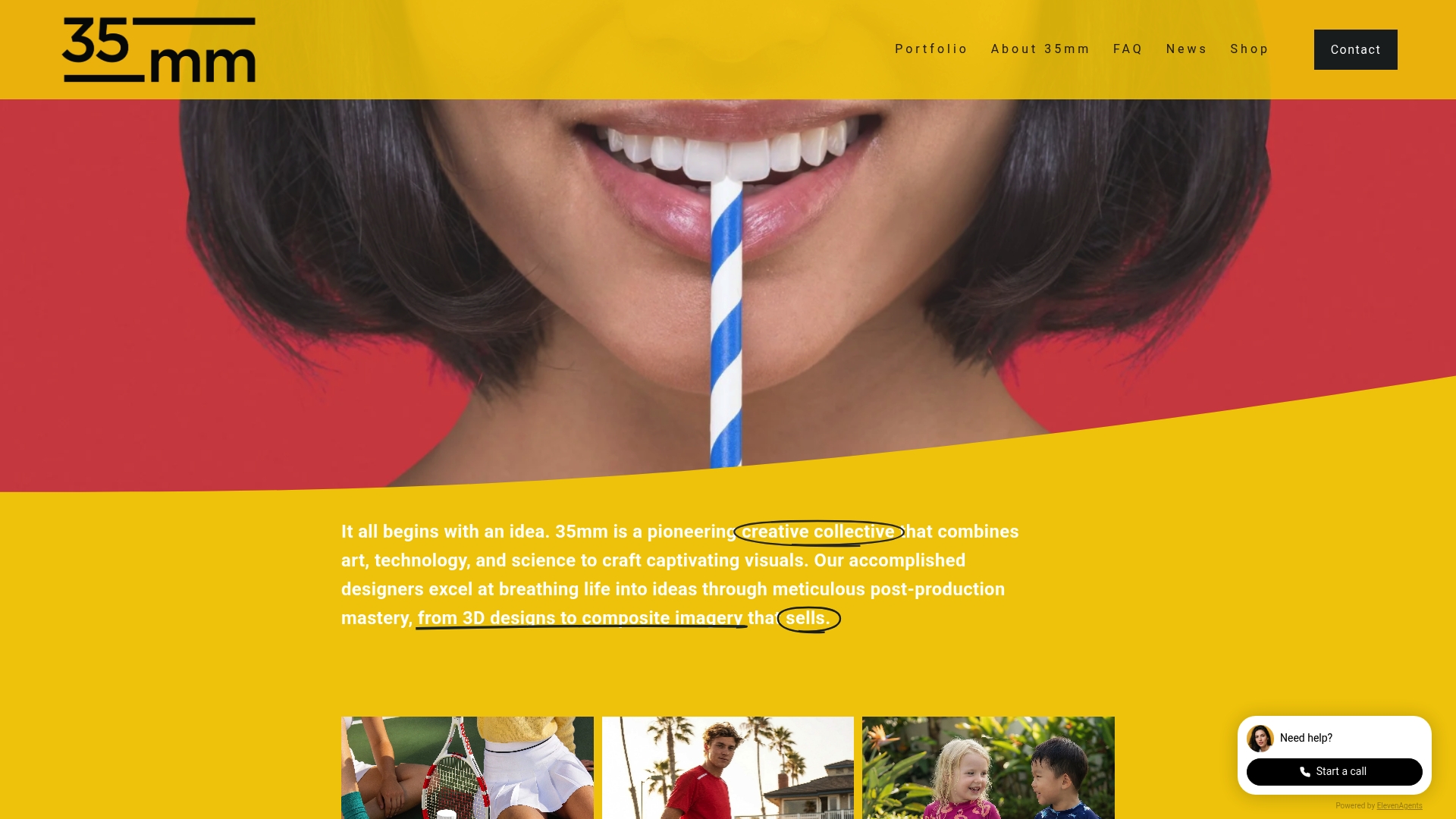
If the trends above have you rethinking your current brief templates, 35milimetre is ready to scope the work with you. The studio delivers commercial post-production services covering retouching, compositing, CGI, AI-enhanced imagery, and cinematic grading, with provenance workflows built into every project.
Whether you are an agency building a campaign from scratch or a brand updating existing assets to meet 2026 standards, the process starts with a scoped quote. Reach out through the studio's contact page to describe your deliverables, timeline, and budget, and the team will respond with a clear project scope.
Useful sources
- Less Perfection, More Human: 2026's Photography Trend | Fstoppers
- Visual Trends 2026: An Analysis of Search Behavior and Creative Demand | FreeImages
- Perfection Fatigue: Lev Mazaraki on the Top Five Trends Shaping Contemporary Photography | GTP Headlines
- 10 Photography Trends 2026: The Rise of "Quiet Authenticity" | Nuizmi
- 12 Photography Trends for 2026 (Color, Grain & Flash) | InspireFusion
- AI image fraud will cost $40 billion next year | ZDNET
- AI limitations on structural reasoning and long-horizon consistency | AlphaXiv
- How AI Changes Image Editing: 2026 Guide | 35milimetre Blog
- Visual content trends for campaign success in 2026 | 35milimetre Blog
- How to Enhance Images with AI: 2026 Techniques | 35milimetre Blog