

A revision round is a single, consolidated batch of written feedback from a named approver, delivered within an agreed window. Anything else, scattered notes, a second stakeholder chiming in three days later, is scope drift, not a round. For most design work, a few rounds is the practical default. Name your approver, set the feedback window before the first draft goes out, and you've already solved the problem that ruins most creative timelines.
TL;DR:
- A revision round must originate from a single named approver, arrive as a consolidated document within an agreed timeframe, and is limited to minor edits, not scope changes.
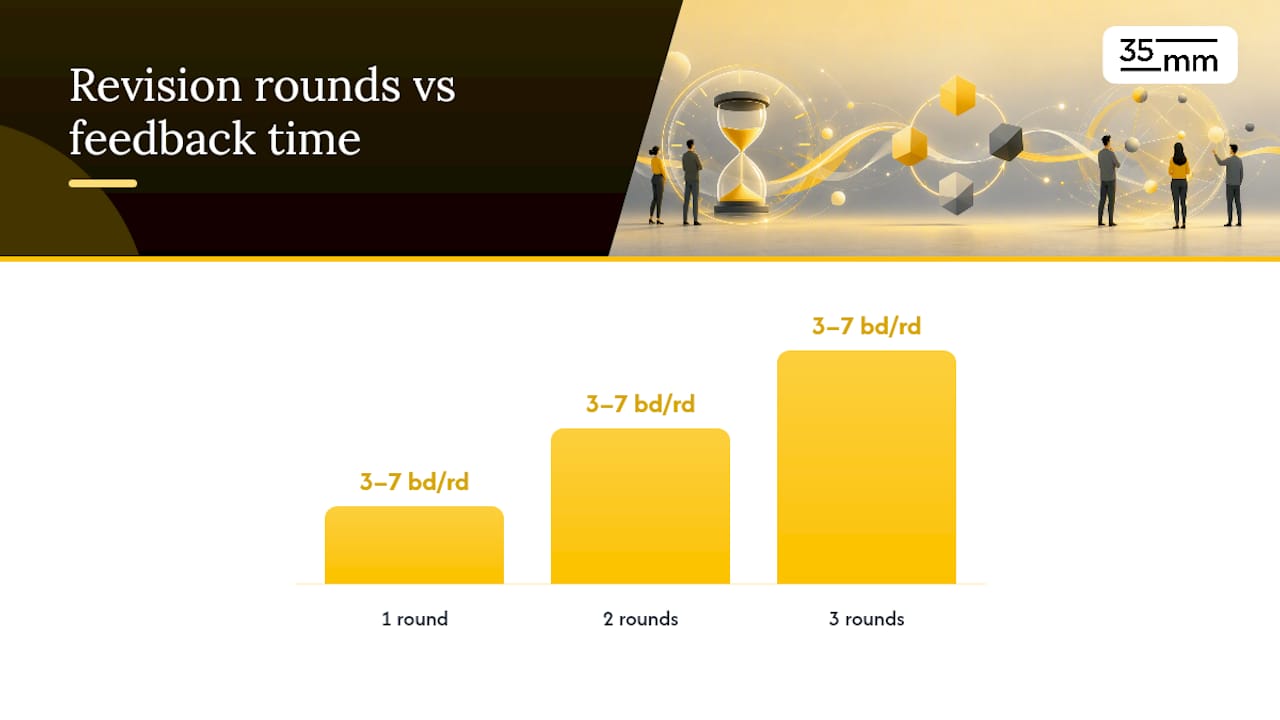
- Most projects should have a small number of rounds—typically one to three—each with a clear feedback window of three to seven business days to maintain momentum.
- Overage charges for additional rounds can range from $75 to $200 per hour, with pre-set rates and explicit scope boundaries reducing disputes.
- Employing a structured review process with designated roles and agenda keeps feedback focused, clear, and minimizes circular debates.
- Clear revision clauses should specify the number of rounds, approved approver, feedback window, scope limits, and overage rates to prevent scope creep and project delays.
Table of Contents
- What Counts as a Creative Revision Round?
- How Many Rounds and How Much Time Should You Budget?
- How Do You Run a Revision Round That Actually Works?
- [Which feedback frameworks actually improve revision quality?](#which-feedback-frameworkshttpsbabylovegrowthaiblogboost-content-engagement-using-feedback-loops-in-2026-actually-improve-revision-quality)
- How Should You Version and Verify Creative Deliverables?
- What Should a Revisions Clause Actually Say?
- How 35milimetre Applies Revision Discipline to Post-Production Work
- Why Fewer, Clearer Revision Rounds Make Bolder Work Possible
- How 35milimetre Runs Revision Rounds on Client Projects
- Sources
- FAQ
What Counts as a Creative Revision Round?
Vague revision terms are what turn a two-week job into a six-week negotiation. A round only counts when three conditions are met: it comes from one named approver, it arrives as a single consolidated document (not a trickle of Slack messages over five days), and it lands inside the agreed timebox. Miss any of those three, and you're not looking at a revision round. You're looking at scope creep wearing a disguise.
Minor edits, swapping a headline, nudging a color value, cropping tighter, belong inside a round. Direction changes, a different concept entirely, a new composition, a shift from lifestyle photography to studio product shots, do not. Those are re-scopes, and they need their own conversation about time and cost.
Multi-stakeholder feedback is where most agencies get burned. If three people on the client side each send separate notes across four days, that's not "consolidated feedback within a window." A revisions clause that names a single approver solves this before it starts, because that approver is responsible for merging internal disagreement into one document before it reaches you.
- One named approver per round, no exceptions
- One document per round, not a running thread
- One deadline for feedback, tracked from delivery date
How Many Rounds and How Much Time Should You Budget?
A small number of rounds is the industry norm for design and brand work, though scope changes that math fast. A single social graphic might need one round. A full packaging system with multiple SKUs often justifies three.
Feedback windows matter as much as round counts. Giving clients three to seven business days to respond keeps the project moving without inviting the kind of slow, staggered feedback that inflates a "one round" into three separate conversations. Shorter windows force decisiveness. Longer ones invite drip feedback.
Pricing overage rounds: Typical overage rates run roughly $75 to $150 per hour for freelancers and $125 to $200 per hour for studios, though flat per-round fees work just as well if you'd rather avoid hourly tracking.
A script that works in almost any client conversation: "Your project includes two revision rounds within five business days each. Additional rounds are billed at [your rate], and any request outside the original brief is scoped separately."
- State the round count in writing before work starts
- Set the response window, not just the delivery date
- Decide your overage rate before you need it, not during a dispute
How Do You Run a Revision Round That Actually Works?
Four roles make or break a review meeting: a facilitator who keeps things moving, a creative owner who presents the work, a decision owner who signs off, and a recorder who documents what was actually decided. Skip the recorder and you'll spend the next round arguing about what was agreed on last time.
A structured creative review agenda that separates clarifying questions, feedback, and final decisions keeps meetings from turning into circular debate. Try this compact structure:
- Two minutes: Creative owner presents the work with no interruptions.
- Three minutes: Clarifying questions only, no feedback yet.
- Ten minutes: Structured feedback, one voice at a time.
- Five minutes: Decision owner states the verdict; recorder logs it.
Once the meeting ends, translate every note into a discrete task with an owner and a way to verify it's done. "Make the logo bigger" isn't a task. "Increase logo width to 200px on the homepage banner, confirmed against the brand guide" is.
Pro Tip: Keep your decision owner out of day-to-day commentary. They should show up only at the decision point in the agenda, sign off, and leave the back-and-forth to the creative owner and recorder.
Which feedback frameworks actually improve revision quality?
Two structured methods consistently outperform freeform critique: Pixar's Braintrust model and Liz Lerman's Critical Response Process. Both share the same backbone, start with what's working, diagnose problems rather than prescribing fixes, and leave the creator with final decision authority. That last part matters more than it sounds. Feedback that arrives as a command ("make it blue") produces compliance. Feedback that arrives as a diagnosis ("the current palette doesn't signal premium enough for this audience") produces better thinking.
You don't need a formal workshop to build this muscle. Two short formats work well:
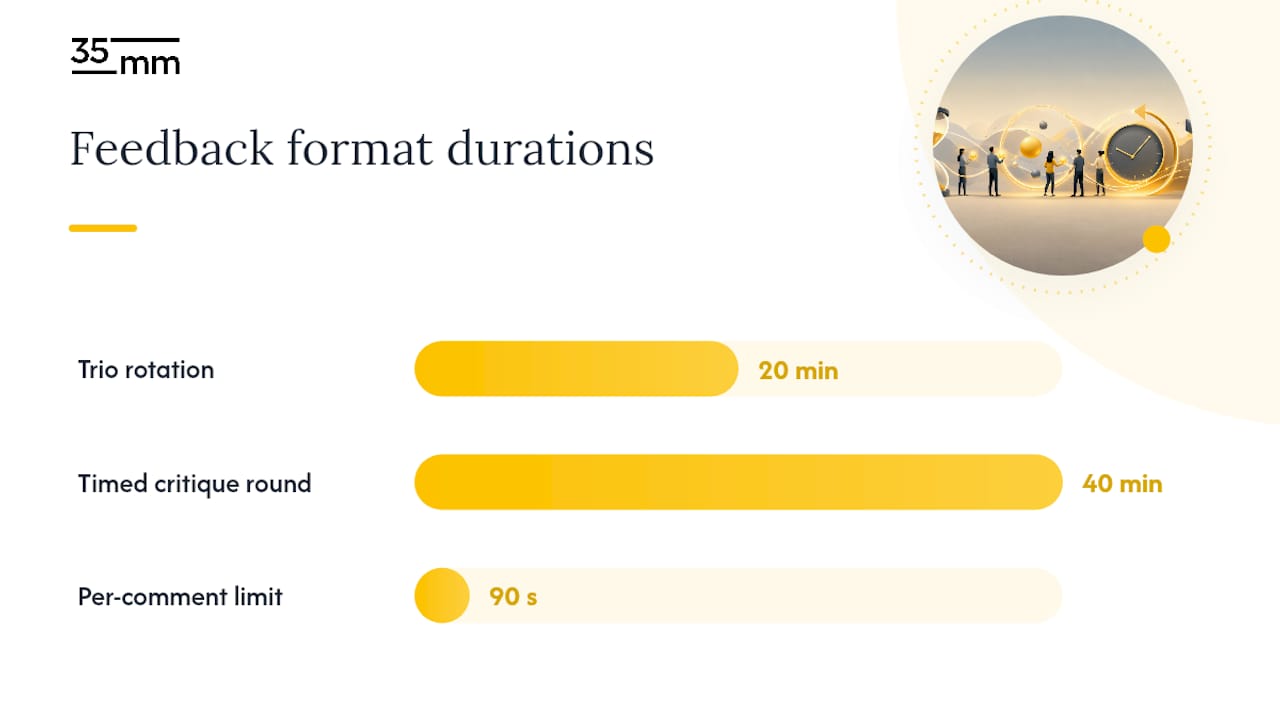
- Trio rotation (20 minutes): Three people rotate through presenter, critic, and observer roles on a single piece, then swap.
- Timed critique rounds (40 minutes): Everyone gets 90 seconds to give one diagnostic comment, no debate allowed until the round finishes.
Practicing feedback in low-stakes, role-rotated sessions measurably lowers the emotional temperature around critique, which matters when the actual client round has real money and deadlines attached.
Pro Tip: Coach clients before the formal round starts. A thirty-second reminder, "tell us what problem you're seeing, not what fix you want", saves an hour of back-and-forth later.
How Should You Version and Verify Creative Deliverables?
A file named Client_Logo_v3_FINAL_ACTUAL.ai is a liability, not a version history. Adopt a simple convention: project code, asset name, version number, date. Pair every version with a short feedback document that records exactly what changed and why.
For image-heavy work, provenance tracking matters more every year as AI-assisted edits enter the pipeline. Tools built around visual provenance and generation history let teams trace exactly which edit introduced a change, which resolves client disputes before they start.
Before sign-off, run through a short verification pass:
- Confirm the file matches the decision recorded in the last meeting
- Check color, dimensions, and format against the original brief
- Log the round number, time spent, and final approver in your project tracker
- Archive the previous version rather than overwriting it
What Should a Revisions Clause Actually Say?
A revisions clause with no specifics is an invitation to endless notes. The elements that matter: number of included rounds, the named approver, the feedback timeframe, what counts as in-scope revision work, and the overage rate per unit.
The distinction between a revision and a re-scope comes down to one question: is the client refining the approved direction, or asking for a different one?
- Name the approver, not just "the client"
- Define the feedback window in business days, not calendar days
- Spell out what falls inside scope, and what triggers a new estimate
How 35milimetre Applies Revision Discipline to Post-Production Work
On compositing and CGI projects, a single approver per deliverable is named and rounds are capped before work begins, with a versioned file history maintained so every change traces back to a specific round. A re-render of a full CGI scene, a new shot angle, or a pivot to a different art direction gets treated as a re-scope, not a revision, because that's honest math about the hours involved. Readers building their own briefing process can find more detail in the studio collaboration process and the studio briefing guide.
Why Fewer, Clearer Revision Rounds Make Bolder Work Possible
Teams often assume tight revision limits squeeze out creativity. The opposite tends to happen. When everyone knows exactly how many rounds exist and who signs off, designers stop hedging toward safe, inoffensive drafts meant to survive endless second-guessing. They commit to a stronger first direction because the process rewards clarity over caution.
The one change worth adopting this week: name your approver in writing before the next project kicks off, even if you never write another word of contract language.
— 35mm
How 35milimetre Runs Revision Rounds on Client Projects
If you've read this far, you already know the fix for revision chaos isn't more flexibility. It's structure. 35milimetre applies exactly that on every project, capped rounds, a named approver, and a versioned file trail, so retouching, compositing, and CGI work moves forward instead of circling.

For teams selling on marketplaces, that discipline shows up directly in the Amazon photo retouching and compositing services, where pricing and revision expectations are set upfront rather than negotiated mid-project. If your work involves AI-assisted product imagery, where provenance and change tracking matter even more, the AI product compositing page outlines how that process fits into a disciplined round structure. Reach out with your project scope, and you'll get a clear answer on rounds, timeline, and pricing before any pixels move.
Sources
- Revisions Clause — What a Revision Clause Should Include | Settled
- How to Track Creative Projects, Revisions, and Client Approvals | Deelo Blog
- Creative Review Meeting Agenda: Give Clear Feedback and Record Decisions | Kiolo
- How to Give Feedback on Creative Work | QuestWorks
FAQ
What Are Some Effective Ways to Approach a Revision Round?
Consolidate all feedback into one document from one named approver, separate diagnostic comments from prescriptive fixes, and convert every note into a task with a clear owner before the meeting ends.
What Are Some Examples of Revisions in Creative Work?
Common examples include color adjustments, copy repositioning, cropping changes, and minor composition tweaks. A shift to a new concept or a full CGI re-render is a re-scope, not a revision.
What Are the Three Stages of a Revision Round?
Most disciplined rounds follow three stages: collecting consolidated feedback within a set window, converting that feedback into assigned tasks with verification criteria, and delivering an updated version for sign-off.
What Are the Two Main Types of Feedback in Revisions?
Feedback generally splits into diagnostic comments (identifying a problem) and prescriptive comments (dictating a fix). Frameworks like Pixar's Braintrust favor diagnostic feedback because it leaves the creator with the final decision.
Does 35milimetre Offer a Set Number of Revision Rounds?
Round counts and pricing depend on the project and service, current details are listed on the 35milimetre website, but the studio applies a named-approver, timeboxed structure consistent with the practices described above.