
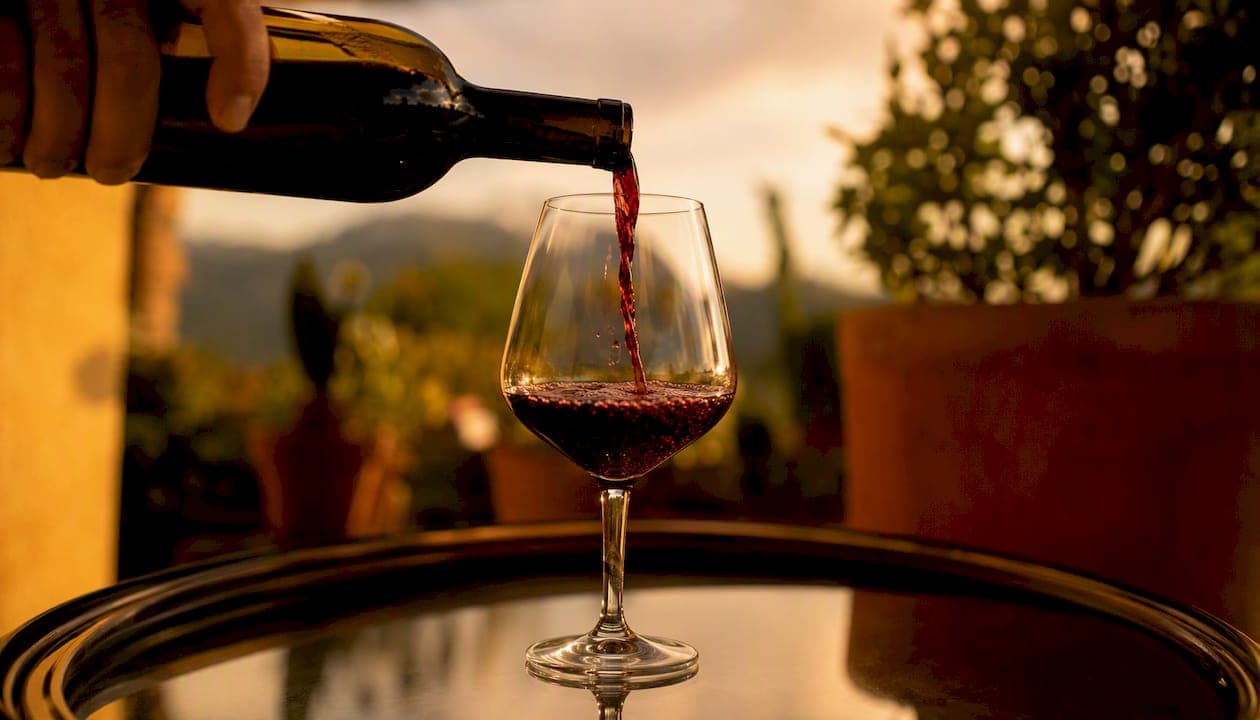
If you're auditing wine e-commerce sites for product photography and merchandising inspiration, here is the shortlist worth opening right now. These eight U.S.-relevant retail sites, paired with 35milimetre as your post-production specialist. They cover every major visual treatment you'll encounter on a commerce surface.
- wine.com — study how photography scales across hundreds of SKUs and how hero-to-listing image hierarchies are structured
- K&L Wine Merchants — inspect close-up label imagery and information hierarchy on specialist product pages
- Winc — observe consistent brand-forward lifestyle photography woven through subscription and marketing pages
- Bright Cellars — compare clean studio packshots against editorial lifestyle frames used for conversion and retention
- Gold Medal Wine Club — review packshot consistency and subscription package styling cues, including unboxing imagery
- Naked Wines — examine producer storytelling layered with product visuals across long-form pages
- Total Wine & More — observe thumbnail legibility, mobile grid behavior, and multiple image angles per SKU
- Vivino — study how user-generated imagery mixed with catalog photography creates real-world image variance and social-proof signals
The Visual Scorecard gives you a structured lens for all of it: five pillars covering library completeness, visual consistency, channel readiness, image-type diversity, and production speed.
Table of Contents
- What to do next: prioritized audit steps and quick wins
- The Visual Scorecard gap most brands miss on commerce surfaces
- 35milimetre can run your audit, pilot, and SKU rollout
- Resources and further reading to deepen technique and workflow knowledge
- Key Takeaways
- What the Visual Scorecard reveals that most audits miss
What to do next: prioritized audit steps and quick wins
Run three checks on each site before you brief anyone. First, test label legibility at thumbnail size on mobile — if the varietal and producer name are unreadable at 150px, the image fails the most common commerce surface. Second, check channel crop safety: does the hero image survive a 1:1 square crop and a 4:5 portrait crop without losing the label or the pour? Channel-ready imagery must be served as optimized formats like WebP to maintain page performance on mobile. Third, look for evidence of post-production compositing — clean background replacements, controlled reflections on glass, and label retouching are the three most common post-production fixes on wine product pages.
For your creative brief, specify a minimum shot list: hero bottle packshot, pour shot, glass-with-atmosphere, and a vineyard or cellar lifestyle frame. These four shot types cover product pages, menus, social, and longer-form brand storytelling. Include required file formats (WebP, retina-ready TIFF), minimum resolution, and aspect-ratio deliverables in the brief itself, not as a verbal afterthought.
Quick AI fixes, such as background swaps and basic label cleanup, are acceptable for social-format refreshes and low-stakes menu assets. When glass reflections are complex, label text is critical to brand compliance, or the image will run in paid media, escalate to specialist retouching. A well-planned product photoshoot with separate bottle and glass passes makes that escalation far less expensive in post.
The Visual Scorecard gap most brands miss on commerce surfaces
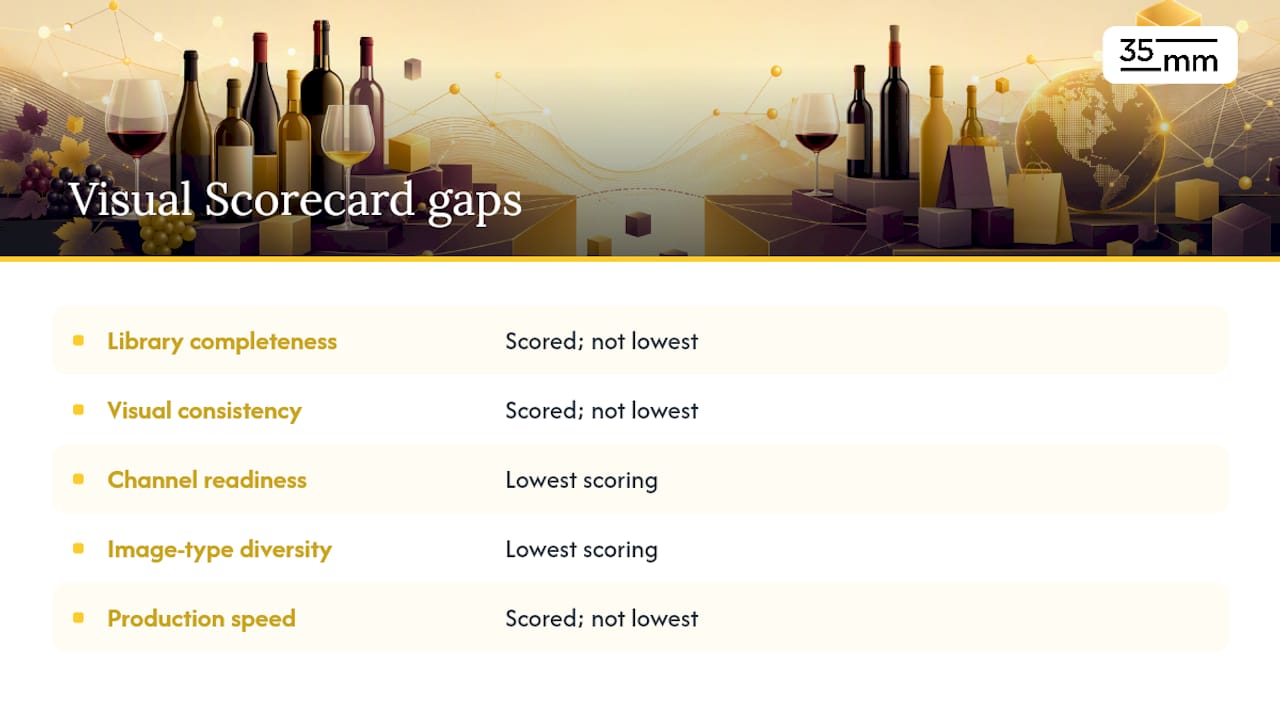
Brands are often one selling season behind because visual asset libraries are built for logistics, not channel-ready delivery. The Visual Scorecard closes that gap by scoring five pillars: library completeness, visual consistency, channel readiness, image-type diversity, and production speed. In practice, channel readiness and image-type diversity are where most wine brands score lowest.
Rim lighting, label-directed small-beam lights, and black-card flags are the standard techniques for controlling reflections and keeping labels legible, as Karl Taylor's bottle-lighting workflow demonstrates. The practical difference between a good packshot and a great one is whether the shoot planned for separate passes for the bottle and the glass, which makes compositing cleaner and label retouching non-destructive.
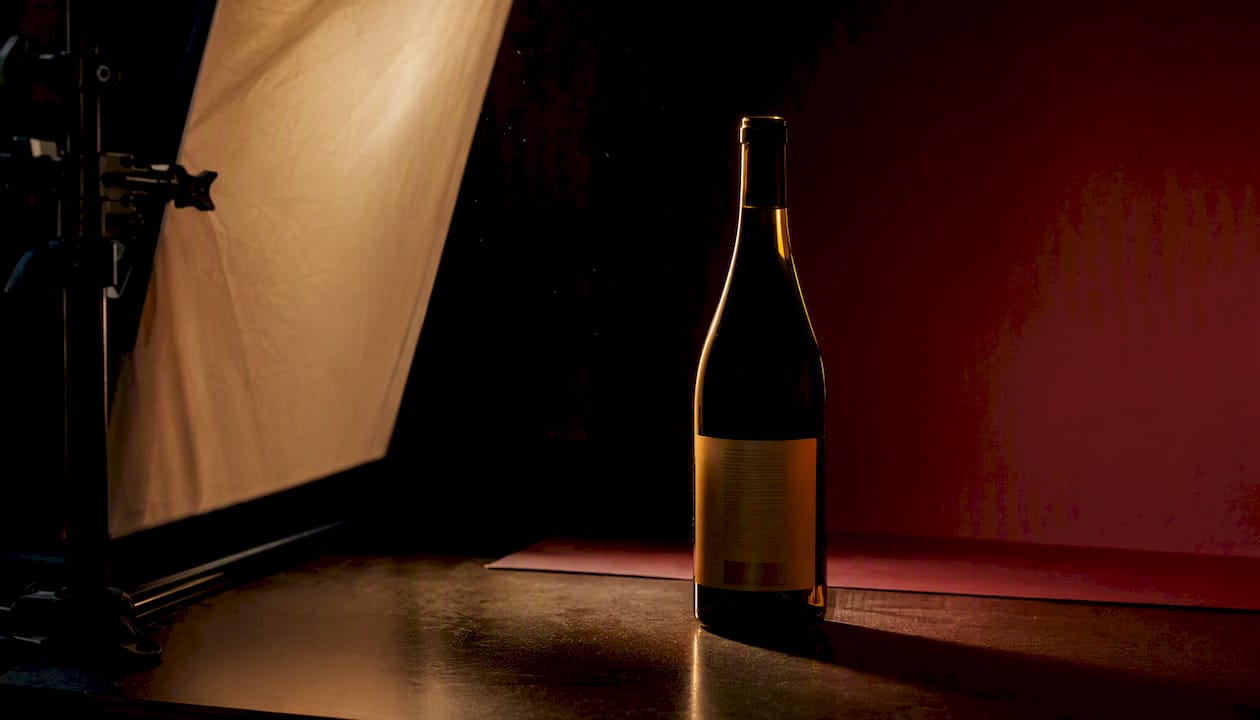
Pro Tip: When briefing a retouch team, supply a layered PSD with the label and glass on separate passes. This single file structure cuts revision cycles and lets the studio swap backgrounds or adjust reflections without rebuilding the composite from scratch.
For post-production ideas that go beyond basic cleanup, CGI compositing and background replacement are now practical for mid-size SKU catalogs, not just flagship campaigns.
35milimetre can run your audit, pilot, and SKU rollout
There are other routes to better wine product imagery — automated capture rigs, AI tools like FoodShot AI, and in-house photography. 35milimetre offers something different: a high-touch post-production workflow that pairs a Visual Scorecard audit with campaign-ready deliverables.
A pilot audit takes roughly one week and scores your existing library against the five scorecard pillars. A 5-image retouch pilot runs 2–3 weeks and delivers retouched packshots, channel crops, and a reusable file-spec template for SKU rollouts. For the handoff to work cleanly, the studio needs raw files, your brand guide, label masters, and a full SKU list upfront. Get a quote and review 35milimetre's post-production services to see which deliverable fits your timeline.
Resources and further reading to deepen technique and workflow knowledge
The sources below underpin the Visual Scorecard criteria, lighting notes, and production recommendations in this article.
| Resource | What it helps you do |
|---|---|
| Wine Industry Advisor — Visual Library | Audit your asset library against the five scorecard pillars; understand channel-readiness gaps |
| Fstoppers — Bottle Lighting Techniques | Learn rim-light, flag, and label-illumination setups to brief a shoot or evaluate a vendor |
| FoodShot AI — Wine Photography Guide | Define your minimum shot list and understand where AI tools fit in the production budget |
| Avisual Studios — Automated Packshot | Evaluate automated capture rigs for high-volume SKU rollouts and multiple-angle assets |
| Master Product Photography — White Background | Understand common post-production fixes: label cleaning, reflection removal, background treatment |
As a next step, use the Visual Scorecard as a 15-minute checklist: open each site on mobile, score the five pillars from 1–5, and note which post-production fix would move the needle most. That scored sheet becomes the first page of your agency brief.
Key Takeaways
The most effective way to audit wine e-commerce visual merchandising is to score each site against the five Visual Scorecard pillars and use those gaps to drive a precise post-production brief.
| Point | Details |
|---|---|
| Start with the shortlist | wine.com, K&L, Winc, Bright Cellars, Gold Medal, Naked Wines, Total Wine, and Vivino each illustrate a distinct visual treatment worth scoring. |
| Run three audit checks | Test label legibility at thumbnail size, channel crop safety at 1:1 and 4:5, and evidence of compositing or background replacement. |
| Brief with a minimum shot list | Specify hero packshot, pour shot, glass-with-atmosphere, and lifestyle frame, plus WebP delivery and retina-ready TIFFs. |
| Know when to escalate | Use AI tools for quick social refreshes; escalate to specialist retouching when glass reflections, label compliance, or paid media are involved. |
| 35milimetre as your specialist | 35milimetre runs Visual Scorecard audits, 5-image retouch pilots, and full SKU rollout post-production with layered, channel-ready deliverables. |
What the Visual Scorecard reveals that most audits miss
Most creative audits stop at "does it look good?" The Visual Scorecard forces a harder question: is this image actually ready for every surface it will appear on? A bottle shot that looks polished on a desktop product page can fail completely as a retailer thumbnail, a distributor portal asset, or a paid social crop. That gap between "looks good in a deck" and "performs on every channel" is where brands consistently lose ground, and it is almost never a photography problem. It is a post-production and delivery problem.
The sites on this list are worth studying precisely because they show the full range of that gap. Vivino's mix of user-generated and catalog imagery makes the variance visible in a way that a curated site like Winc deliberately hides. Total Wine's grid reveals what happens to label legibility at scale. Neither is better or worse as an inspiration source; they are answering different questions. The most useful audit treats them as a spectrum, not a ranking.