

AI imagery is defined as the use of machine learning models to generate, enhance, or transform visual content from text prompts or reference images. The benefits of AI imagery are now measurable and significant: design cycle times drop by over 91%, creative output scales from dozens to hundreds of variants per month, and campaign personalization reaches audiences that traditional photography simply cannot serve at speed. For digital marketers, designers, and content creators, these advantages represent a genuine shift in how visual storytelling gets done. At 35milimetre, we have watched this shift accelerate firsthand, and the studios and brands that adapt earliest are pulling ahead.
1. How AI imagery cuts production time dramatically
AI imagery reduces visual design cycle times by over 91% when integrated into structured workflows. That number is not a rounding error. It means a process that once took two weeks can realistically close in a day or less.
The mechanism behind this speed is text-to-image and image-to-image generation. A designer inputs a prompt or a reference visual, and the model returns multiple finished compositions within seconds. The human role shifts from building assets from scratch to selecting, refining, and approving. That shift alone removes the most time-consuming part of traditional production.
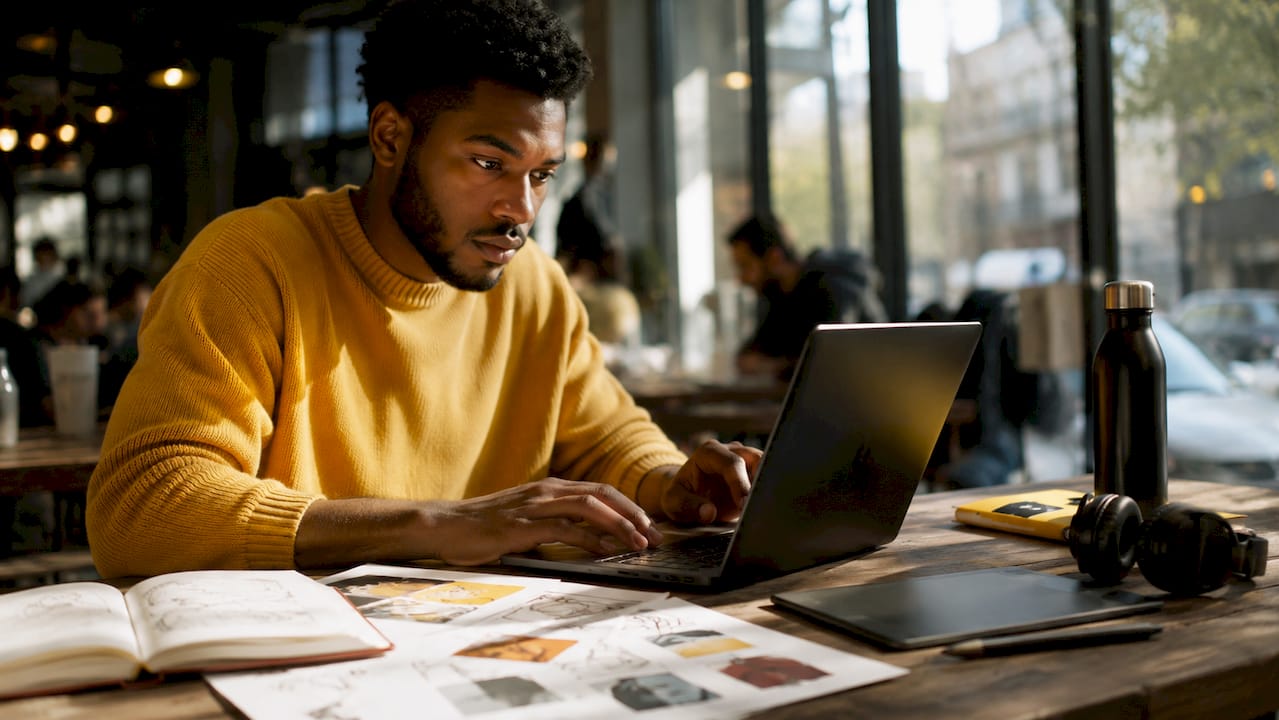
For teams managing campaign calendars, this speed changes what is possible. Seasonal refreshes, product launches, and localized variants no longer require weeks of back-and-forth with photographers and retouchers. The role of AI in creative studios has moved from experimental to operational.
Pro Tip: Pair AI generation with a lightweight human review pass. One trained eye catching errors before delivery protects brand quality without adding significant time back to the process.
2. What cost advantages do AI-generated images offer?
The financial case for AI-generated visuals goes beyond per-image savings. The more useful concept is asset velocity: the ability to produce many variants quickly, which gives marketing teams more creative options without proportionally higher budgets.
Traditional photography for a single product line requires a photographer, a studio, a stylist, post-production retouching, and licensing. AI generation compresses most of that into a prompt and a review step. For long-tail content, such as regional variants, seasonal backgrounds, or channel-specific crops, the cost difference is substantial.
The ROI calculation has also shifted. Businesses now measure AI imagery's value not just in cost savings but in faster audience learning and improved paid media efficiency. More creative variants mean more data on what works, which improves ad performance over time. That downstream value is where the real financial return compounds.
The tradeoff worth acknowledging: AI-generated images work best for context, background, and volume content. For hero product shots where accuracy and brand authenticity are non-negotiable, professional photography and retouching still carry weight. The smart approach uses AI for scale and reserves human craft for the moments that matter most.
3. How AI imagery supports personalization at scale
Marketing teams using AI text-to-image integration scale creative variants from 20 to over 200 per month. That volume unlocks something traditional production cannot: genuine personalization across channels, audiences, and markets.
Localized campaign assets are one of the clearest examples. A brand running campaigns across multiple regions previously needed separate shoots or expensive stock licensing for each market. AI generates localized imagery, including different environments, seasonal cues, and cultural contexts, in hours rather than weeks. That speed enhances campaign scale without multiplying production costs.
The A/B testing benefit follows directly from volume. When a team can produce 20 creative variants instead of 3, they run more meaningful tests. More tests produce faster learning. Faster learning reduces customer acquisition costs. The compounding effect of increased content volume on paid media performance is one of the strongest arguments for AI imagery in marketing.
Practical applications span every major channel. Social media feeds benefit from frequent visual refreshes that maintain audience attention. Email campaigns perform better when imagery reflects the recipient's location or behavior. Product catalogs scale to include lifestyle context shots that would otherwise require multiple shoots. AI makes all of these feasible within a normal production budget.
4. AI imagery and brand authenticity: finding the right balance
AI-generated images reduce creative costs, but they require human validation to prevent brand trust issues. This is the part of the AI imagery conversation that gets skipped too often, and skipping it causes real problems.
The most common failure mode is the AI hallucination: a generated image that looks plausible at a glance but contains nonsense text, anatomically wrong hands, or product details that do not match reality. For a brand selling a physical product, a single inaccurate image in a paid campaign can generate returns, complaints, and lasting credibility damage.
The solution is a structured validation process. Manual tagging and lightweight validation before final use catches visual errors that automated systems miss. A trained reviewer checks for text rendering errors, unrealistic details, and product accuracy before any asset goes live. This step adds minutes, not hours, and it protects everything the brand has built.
Brands also benefit from maintaining a single source of truth for product visuals. AI works best when it generates context around a verified product image, not when it recreates the product itself from scratch. Authentic photography handles the product. AI handles the world around it. That division of labor balances speed with trust in a way that neither approach achieves alone.
Pro Tip: Build a short validation checklist specific to your brand: product color accuracy, logo placement, text legibility, and realistic proportions. Run every AI-generated asset through it before approval.
5. AI imagery reliability and technical performance
AI models now maintain reliable output under textual noise up to 10% and data distribution shifts up to 40%. In practical terms, this means the models perform consistently even when prompts are imprecise or input references vary significantly from the training distribution.
This reliability matters for production teams. Earlier generations of AI image tools required highly specific prompts to produce usable results. Current models tolerate ambiguity and still return coherent, on-brand compositions. That tolerance reduces the skill barrier for using AI generation effectively and makes the tools accessible to a broader range of team members.
For designers, this technical stability means AI generation can be integrated into existing workflows without requiring a complete process rebuild. The techniques for AI-enhanced images that produce the best results combine model reliability with human creative direction, not one or the other.
6. Uses of AI in art and design beyond marketing
The advantages of AI-generated imagery extend well beyond campaign production. In product design, AI generates concept visualizations that communicate ideas to stakeholders before any physical prototype exists. In packaging design, it produces multiple structural and aesthetic variants for client review in a single session.
CGI and compositing workflows benefit from AI at the ideation stage. Rather than building a full 3D scene to test a composition, a designer generates a rough AI version first, validates the concept, and then commits resources to the high-end render. This approach, which 35milimetre uses across technology and automotive projects, reduces wasted render time significantly.
The impact of AI imagery on illustration and art direction is equally significant. Art directors use AI generation to explore visual directions quickly, presenting clients with a range of moods and styles before committing to a single creative path. The result is faster alignment and fewer revision cycles.
7. How AI imagery improves design collaboration
AI imagery changes how creative teams communicate internally and with clients. A prompt-generated visual is faster to produce than a written brief and more precise than a verbal description. Teams use AI-generated mood boards and concept images to align on direction before production begins.
For agencies working with multiple clients, this speed of alignment is a competitive advantage. A client who sees a visual concept in the first meeting is more likely to approve a direction quickly. Fewer approval rounds mean lower project costs and faster delivery. The ad campaign imagery strategies that perform best in 2026 start with faster, clearer creative alignment.
AI also supports collaboration across time zones and disciplines. A marketer in one city can generate a visual reference, share it with a designer in another, and receive a refined version within hours. The shared visual language that AI generation creates reduces miscommunication and accelerates every stage of the creative process.
Key Takeaways
AI imagery delivers its greatest value when speed, volume, and human oversight work together rather than when any single factor operates alone.
| Point | Details |
|---|---|
| Production speed | AI workflows cut design cycle times by over 91%, compressing weeks into hours. |
| Asset velocity | Teams scale from 20 to 200+ creative variants per month, enabling real A/B testing. |
| Cost and ROI | The financial return comes from faster audience learning and better paid media performance, not just per-image savings. |
| Human validation | A lightweight review step before final use prevents AI hallucinations from reaching live campaigns. |
| Authenticity balance | AI handles context and volume; authentic photography handles hero product shots where accuracy is non-negotiable. |
What two decades of visual production taught us about AI imagery
The honest observation from working in post-production for over 20 years is this: AI imagery is the most significant production tool to arrive since compositing software went digital. That is not enthusiasm talking. It is a direct comparison based on what we have seen change in the studio.
What surprises most people is where AI actually saves time. The assumption is that it replaces the skilled work. It does not. It eliminates the repetitive scaffolding around the skilled work: the background variations, the format crops, the seasonal color shifts, the regional adaptations. When those tasks run on AI, the human craft concentrates on the decisions that actually move a campaign.
The part that requires discipline is the validation step. We have seen AI-generated assets that looked perfect at thumbnail size and fell apart at full resolution. A product label with scrambled text. A car reflection that defied physics. These errors are invisible to automated checks and obvious to a trained eye. The studios and teams that build validation into their process from day one avoid the credibility problems that come from skipping it.
The future we see is not AI replacing photography or design. It is AI handling the volume work so that photography and design can focus on the moments that require genuine craft. That division is already producing better outcomes for the brands we work with, and it will only sharpen as the models improve.
— 35mm
Professional AI-enhanced visuals from 35milimetre
35milimetre combines AI image generation with two decades of post-production expertise to deliver visuals that move fast without losing brand integrity.
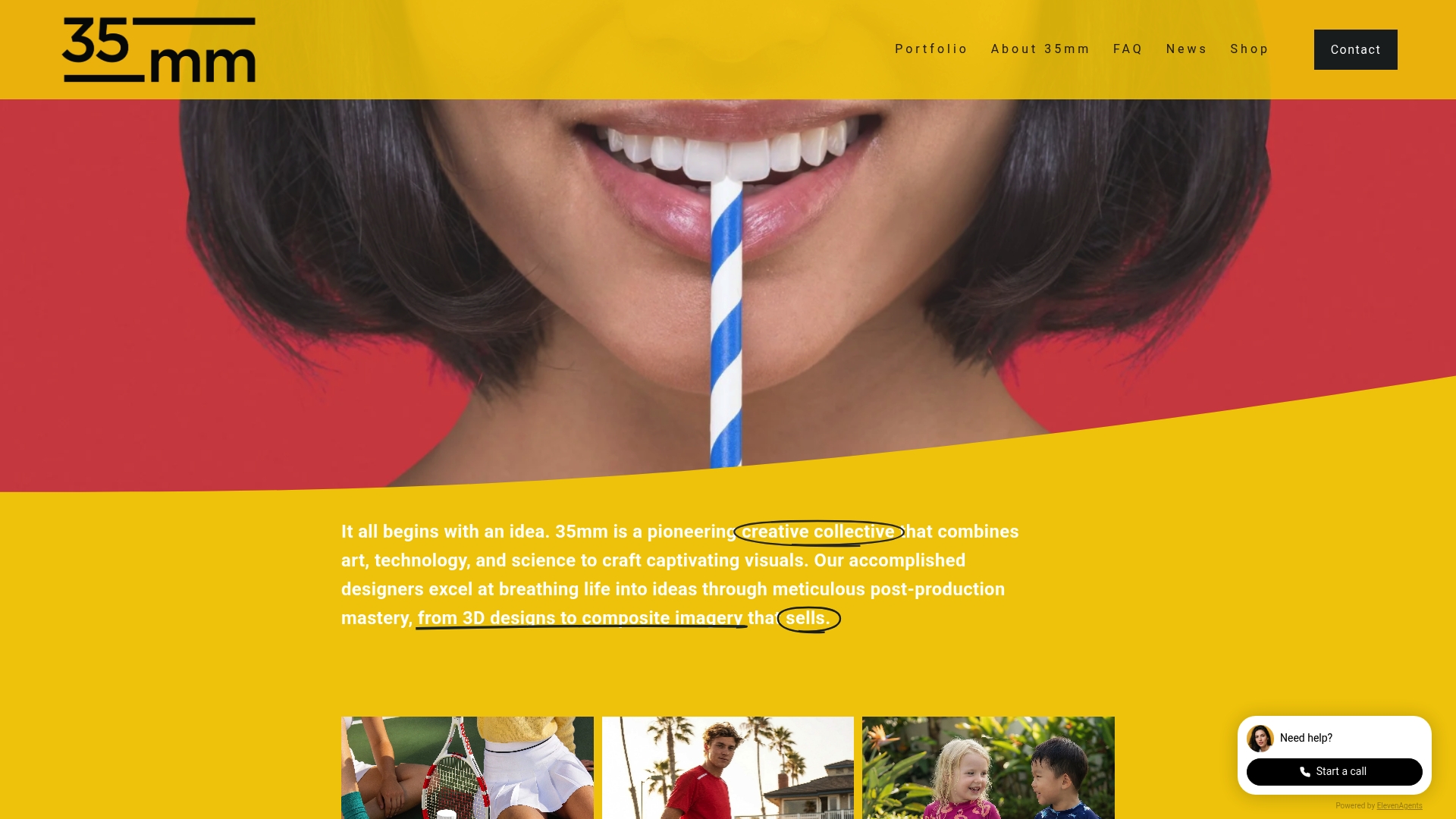
Whether you need high-volume campaign assets, product composites, or AI-enhanced lifestyle imagery, the studio's team of post-production artists, graphic designers, and 3D artists handles the full pipeline. Every asset goes through a structured review before delivery, so what you receive is production-ready. For marketers and designers who want the speed of AI with the quality of professional retouching and post-production, 35milimetre is the studio built for exactly that brief.
FAQ
What is AI-enhanced imagery?
AI-enhanced imagery is visual content that uses machine learning to generate, modify, or improve images from text prompts or reference photos. It differs from traditional editing by creating new visual elements rather than only adjusting existing ones.
Why use AI imagery in marketing campaigns?
AI imagery lets marketing teams produce more creative variants in less time, enabling broader A/B testing and faster audience learning. Research shows teams scale from 20 to over 200 creative variants per month using AI generation workflows.
What are the main advantages of AI-generated images over photography?
The primary advantages are speed, cost efficiency at scale, and the ability to produce localized or personalized variants without additional shoots. Traditional photography remains stronger for hero product accuracy and brand authenticity in high-stakes placements.
How do you prevent AI imagery from damaging brand trust?
A lightweight validation process catches hallucinations, text errors, and product inaccuracies before assets go live. Manual review by a trained eye remains the most reliable method for maintaining brand integrity in AI-generated content.
Does AI imagery work for industries beyond marketing?
AI imagery applies across product design, packaging, CGI concept development, and art direction. Studios use it to test compositions and visual directions before committing to full production, which reduces wasted time and resources significantly.