
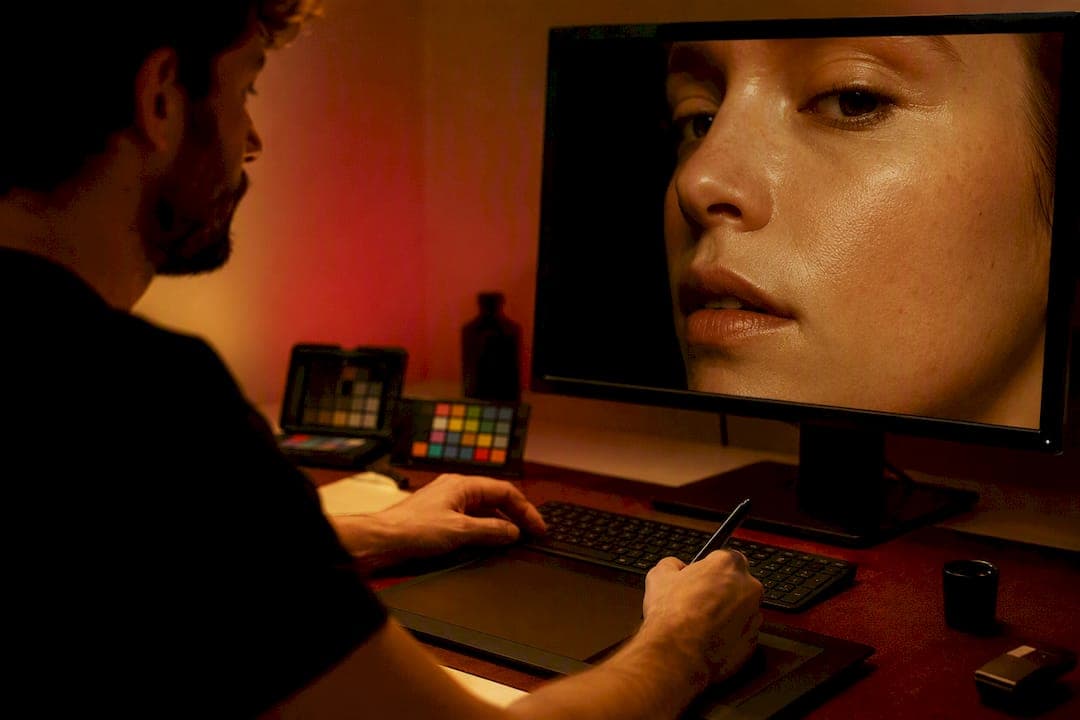
Preserve authentic skin texture with natural skin retouching, targeted frequency separation for micro-detail, and a color grade locked to your campaign's ICC profile. That's the approach 35milimetre used on the Eternal Beauty case study, and it's the standard we recommend to any brand manager planning a campaign shoot. The immediate move: commission a texture-preserving retouch pass, then lock a final color-grade proof before assets go to media.
Key Takeaways
Natural, texture-preserving retouching paired with disciplined color management is what separates premium advertising imagery from work that reads as overprocessed.
| Point | Details |
|---|---|
| Preserve texture first | Keep pores and natural skin variation intact; over-smoothing reads as cheap, not premium. |
| Match your ICC profile | Lock color accuracy to your brand's profile before the retouch pass begins. |
| Brief the specifics | Specify smoothing level, pore visibility, and stray-hair handling before work starts. |
| Budget for revision rounds | Build at least two review cycles into your timeline and cost plan. |
| Choose a texture-first partner | 35milimetre applies frequency separation and targeted cleanup to keep campaign sets consistent and natural, as shown in the Eternal Beauty case study. |
Table of Contents
- What Does Beauty Retouching Advertising Actually Involve?
- What Principles Guide High-End Beauty Retouching?
- What Does the Retouching Workflow and Deliverable Set Look Like?
- How Do You Choose and Brief a Retouching Partner?
- Where Does AI Fit Responsibly Into Beauty Retouching?
- What Did the Eternal Beauty Campaign Accomplish?
- Why Texture Preservation Is the Standard We Push Back On Client Requests For
- How 35milimetre Approaches Your Next Campaign
- Frequently Asked Questions
- Sources
What Does Beauty Retouching Advertising Actually Involve?
Beauty retouching advertising covers everything from spot healing and skin evenness to full color science across a campaign set. It's not one job, it's several layered decisions that together determine whether an image reads as premium or plastic. Some campaigns need a light touch. Others need a coordinated multi-image retouch that holds together across print, digital, and out-of-home.
You need a professional pass when:
- The shoot involves hero imagery for a launch, a rebrand, or a seasonal campaign.
- Assets will run across print, OOH, and hero e-commerce placements where scrutiny is higher.
- You're working with celebrity or brand-ambassador talent, where likeness accuracy carries legal and reputational weight.
- The shot list includes skin close-ups, which magnify every inconsistency in tone or texture.
- In-house editing can usually handle quick social crops or low-stakes internal assets, but not campaign hero shots.
Scale changes scope fast. A single print hero image might need one meticulous pass with a full layered deliverable. A 40-image digital campaign needs consistency across the whole set, which is a different (and more time-intensive) discipline than perfecting one frame.
What Principles Guide High-End Beauty Retouching?
The best beauty retouching advertising work follows a short list of rules, and breaking any one of them is usually what makes an image look overworked. Preserve authentic skin texture first. Pores, fine lines, and natural variation are what separate a believable premium image from a waxy one. Professional image editing protects brand equity precisely because it respects that line instead of erasing it.
Consistency across the set matters just as much as any single frame. Lighting, skin tone, and color temperature need to match from image to image, or a campaign starts to look stitched together from different shoots.
Color accuracy against your brand's reference profile isn't optional. A retoucher working without your ICC profile is guessing at how your reds, skin tones, or packaging colors will render on press versus screen.
A few technique terms worth knowing when you brief a retoucher:
- Frequency separation splits an image into texture and color/tone layers, so a retoucher can fix a blemish or even out skin tone without smoothing away pore detail.
- Dodge and burn sculpts light and shadow subtly, the same principle photographers used in the darkroom, now applied with pixel-level control.
- Targeted cleanup removes stray hairs, blemishes, or product residue without touching the surrounding texture.
Your brief should specify the level of smoothing, whether pores stay visible, how stray hairs get handled, and which image serves as the color-grading reference.
Pro Tip: Send your retoucher one "hero" reference image with your exact brand color targets before the full batch starts. It saves a full round of revisions across the whole set.
What Does the Retouching Workflow and Deliverable Set Look Like?
A typical project moves through five stages: pre-production prep (confirming capture specs and lighting notes), an initial retouch pass, an internal review, refinement based on brand feedback, and final export. Preparing images correctly before the shoot shortens every stage that follows.
Deliverables usually include layered PSD or TIFF files (so your team can make small adjustments later without starting over), high-resolution color-graded masters, web-optimized exports sized per channel, and a proofing PDF for sign-off.
| Deliverable | Typical Spec |
|---|---|
| Layered master file | PSD or TIFF, full resolution, editable layers |
| Print-ready export | CMYK or brand-specific ICC profile |
| Digital/web export | sRGB, compressed for load speed |
| Proofing file | Low-res PDF with revision markup capability |
Timelines vary by complexity: a single hero image with heavy retouching might take a few days, while a full campaign set runs longer once you factor in review rounds. Budget shapes follow complexity too, and planning your 2026 retouching budget in advance keeps scope creep from blowing past what finance approved. Build in at least two rounds of revisions before your deadline, not after it.
How Do You Choose and Brief a Retouching Partner?
Look for these signals before you commit—especially when collaborating with a trusted digital marketing agency that understands campaign consistency and brand color management.
- Texture-preserving work in the portfolio, not just heavily smoothed "after" shots.
- Campaign consistency across multiple images, not just a single standout frame.
- Demonstrated color expertise, ideally with examples spanning print and digital delivery.
- Clear before/after documentation that shows the actual scope of change, not marketing gloss.
When you brief a candidate, ask for a sample retouch pass on one of your real images, request a raw-versus-retouched comparison, and confirm turnaround time in writing before signing anything. Always ask whether layered source files are included in the deliverable. Agencies that rely on structured post-production build proofing rounds into the contract from day one, and you should too.
Red flags worth walking away from:
- No before/after examples anywhere in their portfolio.
- Vague or missing color-space specifications in their proposal.
- No clear turnaround estimate or pricing structure upfront.
Where Does AI Fit Responsibly Into Beauty Retouching?
AI tools speed up batch cleanup, mask generation, and reference matching across large image sets, which is genuinely useful on high-volume campaigns. Final texture work and anything touching talent likeness still needs a human retoucher making the calls. That's not a workflow shortcut you want to skip.
Build these safeguards into your process:
- Require provenance tagging so your team knows which edits used AI assistance.
- Set explicit approval checkpoints where a human signs off before an AI-assisted image moves forward.
- State in your brief what AI-assisted edits are acceptable and what naturalness threshold the final image must meet.
- Get client sign-off specifically on any AI-assisted change, not just the final image.
What Did the Eternal Beauty Campaign Accomplish?
The Eternal Beauty project is a clean example of the texture-preserving approach in practice. The brief called for natural skin retouching, color refinement, and detailed cleanup, without flattening the model's real skin texture into something synthetic.
The retouch preserved authentic skin texture while achieving a premium, campaign-ready finish, according to the project case study.
The result: a consistent set of polished campaign images across the shoot, with a unified look that held up across placements instead of one strong hero shot surrounded by weaker supporting frames. The takeaway for brand teams is straightforward. Texture preservation and tight color matching aren't competing priorities. Handled correctly, they reinforce each other and cut down on last-minute rework before launch.
Why Texture Preservation Is the Standard We Push Back On Client Requests For
We get pushback more often on smoothing than on almost anything else in a brief. A client asks for skin "cleaned up," and cleaned up quietly becomes plastic if nobody sets a limit. The instinct to over-smooth usually comes from comparing an image to a heavily filtered social post, not to how skin actually reads in a considered, premium ad.
On one recent beauty set, the fix wasn't more retouching, it was less: pulling back the smoothing pass by roughly a third and letting frequency separation do targeted cleanup instead of a blanket blur. The image looked more expensive, not less finished. That's counterintuitive to a lot of marketing teams, and it's worth saying plainly: over-retouching photographs cheaper, not premium. With two decades of hands-on post-production work behind us, that's the pattern we see repeat across categories, not just beauty.
How 35milimetre Approaches Your Next Campaign
35milimetre is a full-service studio built for exactly this kind of work: commercial retouching, compositing, CGI, and AI-enhanced imagery, handled by a tight team that's been doing it for over two decades. We work directly with brands, agencies, and photographers who need campaign visuals that hold up under scrutiny, not just look good at thumbnail size.
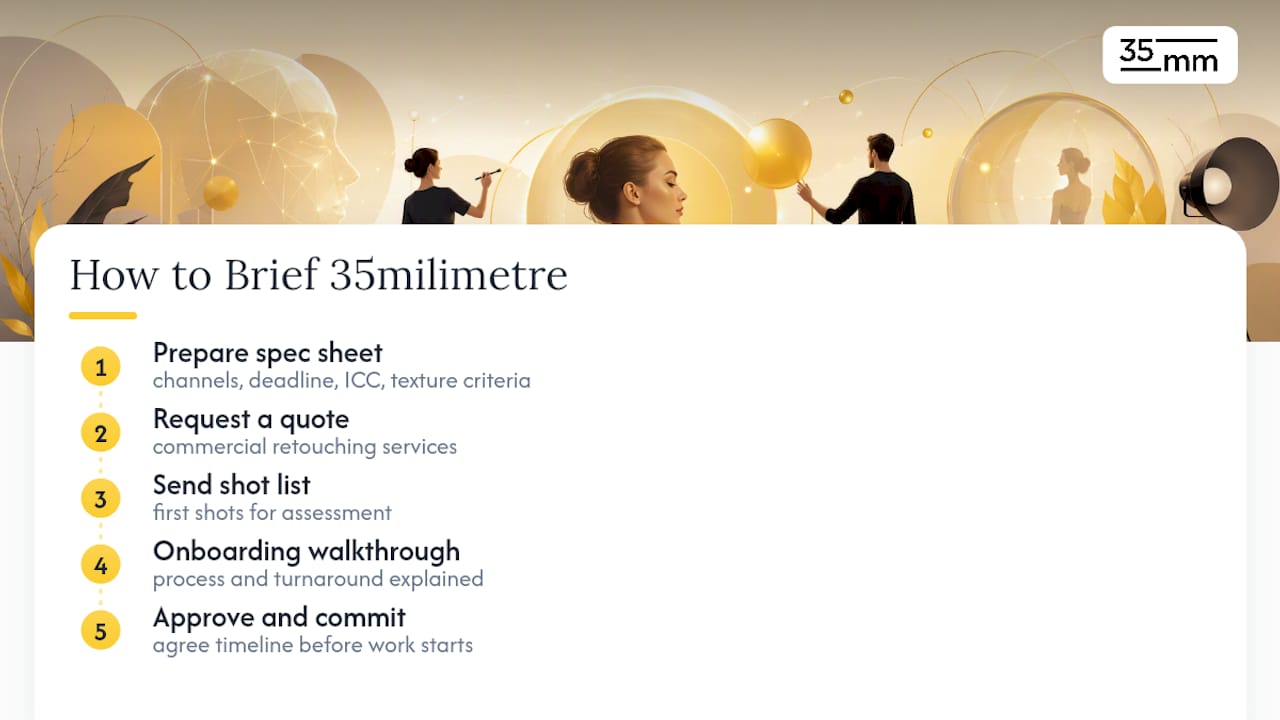
When you're ready to brief a project, a short spec sheet saves everyone time. Include your intended channels (print, OOH, digital), your deadline, your brand's ICC profile or color reference, and your acceptance criteria for skin texture and smoothing level. That single document usually cuts a full round of back-and-forth before work even starts.
If you want a studio that treats texture preservation as the default rather than an upsell, get a quote on 35milimetre's commercial retouching services and send over your first shot list. We'll walk you through onboarding and turnaround before you commit to anything.
Frequently Asked Questions
What is the difference between beauty retouching and general photo retouching? Beauty retouching advertising focuses specifically on skin, complexion, and facial detail, using techniques like frequency separation that general product or lifestyle retouching rarely needs.
How much does professional beauty retouching cost for a campaign? Costs scale with image count, revision rounds, and complexity; a detailed 2026 budgeting guide breaks down the main pricing factors.
Can AI fully replace a human retoucher for beauty advertising? No. AI speeds up batch tasks like masking and reference matching, but final texture decisions and talent-likeness work still need a trained human retoucher.
How long does beauty retouching typically take for a full campaign? A single hero image with heavy retouching might take a few days; a full multi-image campaign set takes longer once review rounds are factored in.
What should I include in a retouching brief? Specify capture specs, intended channels, your ICC color profile, smoothing and texture preferences, deadline, and acceptance criteria for the final image.
Sources
- Beauty retouch for ETERNAL BEAUTY by Valeria Manouilenko