

An automotive branding checklist is a strategic system of guidelines and operational enforcement steps that ensures consistent brand visibility across every marketing channel, physical asset, and customer touchpoint. Without one, brand drift sets in quietly. A dealer in one city runs an outdated logo. A fleet vehicle carries a stretched wordmark. A social post uses the wrong typeface. These are not minor aesthetic issues. They erode buyer trust and dilute the equity your brand has spent years building. This article gives you a structured, multi-dimensional checklist covering visual identity, vehicle branding, dealership compliance, and digital presence, built specifically for automotive marketers and brand managers who need more than a style guide.
1. Automotive branding checklist: core visual identity elements
Visual identity is the foundation every other checklist item depends on. Brand guidelines must include a logo system with badge, wordmark, lockup, and monochrome versions, along with clear rules governing when and how each version is used. This is not optional documentation. It is the single source of truth that prevents every downstream inconsistency.
Color is where many automotive brands lose precision. Brand color values must be documented as exact RGB, HEX, CMYK, and Pantone figures, not approximations. Primary and secondary palettes need approved mono and white versions for dark backgrounds, with contrast ratios that meet accessibility standards. A brand that cannot reproduce its own colors accurately across print, digital, and vehicle wrap formats is already losing coherence.

Typography and tone rules complete the visual identity layer. Your checklist should specify font hierarchy for headlines, body copy, and captions, alongside a tone system that defines whether the brand voice reads as technical, confident, or approachable. These rules apply equally to a brochure, an email campaign, and a dealership banner. Consistency across those formats is what creates a recognizable brand personality rather than a collection of unrelated materials.
Clear space and minimum size rules deserve their own checklist line. Chicago Pneumatic, for example, sets free space at 70% of ring height for print and 35% for digital, a practical standard that prevents logo crowding on vehicle wraps and signage. Applying that level of specificity to your own brand protects legibility at every scale.
Pro Tip: Build your visual identity checklist as a living document with version control. Every update to a logo, color value, or typeface should carry a version number and an approval date so teams always know which assets are current.
For a deeper look at how visual identity requirements differ across media formats, the visual identity guide from 35milimetre covers automotive and tech brand applications in practical detail.
2. Vehicle and fleet branding consistency
Branded vehicles are mobile marketing assets, and they operate in conditions that expose every branding shortcut. A logo that looks fine on a screen can become illegible at 60 miles per hour or in direct sunlight. Your checklist must treat vehicle branding as a distinct discipline with its own enforcement rules.
Chicago Pneumatic's vehicle branding guidelines prohibit logo alterations on vehicle wraps without exception. No tilting, no stretching, no recoloring, and no substituting unofficial artwork. Only approved original files are permitted. This level of specificity matters because vehicle graphics are often produced by third-party print vendors who will default to whatever file they receive, approved or not.
Minimum clear space requirements are equally non-negotiable on vehicles. Vehicle branding rules must enforce clear space and minimum size metrics calibrated to typical driver glance distances and vehicle motion. A logo that meets minimum size requirements on a static sign may still fail legibility tests on a moving van viewed from a perpendicular angle. Test your specifications in real conditions, not just on a design mockup.
Orientation and placement constraints round out the vehicle branding checklist. Logos must appear on approved panels in approved positions. Side panels, rear doors, and hood placements each carry different visibility profiles and should be treated as separate placement decisions rather than interchangeable surfaces.
Pro Tip: Photograph every newly wrapped vehicle against a neutral background before it enters service. This creates a compliance record and gives you a reference image for future rebranding audits.
3. Dealership network brand compliance
Operationalizing brand standards across a dealership network is where most automotive brands encounter their biggest consistency failures. Individual dealers have local priorities, local vendors, and local habits. Without a structured audit system, brand standards erode at the edges of the network first, then spread inward.
Corporate identity compliance audits covering signage accuracy, campaign currency, showroom layout, and staff uniform consistency are the backbone of dealership brand governance. AutoSmart structures these audits around photo proof and digital scoring, creating a transparent record of compliance status at every physical and virtual touchpoint. The photo-proof requirement is particularly effective because it removes subjective interpretation from the compliance conversation.
A well-designed audit checklist for dealerships covers the following areas:
- Exterior signage: correct logo version, approved color reproduction, and current campaign materials displayed
- Showroom layout: approved display configurations, current product materials, and no unauthorized third-party signage
- Digital presence: website content aligned with current brand guidelines, Google Business Profile updated with correct NAP formatting
- Staff presentation: uniform standards met, brand-aligned communication tone in customer interactions
- Campaign currency: no expired promotional materials in circulation at the point of sale
AutoSmart Audits reduce administrative burden by 50% while providing transparent compliance tracking and instant corrective feedback. That efficiency gain matters for brand managers overseeing networks of 20 or more locations, where manual audit processes become unsustainable quickly.
Multi-store consistency also requires local SEO standardization within the brand checklist. A3 Brands uses a 30-point monthly audit scorecard that covers brand voice, content quality, technical performance, and local presence adherence. NAP formatting and Google Business Profile posting cadences are included because inconsistent local listings undermine brand credibility just as effectively as a misused logo.
| Audit area | Standard to enforce |
|---|---|
| Exterior signage | Current logo version, approved colors, no unauthorized additions |
| Campaign materials | All materials dated within current campaign cycle |
| Digital listings | Consistent NAP across all platforms, updated GBP posts |
| Staff compliance | Uniforms and communication tone meet brand standards |
| Showroom layout | Approved configurations with no third-party signage |
4. Content and customer journey consistency
Branding extends well beyond visual identity. Automotive branding consistency requires aligning visual identity with customer service tone, advertising messaging, online user experience, and community engagement to create a complete brand experience. Prose Media frames this as a multi-channel system that must survive operational variances, meaning the brand should feel coherent whether a customer encounters it through a paid search ad, a service department visit, or an Instagram post.
Mapping social content to the buyer journey is one of the most overlooked items in a car branding strategy. Sprout Social's research confirms that social content aligned to the customer journey creates a reinforcing branding effect rather than isolated messaging. Awareness-stage content should build recognition. Consideration-stage content should address comparison questions. Decision-stage content should reduce friction and build confidence. Each stage requires different assets, different tones, and different success metrics.
"Branding is not what you say it is. It is what your customer experiences at every single touchpoint, from the first ad impression to the third service appointment." This framing, consistent with Prose Media's automotive marketing playbook, is the right mental model for building a checklist that actually prevents brand drift.
A campaign-level checklist should cover 14 distinct steps according to ChecklistGuro, including strategy definition, persona development, asset gathering, launch execution, compliance review, ongoing monitoring, optimization cycles, and post-campaign analysis. Most automotive marketing teams execute the first half of that list reliably. The compliance review and post-campaign analysis steps are where discipline breaks down, and where brand inconsistencies accumulate over time.
Legal and compliance review deserves a dedicated checklist line, particularly for incentive-based campaigns where regulatory requirements vary by market. Expired offers left live on dealership websites are a common source of both legal exposure and brand credibility damage.
5. Brand governance and living document standards
Brand guidelines are most effective when supplemented by operational governance that defines change approval processes, asset storage protocols, and versioning standards. Without this layer, even the most detailed style guide becomes a static document that teams quietly stop referencing after the first major campaign cycle.
Separating brand identity rules from compliance operations is a key success factor in preventing brand drift across multiple locations and time. Identity rules cover logo usage, color values, and typography. Compliance operations cover campaign approval workflows, asset expiration controls, and audit scheduling. These two systems need to be documented separately and owned by different people within the organization, otherwise both functions get neglected.
Branding checklists should be living documents with version control, detailed governance, and scheduled audits to prevent drift amid inventory changes and incentive fluctuations. A quarterly review cycle is the minimum for most automotive brands. High-volume dealer groups running multiple simultaneous campaigns may need monthly governance check-ins to stay current.
Developing your visual assets step by step with a documented production workflow is the practical complement to governance documentation. When asset creation follows a repeatable process, compliance becomes easier to enforce because every output starts from the same approved foundation.
Key takeaways
A strong automotive branding checklist separates visual identity rules from compliance operations and enforces both through structured governance, scheduled audits, and version-controlled documentation.
| Point | Details |
|---|---|
| Define visual identity precisely | Document exact RGB, HEX, CMYK, and Pantone values with clear space and minimum size rules. |
| Treat vehicles as brand assets | Enforce no-alteration rules on wraps and test logo legibility at real-world distances. |
| Audit dealerships systematically | Use photo-proof digital audits with standardized scoring to track and correct compliance gaps. |
| Map content to the buyer journey | Align social and campaign content to awareness, consideration, and decision stages explicitly. |
| Govern the checklist itself | Assign version control, approval workflows, and scheduled reviews to prevent brand drift. |
What we've learned from working inside automotive brand systems
The most common failure we see is not a poorly designed logo or a weak color palette. It is a brand team that built excellent identity documentation and then treated the job as finished. The guidelines sit in a shared drive. The dealers get a PDF. Six months later, three different logo versions are circulating across the network, and no one can explain how it happened.
The separation between identity rules and compliance operations is the insight that changes everything. Identity rules tell people what the brand looks like. Compliance operations tell people how to enforce it, who approves changes, where approved assets live, and what happens when a dealer goes off-script. Most automotive brands have the first system. Very few have the second.
Vehicle branding is where we see the most overlooked specificity. Clear space requirements that work on a business card do not automatically translate to a van door. The physics of motion, viewing distance, and ambient light create a completely different legibility environment. Brands that test their vehicle wrap specifications in real conditions, rather than on a monitor, catch problems before they go into production across an entire fleet.
Brand drift is not dramatic. It is incremental. One outdated banner here, one stretched logo there, one dealer who printed their own version of the campaign materials. Each individual instance seems minor. Cumulatively, they signal to buyers that the brand is not paying attention. In automotive, where purchase decisions involve significant trust and significant money, that signal costs more than most teams realize.
— 35mm
Strengthen your brand with professional visual assets
Every checklist item in this article depends on one thing: the quality of the visual assets you are working with. A governance system built around low-resolution, inconsistently produced imagery will still produce inconsistent results, no matter how detailed the compliance protocols are.
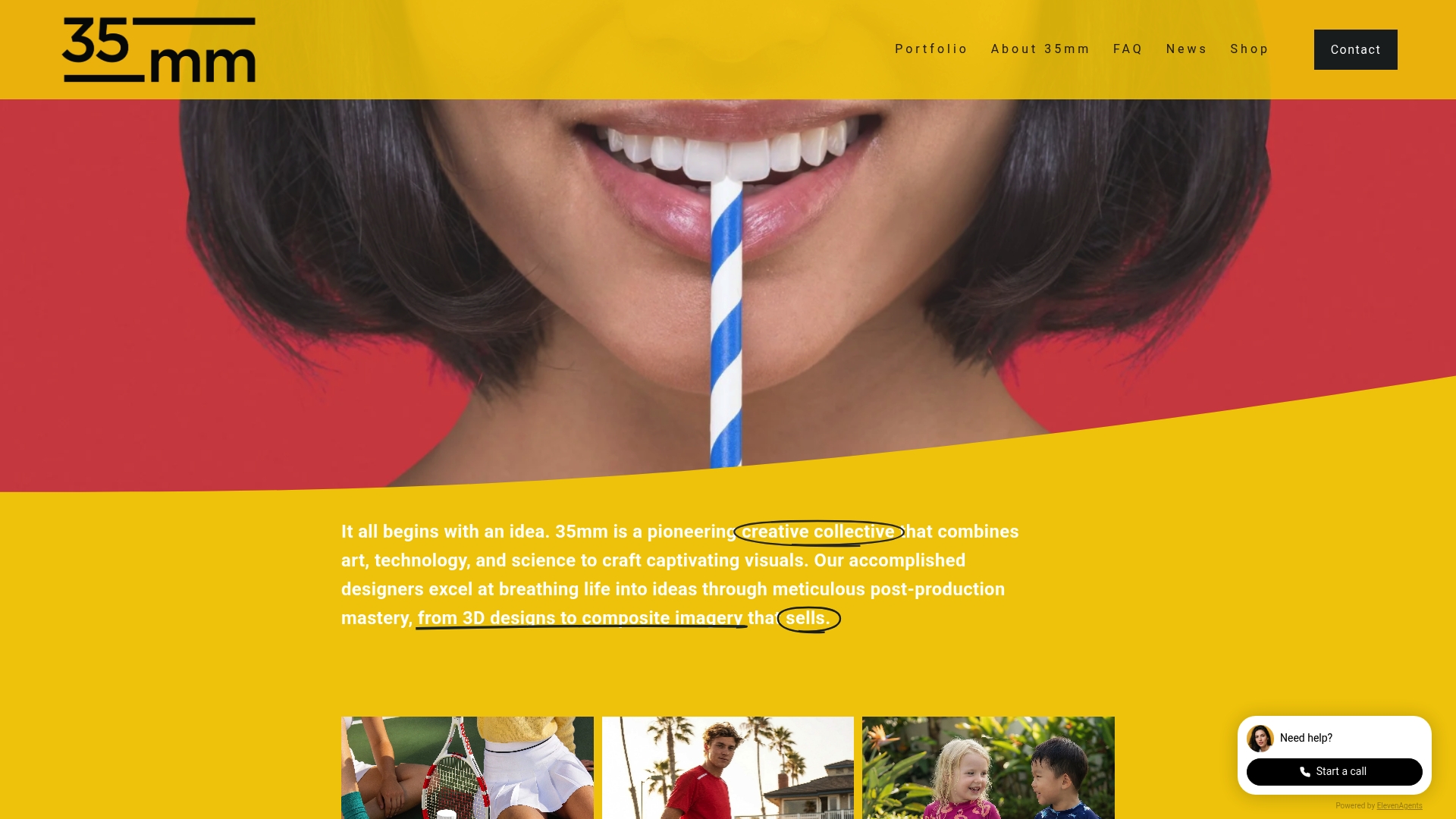
At 35milimetre, we work directly with automotive brands and ad agencies to produce the kind of high-end visual post-production that makes brand guidelines worth enforcing. From compositing and color grading to CGI and retouching, our work gives marketing teams assets that hold up across every format on your checklist, from vehicle wraps to digital campaigns. If your brand standards are solid but your imagery is not matching them, that is the gap we close. See what automotive visuals that drive results actually look like in practice.
FAQ
What does an automotive branding checklist include?
An automotive branding checklist covers visual identity rules (logo, color, typography), vehicle branding specifications, dealership compliance audit protocols, digital presence standards, and campaign-level governance. It functions as both a style guide and an operational enforcement system.
How often should automotive brands audit dealership compliance?
Most automotive brands benefit from quarterly compliance audits at minimum, with high-volume dealer groups requiring monthly reviews. AutoSmart's digital audit tools support continuous photo-proof tracking to reduce the administrative load of frequent audits.
Why do vehicle branding rules need separate specifications?
Vehicle wraps operate under different legibility conditions than print or digital formats, including motion, distance, and variable lighting. Clear space and minimum size rules must be calibrated specifically for vehicle surfaces to maintain logo legibility at typical driver glance distances.
What is the difference between brand identity rules and compliance operations?
Brand identity rules define what the brand looks like, covering logo usage, color values, and typography. Compliance operations define how those rules are enforced, including asset approval workflows, expiration controls, and audit scheduling. Separating these two systems prevents brand drift across multi-location networks.
How does local SEO fit into a dealership branding checklist?
Consistent NAP formatting and Google Business Profile management are branding requirements, not just SEO tasks. A3 Brands' 30-point monthly audit scorecard includes local presence adherence because inconsistent online listings undermine brand credibility across the network just as effectively as visual inconsistencies.