
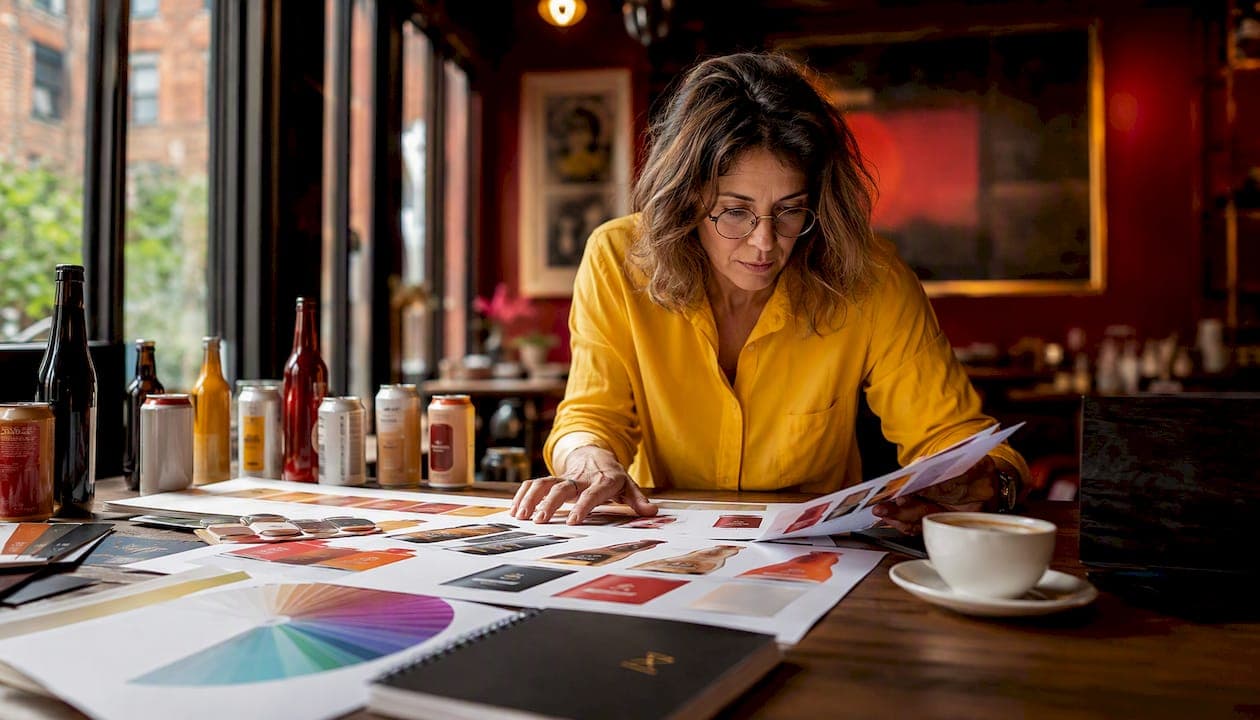
35milimetre is the strongest single alternative for beverage packaging imagery and post-production. The studio pairs studio-quality retouching and compositing with production-ready CGI, strict native-file ownership, and working awareness of TTB/FDA labeling requirements — the combination that matters most when a label has to survive both a regulatory review and a retail shelf.
To evaluate fit quickly, request three things upfront:
- A sample SOW with revision rounds and acceptance criteria spelled out
- At least three beverage-specific case studies showing measurable outcomes (distribution placement, conversion lift, or trade acceptance)
- Native-file proof: a rendered digital twin built from the actual dieline and bottle CAD, not a Photoshop mockup
Table of Contents
- Best alternatives for beverage packaging, CGI, and post-production
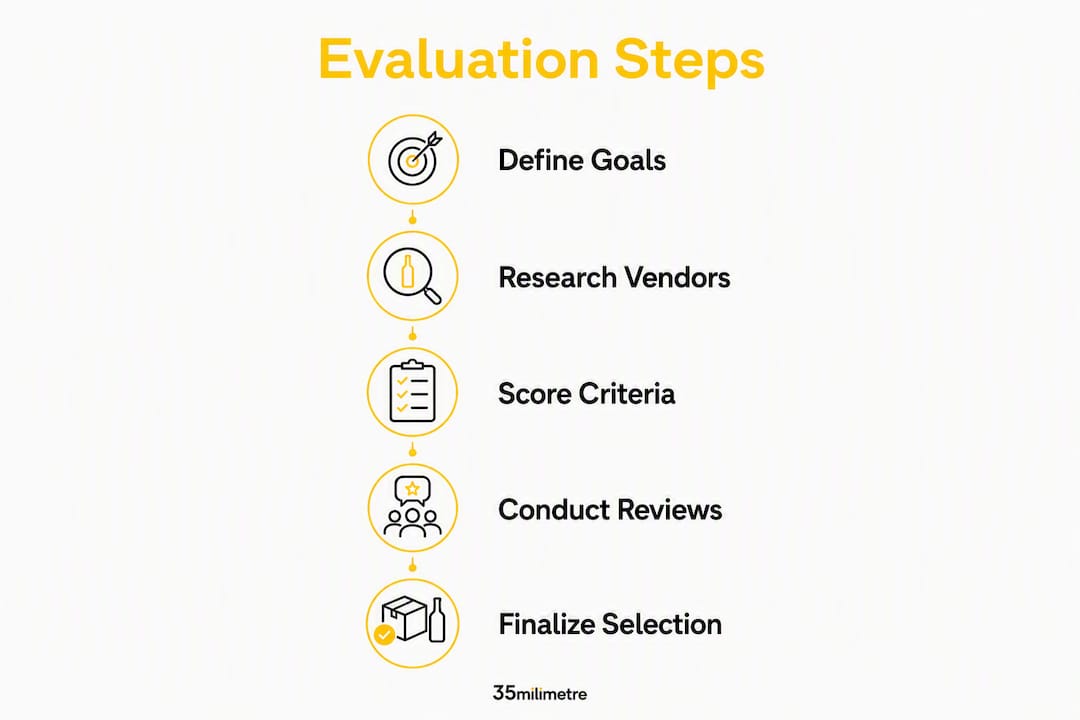
- How to shortlist vendors using a 10-dimension scoring framework
- What your contract and SOW must cover for US beverage projects
- Why 35milimetre is a strong choice for beverage brands
- Final verdict and your hiring checklist
- Key Takeaways
- What we've learned from beverage packaging projects
- Work with 35milimetre on your next beverage project
- Useful resources for vendor evaluation and compliance
Best alternatives for beverage packaging, CGI, and post-production
The shortlist below covers studios and service tiers that realistically replace a specialist post-production partner for spirits, RTD, beer, and non-alcoholic CPG brands. Each entry is categorized by the buyer profile it fits best.
| Studio / Tier | Best for | Core services | 3D/CGI capability | Regulatory awareness | File ownership | Pricing band | Turnaround | Workflow | Measurable results |
|---|---|---|---|---|---|---|---|---|---|
| 35milimetre | Premium spirits, CPG, ad agencies needing full post-production | Retouching, compositing, CGI rendering, packaging artwork, AI-enhanced imagery, custom illustration | Full pipeline: modeling, texturing, rendering, digital twin from CAD | TTB/FDA-aware; digital twin approach reduces misrepresentation risk | Native files (AI/PSD/STEP) transferred on delivery | Mid-tier boutique; project-based | 1–3 weeks per SKU | High-touch, agency-integrated | Case studies available on request |
| Boutique beverage design studio | Growth D2C brands, craft spirits | Structural design, label artwork, brand identity | Moderate; renders from dieline | Variable | Negotiated per contract | — | 4–8 weeks | Account manager model | Shelf placement lift reported |
| Full-service packaging agency | Enterprise CPG, multi-SKU rollouts | Strategy, structural, artwork, pre-press | Full 3D structural + render | Strong; in-house regulatory team | Full ownership standard | — | 10–16 weeks | Dedicated team | Documented launch outcomes |
| Freelance CGI artist | Startups, single-SKU DTC launches | CGI rendering, basic retouching | High rendering skill; limited pipeline | Rarely | Often no native-file clause | $3,000–$6,000 | 1–2 weeks | Direct, low overhead | Rarely documented |
| Vertical imaging platform | High-volume RTD, beer, wine | Automated 3D rendering from label upload | Template-based; fast configuration | 3D rendering from verified label files produces compliance-safe output | Platform-retained | Subscription or per-render | Minutes to hours | Self-serve | Volume efficiency documented |
Budget bands by scope:
- Single SKU shoot or CGI render: budget depends on scope and complexity.
- SKU range (multiple products): budget depends on scope and complexity.
- Full packaging system (structural + artwork + photography + CGI): budget depends on project scale and requirements.
When to choose which tier:
- Startup or early DTC: a freelance CGI artist or vertical platform covers launch imagery cheaply; add a boutique studio when brand identity needs to hold across retail.
- Growth brand entering premium retail: a boutique studio like 35milimetre delivers the quality and file discipline that buyers and distributors expect.
- Enterprise or multi-market rollout: a full-service agency with an in-house regulatory team reduces coordination risk at scale.
How to shortlist vendors using a 10-dimension scoring framework
A 10-dimension evaluation framework is the most reliable way to compare studios objectively, because style portfolios alone tell you almost nothing about production readiness or compliance fluency.

| Dimension | Weight | What to look for |
|---|---|---|
| Dimension | Weight | What to look for |
| --- | --- | --- |
| Category experience | 15 | Beverage-specific case studies with named brands |
| Structural design / 3D | 12 | CAD-to-render pipeline, not just Photoshop mockups |
| Regulatory fluency | 12 | TTB/FDA awareness, pre-press proof process |
| Sustainability | 12 | Material specs, recyclability notes in dielines |
| Production oversight | 10 | Printer liaison, press-check attendance |
| Localization | 8 | Multi-market label variants, language adaptation |
| Photography / rendering | 8 | Lighting accuracy, color fidelity on curved glass |
| Brand integration | 8 | Typography, palette, and iconography consistency |
| Team continuity | 8 | Named contacts, not rotating account staff |
| Pricing transparency | 7 | Itemized SOW, change-order rules stated upfront |
Score each candidate out of 10 per dimension, multiply by weight, and compare totals. A studio that scores well on the top three dimensions but poorly on production oversight is a style shop, not a production partner.
Questions to ask in the first call:
- Can you show a case study with documented outcomes — distribution placement, conversion lift, or trade acceptance?
- Which printers have you worked with, and do you attend press checks?
- Can you render a digital twin from our native dieline and bottle CAD before we commit?
- How do you handle TTB advertising compliance in CGI outputs?
- What file formats do you deliver, and who retains the native source files?
Red flags to watch for:
- Only Photoshop mockups in the portfolio, no pre-press proofs
- Refusal to provide native files or color profiles on delivery
- No documented beverage case studies — only lifestyle photography
- Generative AI used for product renders without a verified 3D model base
Pro Tip: For any project above $25,000, require a paid concept exploration phase before awarding full production. This phase should deliver one rendered digital twin, a color-proofed dieline, and a documented revision process. It reveals collaboration style and technical depth far better than a portfolio review.
What your contract and SOW must cover for US beverage projects
A clear SOW should itemize deliverables, revision rounds, native-file ownership, color profiles, and acceptance criteria — these are the terms most predictive of avoiding budget overruns and production friction.
Contract checklist:
- Defined revision rounds (typically 2–3 rounds; additional rounds billed as change orders)
- Acceptance criteria stated per deliverable, not per project
- Native file ownership transferred to the brand on final payment
- Payment milestones tied to deliverable sign-off, not calendar dates
- Change-order rules with written approval required before work begins
Deliverables checklist:
- Press-ready dielines (PDF/AI with bleed, trim, and safe zones)
- Layered native files (AI, PSD, STEP for structural)
- Color profiles: Pantone + CMYK for each substrate
- Pre-press proofs and printer-ready files
- 3D assets, textures, and production-ready renders
- Asset naming conventions agreed before delivery
File format reference:
| Asset type | Required formats | Who retains originals |
|---|---|---|
| Label artwork | AI, PDF/X-4, EPS | Brand |
| Photography | RAW + TIFF (retouched) | Brand |
| CGI renders | PSD, PNG, EXR | Brand |
| Structural / 3D | STEP, OBJ, native project file | Brand |
Regulatory note: TTB advertising regulations under 27 CFR Parts 4, 5, and 7 prohibit imagery that misrepresents the appearance or characteristics of an alcohol beverage. 3D rendering from verified label artwork and CAD geometry creates a compliance-safe digital twin; generative AI without a verified model base carries hallucination risk. Retain all source files used for CGI generation — they may be required in a compliance audit.
Pro Tip: Archive source files and render project files together, labeled by SKU and version. A future label refresh or line extension will cost a fraction of the original if the studio hands over a complete, named asset package.
Why 35milimetre is a strong choice for beverage brands
35milimetre is a boutique post-production and design studio led by Mehmet Turan, with over two decades of experience in image manipulation, compositing, and visual storytelling. The core team covers post-production, graphic design, and 3D artistry, with the capacity to scale for larger projects.
Services that map directly to beverage brand needs:
- Packaging artwork and label design
- Photo retouching and compositing
- CGI rendering and 3D product visualization
- AI-enhanced imagery for rapid variant generation
- Custom illustration and visual storytelling
- Full native-file handover on project completion
The studio fits the mid-tier boutique band — typically right for growth brands, premium spirits launches, and ad agencies that need a reliable production partner without full-agency overhead. For a single-SKU CGI render and retouching package, expect a project-based quote with clear scope and revision terms defined in the SOW before work starts.
Pro Tip: When you reach out, include your SKU count, target substrate (glass, can, carton), timeline, and budget band. A brief that answers those four questions gets a scoped proposal back within 48 hours rather than a generic capabilities deck.
Final verdict and your hiring checklist
35milimetre is the recommended pick for premium spirits, RTD, and CPG beverage brands that need production-ready CGI, strict file ownership, and a studio that understands what "compliance-safe" means in a US context. For enterprise multi-market rollouts, a full-service agency with an in-house regulatory team is the more appropriate tier.
Hiring checklist:
- Define scope: SKU count, asset types, substrates, and target channels
- Request a sample SOW with revision rounds and acceptance criteria
- Ask for a digital twin render from your dieline and bottle CAD as a paid pilot
- Verify pre-press proof process and printer coordination capability
- Confirm native file ownership and delivery formats in writing
- Agree IP terms and payment milestones before kickoff
- Schedule a discovery call to align on TTB/FDA compliance approach
- Run a short paid pilot ($3,000–$6,000) before committing to full production
Test project template:
- Scope: One SKU, CGI render + retouching + press-ready dieline
- Deliverables: Digital twin render (3 angles), layered PSD, print-ready PDF/X-4, color profile documentation
- Acceptance criteria: Label text matches approved artwork; color delta within tolerance for target substrate; native files delivered with asset naming convention
- Timeline: 1–2 weeks
- Budget: $3,000–$6,000
Timeline benchmarks:
- Label refresh (existing structure): 1–2 weeks
- Single SKU CGI shoot: 1–3 weeks
- Full packaging system (structural + artwork + CGI): 8–16 weeks
Key Takeaways
35milimetre is the recommended alternative for beverage packaging imagery and post-production, combining CGI, retouching, and strict native-file ownership with TTB/FDA compliance awareness.
| Point | Details |
|---|---|
| Lead with compliance | TTB rules under 27 CFR Parts 4, 5, and 7 require imagery that accurately represents the product; digital twins from verified CAD reduce risk. |
| Use the 10-dimension framework | Score studios on category experience (weight 15), structural 3D (12), and regulatory fluency (12) before reviewing portfolios. |
| Require native files in the SOW | AI, PSD, STEP, and color profiles must transfer to the brand on final payment — no exceptions. |
| Run a paid pilot first | A test project with a moderate budget validates capability before full production commitment. |
| 35milimetre fits the mid-tier | Best for premium spirits, RTD, and CPG brands needing boutique-quality CGI and post-production without full-agency overhead. |
What we've learned from beverage packaging projects
The most common mistake brand teams make is treating packaging imagery as a final step rather than a production system. By the time a label reaches a CGI studio, the structural decisions, color profiles, and substrate choices should already be locked. When they are not, the studio ends up compensating visually for production decisions that were never made — and the render looks right on screen but fails at the printer.
The second thing buyers underestimate is the difference between a Photoshop mockup and a true digital twin. A mockup wraps a flat image around a generic bottle shape. A digital twin is built from the actual bottle CAD and the approved dieline, with accurate glass refraction, label placement, and lighting. The compliance difference matters under TTB rules, but so does the practical one: a digital twin can be re-rendered for a new background, a new market variant, or a line extension without rebuilding the asset from scratch.
Paid concept exploration phases are worth the investment on any project above $25,000. A polished portfolio tells you what a studio has done; a short paid pilot tells you how they work, how they handle feedback, and whether their file handover is actually clean. Those are the things that determine whether a project lands on time and on budget.
Work with 35milimetre on your next beverage project
35milimetre delivers production-ready beverage imagery — CGI renders, packaging artwork, retouching, and compositing — with full native-file ownership and a structured SOW from day one. The studio's boutique scale means you get direct access to the artists doing the work, not an account manager relaying feedback through three layers.
To get started, send a brief that includes your SKU count, packaging format, target timeline, and budget band. The team will scope a pilot project and return a proposal within 48 hours. For agencies managing multiple brands, 35milimetre integrates cleanly into existing workflows with named contacts and agreed asset-handover protocols.
Start your beverage project with a discovery call or a scoped pilot brief — and see what production-ready CGI actually looks like before committing to full production.
Useful resources for vendor evaluation and compliance
Use these authoritative references to validate vendor claims, build your SOW, and stay current on US beverage labeling rules.
US regulatory authorities:
- TTB Advertising Regulations (27 CFR Parts 4, 5, 7) — the primary source for alcohol beverage advertising and labeling rules in the US
- FDA Labeling Requirements for Food and Beverages — covers non-alcoholic beverage labeling, nutrition facts, and claims
Vendor evaluation and briefing:
- How to brief a creative studio for high-impact visuals — templates and scope-definition guidance before contacting a studio
- CGI Workflows Explained: A Professional's Complete Guide — pipeline documentation, asset handover, and archival practices for scoring 3D capability
- How to Choose a Packaging Design Agency in 2026 — the source for the 10-dimension framework used in this article
- Beverage Packaging Design: Choosing the Right Agency — pre-press, printer coordination, and SOW guidance for beverage-specific projects
Further reading on CGI accuracy and production readiness:
- Examples of CGI in Branding That Inspire Marketers — visual quality benchmarks and compliance-safe rendering examples
- Spirits Packaging Concept Development for Custom Bottles — structural design, CAD validation, and timeline guidance for premium spirits
- AI-Generated Product Photography and Go-to-Market Timelines — the case for 3D rendering over generative AI for compliance-safe beverage imagery
This article provides general guidance on vendor selection and US regulatory considerations. Confirm current TTB and FDA requirements directly with those agencies or a qualified compliance professional before finalizing packaging artwork for market.